•
•
•
•
•
•
•
•
•
•
•
•
•
•
•
•
•
•
•
•
•
•
•
•
•
•
•
•
•
•
•
•
•



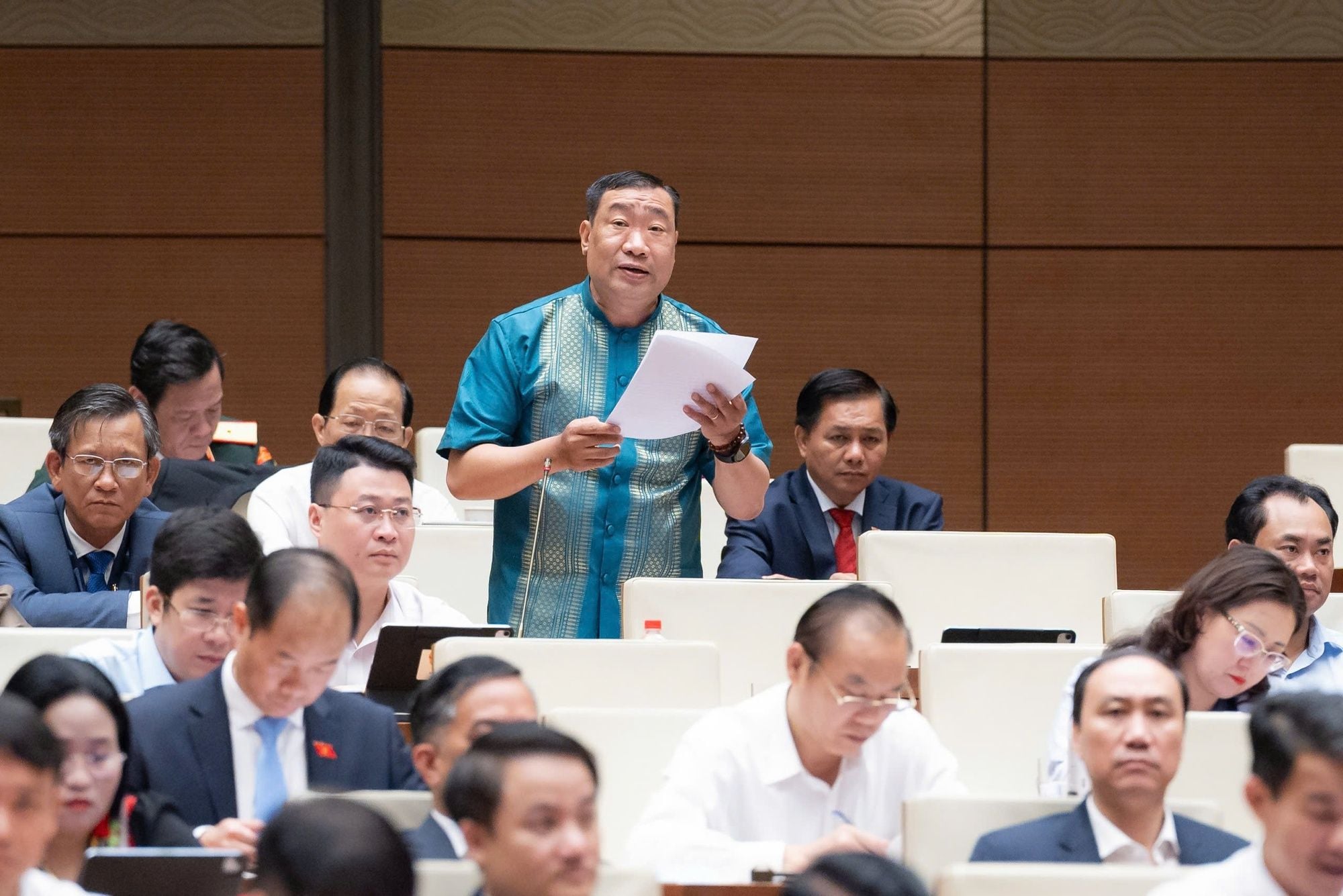
Deputy Nguyen Thanh Tung (Ho Chi Minh City) supported the government’s proposal to amend the draft law in a way that does not set a specific revenue threshold in the Personal Income Tax (PIT) Law for income not subject to PIT, nor a revenue threshold for households not subject to VAT. Instead, the draft would leave these thresholds to the Government to determine.
He also said the proposed amendments to the Corporate Income Tax (CIT) Law would introduce a revenue threshold exempt from CIT, while similarly leaving the specific threshold to the Government. The draft would additionally include detailed provisions on exemptions under the competent authority.
In the same draft, the excise tax (TTĐB) rate for vehicles with engines under 24 seats powered by batteries would be revised, extending the duration of the current policy until the end of 2030.
Deputy Nguyen Thanh Tung argued against applying a single “hard threshold” for taxation, noting that profitability varies across sectors and that the taxation method should also differ. He therefore suggested that different thresholds should apply to different industries.
Deputy Nguyen Van Than (TPHCM), Chairman of the Vietnam Small and Medium Enterprises Association, said that after consultations, experts agreed with a household revenue threshold not subject to tax of 1 billion VND per year or less. For revenue from 1 billion to 3 billion VND per year, taxation would be applied at a fixed rate set by the Government.
Revenue of 3 billion VND per year or more would continue to be taxed under normal procedures.
Deputy Nguyen Van Than said revenue under 1 billion VND per year already accounts for a large share of the 5.2 million household businesses. Of the 5.2 million households, 3.6 million are under tax management, and only 37,000 have revenue above 1 billion VND per year—indicating that most households fall below the proposed exemption level. Based on this, he supported exempting revenue up to 1 billion VND.
Deputy Tran Hoang Ngan (TPHCM) said that many household businesses are currently having to close, and that adjusting the tax threshold is necessary. She emphasized that for households and SMEs, social welfare considerations are paramount, stating that solving employment and ensuring social welfare is the most important goal rather than taxation.
“Of course, we encourage transparency, declaration, bookkeeping, and accounting,” Deputy Tran Hoang Ngan added.
On CIT, Deputy Tran Hoang Ngan said that for SMEs, the threshold should be set at 5 billion VND per year. She argued that at that level, household businesses can work toward becoming SMEs to benefit from CIT policies, while also reducing tax declaration procedures.
Deputy Duong Minh Anh (Hanoi) suggested that the threshold for revenue and taxable income should be explicitly defined in the law. He said this would help ensure clarity, transparency, stability in the business environment, and policy predictability.




Premium gym chains are entering a “golden era” that is ending or already in decline, as rising operating costs collide with shifting consumer preferences toward more flexible, community-based ways to exercise. Long-term memberships are shrinking, margins are pressured by higher rents and facility expenses, and competition from smaller, more personalized…