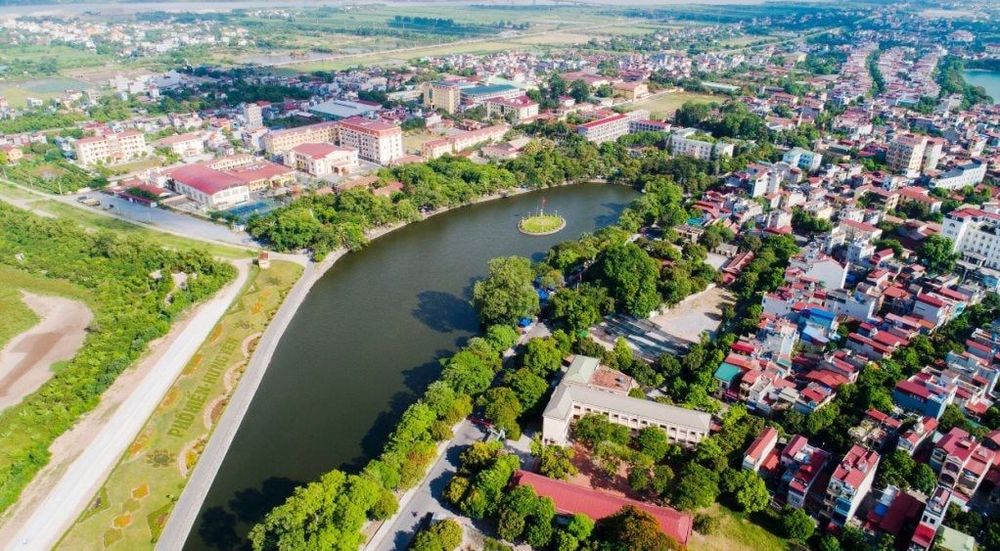
On March 13, the Hung Yen Provincial Party Committee's Executive Board approved the proposal to establish the Hung Yen Free Economic Zone to report to the Government's Party Committee for consideration by the Politburo. The zone’s development model is to be oriented toward multi‑sector integration, with high technology, a digital economy, innovation, and modern services playing a central role. The proposal for the Hung Yen Free Economic Zone sets the goal of restructuring the local economy and creating momentum to maintain growth above 10% per year. The zone is also expected to become a testing ground for new development mechanisms and policies, attracting strategic investors and forming a globally competitive zone model.
According to the proposal, the model focuses on improving the
investment environment rather than relying solely on tax and fee incentives. Hung Yen province plans to propose 12 policy groups with 31 policies, including 18 policies that are among the best currently applied in Vietnam and 13 breakthrough policies aligned with international standards.
Mr. Le Quang Hoa, Vice Chairman of Hung Yen Provincial People's Committee, said policy design is based on four core principles: not focusing on traditional tax and fee incentives; prioritizing measures that create an attractive and efficient business environment; ensuring international competitiveness; and placing investor needs and barriers at the center of policy design.
The Hung Yen Free Economic Zone currently has total investment of about $18 billion.
The area is currently about 30,583 hectares, with plans to expand by 13,000 hectares to the west and reclaim about 17,000 hectares to the east, divided into three functional development zones.
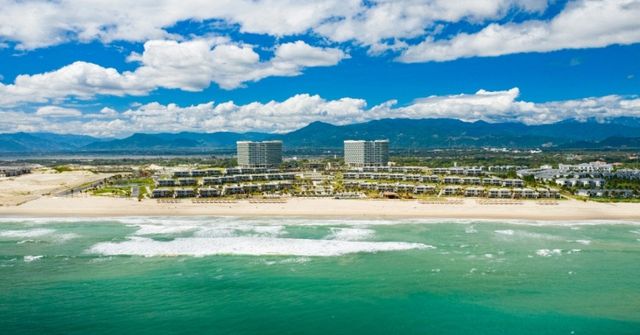
Specifically, the zone is oriented to become a hub for applied research, high-tech development, new energy, and logistics services (including seaports, airports, and resort urban areas). It is expected to attract large global players in the supply chain, creating an economy beyond the traditional region.
Total investment for 2025–2050 is projected at about 463,000 billion VND (about $18 billion). Phase 1 (2025–2030) will focus on completing master planning, foundational infrastructure, and piloting special policies. Phase 2 (2030–2040) will intensify attracting strategic investment and scale up. Phase 3 (2040–2050) will complete the free‑economy ecosystem and be ready to compete globally.
Calculations indicate the plan could contribute an additional about 47,500 billion VND to Hung Yen’s budget by 2030, about 364,000 billion by 2040, and about 1.3 quadrillion VND by 2050.
Regarding state budget revenue, the project is expected to contribute around 4,200 billion VND by 2030, 25,000 billion by 2040, and 50,000 billion by 2050 for Hung Yen. It is also expected to create more than 300,000 jobs by 2030, about 870,000 by 2040, and over 1.2 million by 2050.
The newly formed Hung Yen province (after merging with Thai Binh) covers about 2,514.81 km2, becoming the smallest province by area. In 2025, gross regional domestic product (GRDP) is estimated at 166,106 billion VND, up 8.78% from 2024, placing Hung Yen among the 10 fastest‑growing provinces nationwide. In 2026, Hung Yen aims for GRDP growth of 10–10.5%, an economic scale of 360,000 billion VND, and a per‑capita GRDP of 110 million VND.