•
•
•
•
•
•
•
•
•
•
•
•
•
•
•
•
•
•
•
•
•
•
•
•
•
•
•
•
•
•
•
•
•


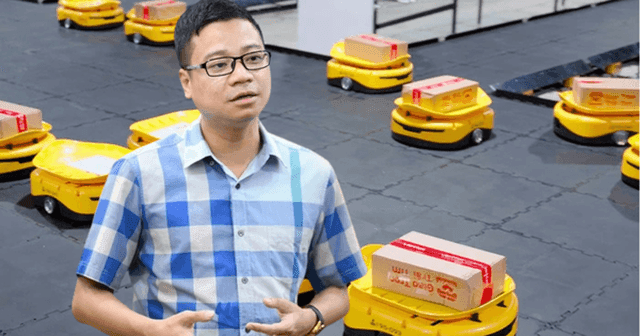
Viettel Post’s CEO, Phùng Văn Cường, said logistics has become a technology-intensive industry and that businesses now need to apply automation, autonomous robots, automated sorting systems and artificial intelligence (AI) to remain efficient and cost-effective.
At Viettel Post, the company previously handled only a few hundred thousand orders per day. It now processes about 1.5 million orders daily, and the CEO said continuing with older methods would be costly and more prone to errors.
Automation and AI are widely used, with robots performing core operations. In some sorting centers, a “no-human” factory model has emerged, operating 24/7 with the full process controlled by robots.
At the Quang Minh sorting center in Mê Linh, Hà Nội, productivity has increased fivefold compared with earlier operations. Headcount has fallen from about 600 to around 200, as robots handle most of the work and operations run continuously.
Technology is also used to support delivery personnel. Software optimizes delivery drivers’ routes, helping save time and costs. The company provides tools through mobile apps, while smart lockers and smart maps assist drivers in navigating buildings, apartments and offices.
Looking ahead, the CEO said drone delivery could be deployed to reduce downtime and improve system-wide efficiency.
For smart lockers, drivers can place hundreds of parcels into a locker at once. When a slot is filled, customers receive a notification with the specific locker number and can pick up within five hours; after that, fees are charged by the hour.
The CEO said this helps explain why, in large markets such as China, a courier can deliver up to 1,000 parcels per day. In Vietnam, current productivity remains around 80 parcels per day due to more traditional operating methods.
Viettel Post is rolling out smart lockers nationwide and plans to expand the model by involving private developers or building managers who invest in lockers and connect them to the network.
Investment per locker is currently around 100 million VND. Once connected, lockers are integrated into the network with identification codes, and shared revenue from usage fees is distributed to investors.
The company expects this approach to scale faster than if Viettel Post financed the entire expansion alone, and the CEO said the model could expand beyond major cities to provinces.






Premium gym chains are entering a “golden era” that is ending or already in decline, as rising operating costs collide with shifting consumer preferences toward more flexible, community-based ways to exercise. Long-term memberships are shrinking, margins are pressured by higher rents and facility expenses, and competition from smaller, more personalized…




