•
•
•
•
•
•
•
•
•
•
•
•
•
•
•
•
•
•
•
•
•
•
•
•
•
•
•
•
•
•
•
•
•


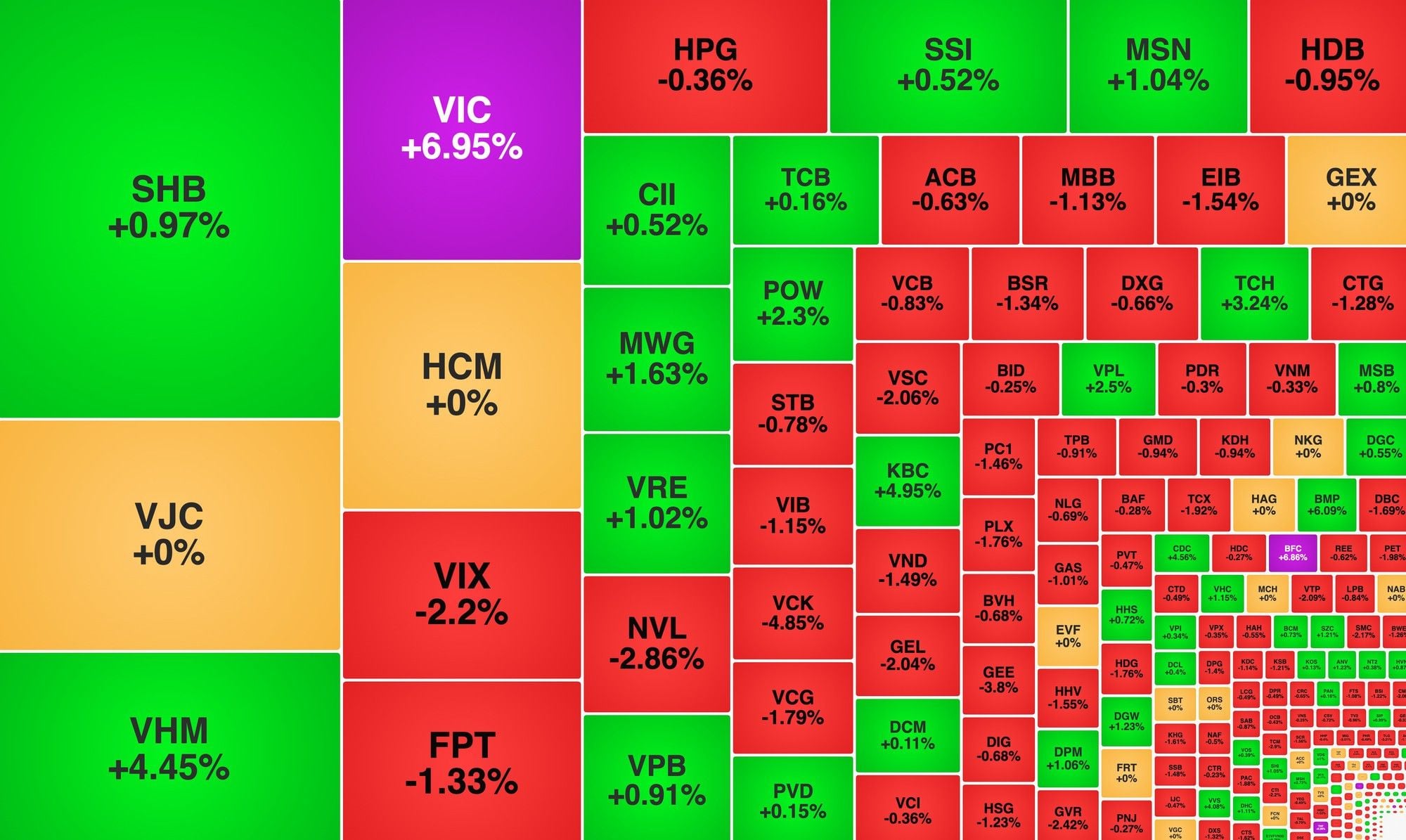
The VN-Index closed at 1,819.83 points on 16/4, up more than 19 points from the previous close, hovering near the 1,820 level.
In the Vingroup group, VIC hit the daily limit up at 189,300 dong per share and set a new all-time high. VHM also reached a new record high, rising 4.5% to 143,100 dong per share. VRE gained over 1%, while VPL rose 2.5%.
Outside the Vingroup stocks, several names advanced, including KBC (+5%), TCH (+3.2%), CEO (+1.7%), and IDC (+1.9%). In the afternoon, NVL saw profit-taking pressure after its rally, falling 2.9% to 17,000 dong per share. Other stocks mostly eased slightly, such as DXG, DIG, KDH, PDR, NLG, and HDC.
The securities group was mixed to weaker, with VCK dropping sharply 4.9% to 34,350 dong per share. Other declines included VIX (-2.2%), APG (-2.9%), TCX (-1.9%), CTS (-1.6%), BVS (-1.8%), and VND (-1.5%). In contrast, SHS rose 1.1%, VDS gained 1%, and SSI increased slightly, while the rest were flat or declined.
The banking group also leaned negative, led by VBB (-2.2%), NVB (-1.8%), EIB (-1.5%), SSB (-1.5%), and CTG (-1.3%). Gainers included KLB, MSB, SHB, TCB, and VPB.
Foreign investors traded over 7 trillion dong net and net sold more than 1.1 trillion dong. The largest net sellers were FPT (over 500 billion dong) and VHM (over 460 billion dong). Other net sellers included HCM (118 billion dong) and VIX (99 billion dong), while NVL and VJC were each sold over 70 billion dong. SHB, VRE, and CII were also net sold by over 60 billion dong.
On the buying side, VIC was the strongest net buyer with over 460 billion dong, followed by SSI (235 billion dong) and HPG (75 billion dong). ACB, TCH, and SHS were also net bought by over 60 billion dong.
HNX-Index rose 3.77 points, while UPCoM fell 0.63 point. Liquidity declined: total trading value on HOSE was near 28 trillion dong, down 300 billion dong from the previous session. Including HNX, liquidity approached 29.3 trillion dong.

Premium gym chains are entering a “golden era” that is ending or already in decline, as rising operating costs collide with shifting consumer preferences toward more flexible, community-based ways to exercise. Long-term memberships are shrinking, margins are pressured by higher rents and facility expenses, and competition from smaller, more personalized…