•
•
•
•
•
•
•
•
•
•
•
•
•
•
•
•
•
•
•
•
•
•
•
•
•
•
•
•
•
•
•
•
•


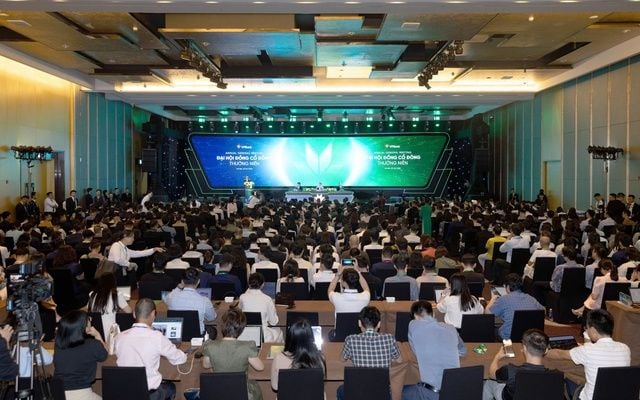
VPBank’s leadership has presented, and the 2026 Annual General Meeting (AGM) of shareholders has approved, a plan to increase the bank’s charter capital from 79.339 trillion dong to 106.243 trillion dong in 2026. Once completed within the year, the bank said the move is intended to strengthen its position in Vietnam’s banking sector through improved financial capacity.
The capital increase will be carried out in two phases.
Phase 1: VPBank will issue shares from its equity at a rate of over 26%, bringing charter capital to 100.000 trillion dong. The execution window is expected to fall in Q2–Q3 2026.
Phase 2: The bank expects to conduct a private placement of more than 624 million shares to a foreign investor, lifting charter capital to over 106.2 trillion dong. The private placement is planned for Q3–Q4 2026, with the investor potentially being a strategic investor or a foreign institution meeting the required financial capability and participation conditions.
Alongside the capital plan, shareholders approved a 5% cash dividend. VPBank said maintaining the cash dividend policy this year marks the fourth consecutive year the bank has committed to this policy, aligned with the AGM 2023 plan to maintain cash dividends for five consecutive years.
For 2026, VPBank targets consolidated pre-tax profit of 41,323 billion dong, up 35% year-on-year. The bank expects consolidated credit outstanding to reach nearly 1.3 quadrillion dong, up 34%, while customer deposits and securities are expected to exceed 1 quadrillion dong, up 40%. The bank also expects the NPL ratio under Circular 31 to remain below 2.5%.
In its statement, the bank said that while the business environment remains challenging due to risk factors from global politics, it is confident in executing the plan under the Board, Management Team, strategic partners, and the unity of staff.
As of the end of Q1 2026, VPBank reported consolidated pre-tax profit of more than 7.9 trillion dong, up 58% year-on-year, reaching nearly 20% of the annual plan. Total consolidated assets rose 9% to over 1.37 quadrillion dong, and the bank said it remains the leading private bank with no State ownership.
Consolidated credit outstanding surpassed 1 quadrillion dong, up 10.2% from end-2025. Consolidated deposits and securities were about 822 trillion dong, up 11.8%.
VPBank said that in 2025, supported by synergy from its open ecosystem and backing from strategic shareholder SMBC, it outperformed its plan across financial indicators. By year-end 2025, total assets reached 1.26 quadrillion dong, up 36.4%, making VPBank the private bank with the largest total assets in the system.
By end-2025, consolidated credit outstanding exceeded 961,000 billion dong, while deposits and securities rose 35.6% year-on-year. The bank also said it maintains access to international capital markets with long-term funding totaling USD 2.36 billion, and that its Capital Adequacy Ratio (CAR) remains in the leading group at over 14%.
VPBank outlined several pillars for the new phase, including:
The bank described 2026 as a pivotal year in its five-year development plan, aimed at accelerating execution of long-term objectives. It said it targets operating scale expansion while maintaining growth of above 30% per year, combining “rapid growth” with “improved quality” as the central approach.
VPBank said this direction builds on persistent growth over many years, with average growth around 30% over the last 15 years, and that growth has exceeded 30% in the most recent three years, reflecting its ability to execute a consistent strategy while controlling risk in a volatile market.



Premium gym chains are entering a “golden era” that is ending or already in decline, as rising operating costs collide with shifting consumer preferences toward more flexible, community-based ways to exercise. Long-term memberships are shrinking, margins are pressured by higher rents and facility expenses, and competition from smaller, more personalized…