•
•
•
•
•
•
•
•
•
•
•
•
•
•
•
•
•
•
•
•
•
•
•
•
•
•
•
•
•
•
•
•
•


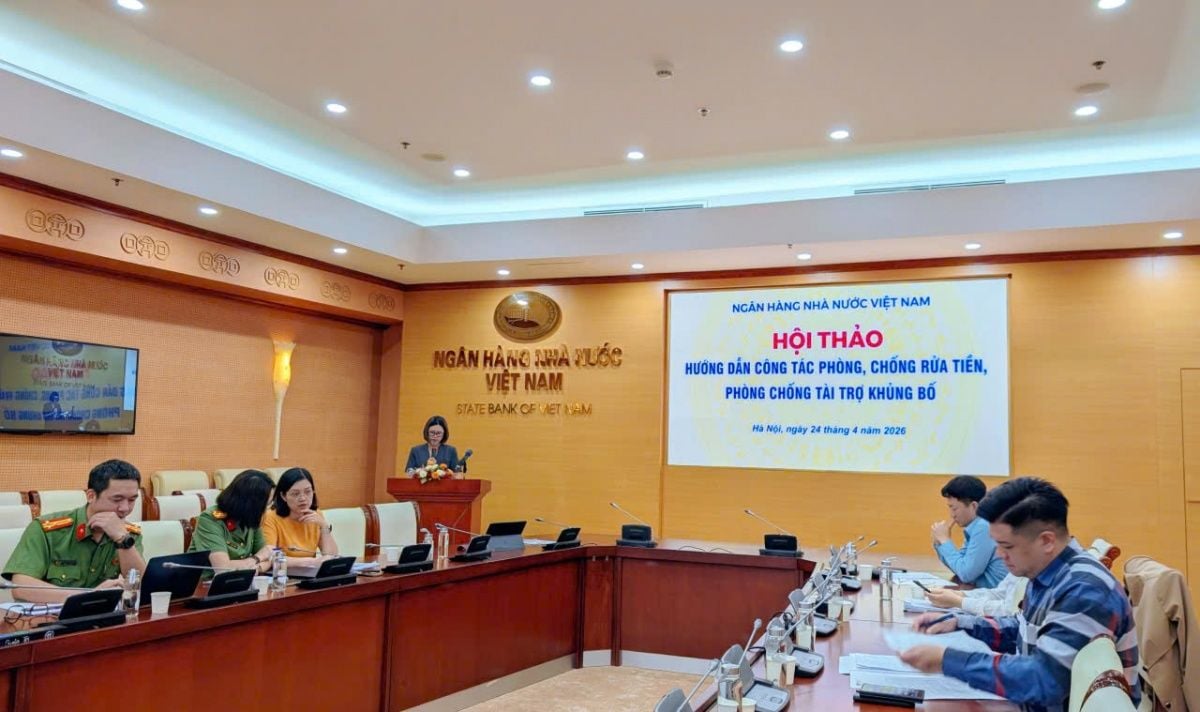
On April 24 in Hanoi, the State Bank of Vietnam (SBV), in coordination with the Ministry of Public Security and the Ministry of Industry and Trade, organized a workshop to guide anti-money laundering (AML) and counter-terrorist financing (CTF) compliance in the precious metals and jewelry sector. The event aims to implement international commitments and strengthen the private sector’s compliance capacity amid increasingly complex financial risks.
The workshop was held in person in Hanoi and online at multiple hubs nationwide.
In opening remarks, Mr. Nguyen Thanh Binh, Deputy Director of the Domestic Market Management and Development Department under the Ministry of Industry and Trade, said the workshop supports implementation of Decision No. 194/QD-TTg dated February 23, 2024, which sets out Vietnam’s national action plan to fulfill its commitments on AML, terrorist financing, and proliferation financing.
He noted that a core task is to strengthen outreach to the private sector on the results of the national risk assessment and sector-specific risks, particularly in high-risk areas. The precious metals and gemstones sector has been identified as high risk for money laundering and terrorist financing.
Lieutenant Nguyen Thanh Long from the Department of Internal Security under the Ministry of Public Security discussed combating terrorist financing in the precious metals and jewelry sector, highlighting features that can make it a target for illicit activity.
According to the analysis presented, the sector has characteristics that criminals can exploit, including:
International practice cited in the workshop indicates that gold mining and smuggling can serve as important funding sources for terrorist organizations. Examples mentioned include extremist groups controlling gold mines in Africa and cross-border gold smuggling in the Middle East used to fund armed groups.
Lieutenant Nguyen Thanh Long said that Vietnam has not recorded specific cases linked to terrorist financing in this sector to date, but international pressure remains substantial. He also noted that Vietnam’s placement on the FATF grey list since 2023 creates urgent requirements to strengthen the AML/CFT/PCRT (prevention, combating, and countering) system, including for the precious metals and jewelry sector.
He added that the surveillance approach is shifting from blanket methods to risk-based supervision: higher-risk subjects face tighter scrutiny, while lower-risk individuals may benefit from simplified procedures to reduce administrative burden on businesses.
Ms. Nguyen Thi Minh Tho, Deputy Director of the Anti-Money Laundering Department at the State Bank of Vietnam, presented an overview of the legal framework and reporting obligations for entities in the precious metals and jewelry sector.
She said Vietnam’s AML/CFT/PCRT legal framework has been substantially strengthened, including the Money Laundering Prevention Law 2022 and its implementing guidance, the anti-terrorism law, decrees related to proliferation of weapons of mass destruction, and penalties for violations in monetary and banking matters.
Businesses dealing in precious metals and jewelry are designated as reporting entities under the law, with obligations including:
Ms. Tho emphasized that customer identification is foundational and requires firms to collect, verify, and update customer information, including identifying the ultimate beneficial owner. Large value transactions and suspicious indicators must be closely monitored and reported promptly.
She further noted that reporting of suspicious transactions does not depend on transaction value, but on indicators related to money laundering, terrorist financing, or proliferation financing. The typical reporting timeline is within 1–3 working days from detection.
Ms. Tho said penalties have been strengthened, with administrative fines reaching hundreds of millions of dong and criminal liability for serious violations.
Ms. Tho said strengthening AML and CTF is essential in a globalized and deeply integrated financial environment. For the precious metals and jewelry sector, compliance helps businesses avoid legal risk, build trust, and support sustainable development.
She stressed that combating money laundering and terrorist financing requires more than regulatory oversight; it also depends on proactive participation by businesses that directly interact with customers and conduct transactions. Effective coordination mechanisms, she said, can improve early detection of unusual indicators and support timely action to address violations, contributing to national financial security.







Premium gym chains are entering a “golden era” that is ending or already in decline, as rising operating costs collide with shifting consumer preferences toward more flexible, community-based ways to exercise. Long-term memberships are shrinking, margins are pressured by higher rents and facility expenses, and competition from smaller, more personalized…