•
•
•
•
•
•
•
•
•
•
•
•
•
•
•
•
•
•
•
•
•
•
•
•
•
•
•
•
•
•
•
•
•


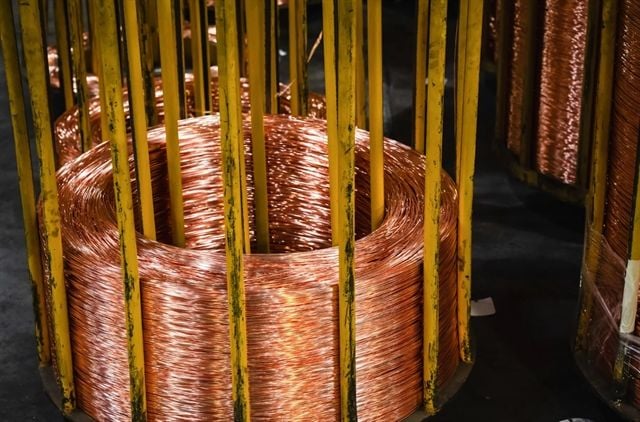
While global markets often focus on oil or gold, the metals sector is seeing a quieter shift: the United States has been building the largest copper stockpile in decades. The accumulation has begun to distort global trade flows and has contributed to pushing copper prices higher.
One key driver is the trade policy environment following Donald Trump’s return to the White House in early 2025. Fears that the US could impose tariffs on refined copper— the most commonly traded form—helped lift copper prices in the US above the London Metals Exchange (LME) benchmark.
That price gap encouraged large commodity traders, including Mercuria Energy Group, Trafigura Group, and Hartree Partners, to increase shipments of copper to the United States to capture the differential.
The flow paused briefly in July 2025 when the US did not impose a direct tariff on refined copper. Instead, the US imposed a 50% tariff on semi-finished products such as wires and tubes. As the broader tariff threat persisted, copper flows to the US resumed.
According to the US Geological Survey (USGS), the US imported up to 1.7 million tonnes of copper in 2025, nearly double the previous year.
There is no single official total figure for stockpiles, but market data indicate that US inventories have surged. Copper stored in CME Group-licensed warehouses—used to support Comex futures trading—has risen steadily since the start of 2025. As of early February 2026, that figure stood at about 534,000 tonnes, the highest since 1989 and more than five times the level from the same period a year earlier.
If copper held outside trading warehouses is included, total copper in the United States could be around 1 million tonnes, according to estimates by BMO Capital Markets. That amount is equal to the annual production of the world’s largest copper mine, Escondida in Chile.
The concentration of copper in the US has contributed to a relative shortage elsewhere, particularly as disruptions have affected mines across South America and Southeast Asia. Copper prices have risen sharply as a result.
In late January 2026, copper on the LME surpassed $14,500 per tonne, reaching a historic peak. Goldman Sachs analysts said copper prices are above fundamentals, while BNP Paribas argued that prices above $11,000 per tonne are mostly speculative.
Higher prices have also fed back into trade patterns. Refined copper imports into the US in 2025 surged, nearly doubling the four-year average, according to the USGS.
At the same time, copper-using industries face cost pressures. In China, the world’s largest copper user, many factories have had to curb production because they cannot fully pass higher input costs to customers. Across sectors including construction, electrical equipment manufacturing, EVs, and technology infrastructure, rising copper costs can affect company margins and potentially lift consumer prices.
Whether the stockpile is the result of a deliberate US strategy remains unconfirmed. However, the plan to build a $12 billion mineral reserve under the name “Project Vault” suggests the US is increasingly prioritizing resource security.
Experts cited in the article say the amount of copper stockpiled in the US is unlikely to fall soon and could continue rising as businesses hedge against price and supply risks. Still, if copper flows were to suddenly return to global markets, prices could face downward pressure and trigger renewed volatility.
Historically, during the Cold War, the US stocked enough copper for 10 months. Today, the stockpile is about 1 million tonnes, roughly equivalent to seven months of demand—still not large enough to eliminate market risk, but sufficient to potentially drive disruptions.







Premium gym chains are entering a “golden era” that is ending or already in decline, as rising operating costs collide with shifting consumer preferences toward more flexible, community-based ways to exercise. Long-term memberships are shrinking, margins are pressured by higher rents and facility expenses, and competition from smaller, more personalized…




