•
•
•
•
•
•
•
•
•
•
•
•
•
•
•
•
•
•
•
•
•
•
•
•
•
•
•
•
•
•
•
•
•


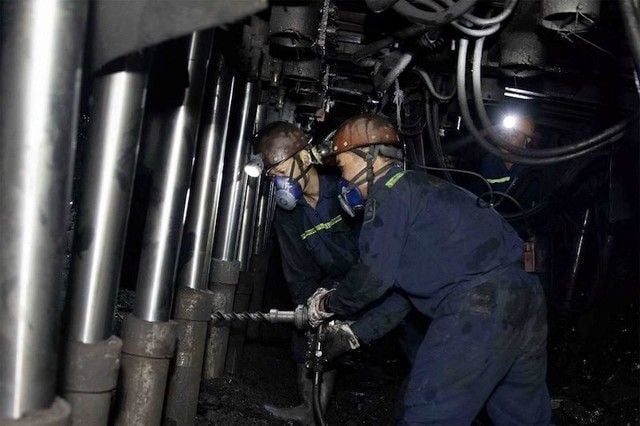
Investment results in the first four months of 2026 show realized investment value of 1,070 billion dong in April, bringing the four-month total to 3,425 billion dong—equivalent to 134% of the same period in 2025.
By sector, investment in the coal segment exceeded 2,400 billion dong, up 27% year-on-year. The electricity sector reached 483 billion dong, up 174% year-on-year. The minerals-chemicals sector recorded 416 billion dong, up 11% year-on-year. Other sectors totaled 60 billion dong.
Alongside investment realization, disbursement of investment capital in the four months reached over 2,700 billion dong, up 16% year-on-year.
TKV has approved/authorized 22 projects and adjusted/shifted 34 projects for implementation.
For key projects, the Deputy General Director instructed units to ensure excavation progress for large underground mine projects; start new projects in Q2 2026; accelerate coal conveyor belt projects; and ensure progress of thermal power projects, especially Na Dương 2 Thermal Power Plant.
For mine projects, units were asked to focus on completing shaft excavation and basic construction, particularly two key projects at Ha Long Coal Company and Mau Khe Coal Company. In addition, units should urgently accelerate settlement procedures for completed projects.
The No. 4 Coal Preparation Plant has been modernized with a designed capacity of 7 million tons per year at the Cửa Ông Coal Preparation Plant.
In the context of Vietnam’s commitment to achieve net-zero emissions by 2050, hydrogen and green ammonia are positioned as new energy sources. TKV is developing a hydrogen development roadmap to shift growth from a “high-carbon” to a “low-carbon” model.
Studies indicate TKV has advantages to form integrated hydrogen hubs. The group owns more than 41 million m2 of waste dumps and already-closed mine areas, providing space to develop solar and wind projects with a scale of 3–5 GW. This electricity input is intended to support green hydrogen production via electrolysis.
In addition to land, TKV also has advantages in port systems, warehousing, and logistics infrastructure in Quảng Ninh, which are expected to help reduce investment costs for hydrogen storage and green ammonia hubs.
TKV’s internal hydrogen demand is a key driver. In chemicals, MICCO currently consumes about 13,500 tons of hydrogen per year through imported ammonia to produce industrial explosives. In the power sector, coal-fired plants such as Cẩm Phả, Na Dương, and Cao Ngạn can use ammonia for co-firing, with hydrogen demand conversion of over 205,000 tons per year after 2030. Hydrogen can also be used to replace fuel for mine trucks and furnaces in metallurgy.
TKV’s roadmap is built in three stages:
Premium gym chains are entering a “golden era” that is ending or already in decline, as rising operating costs collide with shifting consumer preferences toward more flexible, community-based ways to exercise. Long-term memberships are shrinking, margins are pressured by higher rents and facility expenses, and competition from smaller, more personalized…