•
•
•
•
•
•
•
•
•
•
•
•
•
•
•
•
•
•
•
•
•
•
•
•
•
•
•
•
•
•
•
•
•


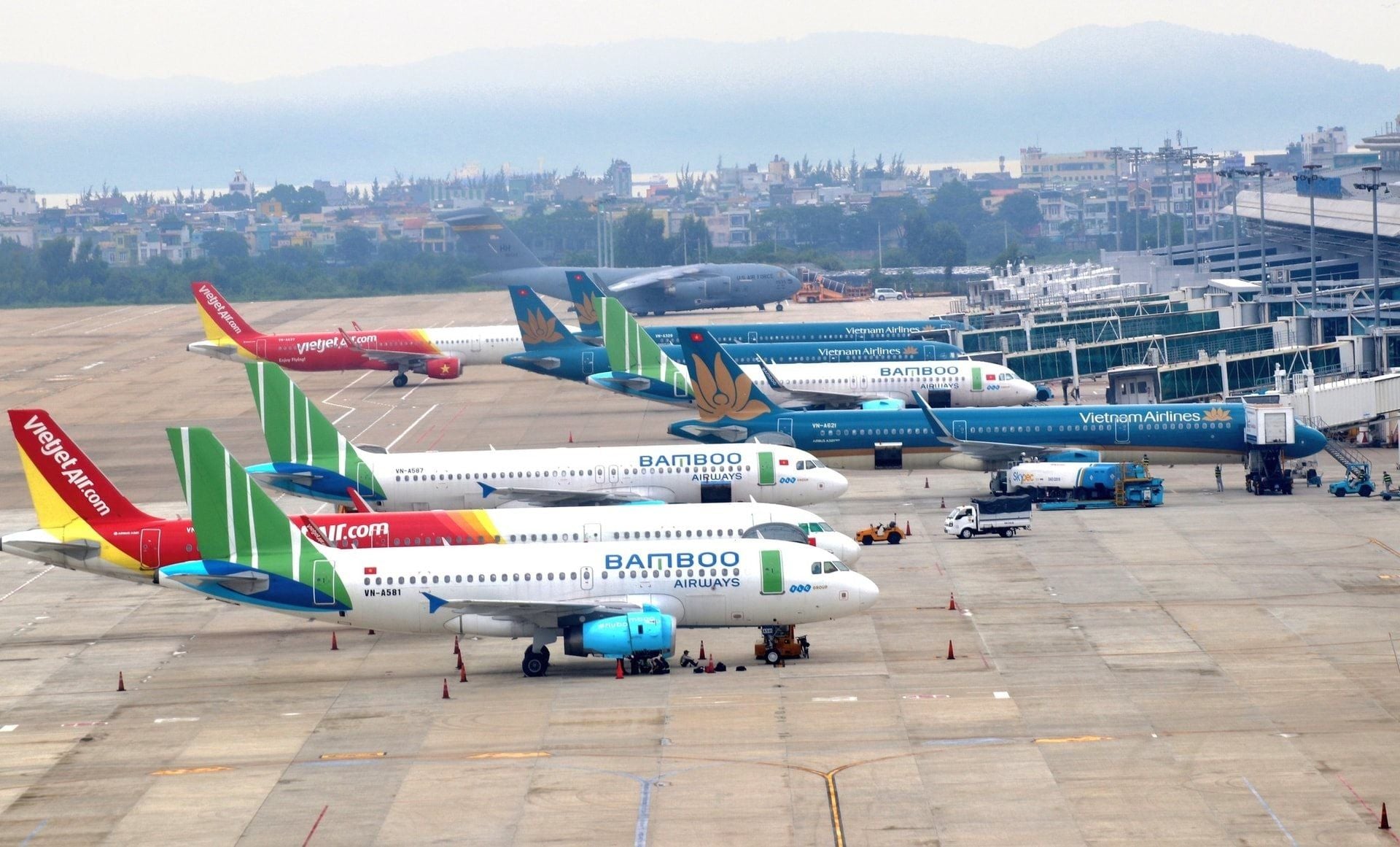
Vietnam’s national airport system planning for 2021-2030 with a vision to 2050 will expand the network from the current scale to 33 airports by 2050, including 14 international and 19 domestic airports, according to a report submitted to the Government and cited by the Government Portal.
The Ministry of Construction said the network planning through 2030 includes 30 airports: 14 international and 16 domestic. Looking toward 2050, the system is expected to expand to 33 airports, with the international-to-domestic mix shifting to 14 international and 19 domestic.
For the 2030 horizon, the plan expects that 15 out of 31 airports will be international.
The Ministry also noted that 12 potential sites are still being studied for possible addition to the national airport system planning.
The Ministry said it has added Gia Binh International Airport and Tho Chu Airport to the planning in a streamlined manner.
It also indicated it will focus on studying the feasibility of adding more international airports, including Ninh Binh, Hung Yen, and a second airport for the capital region. The ministry said it is considering adjusting the scale of Con Dao International Airport and redefining the role of Hai Phong Airport.
To avoid affecting the pace of planning and investment in Mang Den, Van Phong, and Quang Tri airports, the Ministry recommended separating these three airports from the overall adjustment process of the national airport system plan.
Under the Ministry’s proposal, by 2030 more than 95% of Vietnam’s population will be able to access an airport within a 100-km radius. The report said this exceeds the global average of 75% and is comparable with regional peers, including Japan (99%), South Korea (100%), Malaysia (98.13%), the Philippines (93.62%), and Thailand (88%). China was cited at 73.37%.
On international airport numbers, the plan through 2030 envisions 15 of 31 airports being international. The Ministry said this ratio is aligned with South Korea’s 8 of 15 international airports and higher than several regional countries, including Thailand (10 of 39), Malaysia (7 of 38), and Japan (29 of 97).
The Ministry of Construction said Vietnam’s current airport network scale is comparable to many regional countries. It cited Thailand at 39 airports, Malaysia at 38, Myanmar at 32, Japan at 97, and South Korea at 15.
On May 7, Deputy Prime Minister Pham Gia Tuc chaired a meeting to review progress and outline adjustments to the nationwide airport system planning for 2021-2030 with a vision to 2050.
The meeting concluded that airport-system planning must be strategic, cohesive, comprehensive, and long-term toward 2050, even over a 100-year horizon, and should limit frequent revisions. It should also connect with other transport modalities, the national master plan, regional planning, and related sector plans.
For proposals to add Mang Den and Van Phong airports, the Deputy PM asked the Ministry to study them within the broader regional development framework, clarifying connectivity with road infrastructure, interregional routes, and development potential. Investment should be planned carefully regarding domestic and foreign funding and multipurpose use, and studies should examine linkages with regional airports and the interregional transport network.
The Deputy PM also stressed that even with private sector involvement, airport operation efficiency must be carefully weighed. The guidance warned against over-spreading investment where every locality has an airport but effectiveness is not ensured, noting that this could complicate operations. The meeting further emphasized air cargo transport, linked to tourism, services, and a cohesive infrastructure network.
The Ministry of Construction was asked to absorb all opinions from ministries and agencies, continue studying and completing the basis for formulating and adjusting the nationwide airport-system plan, and report to the competent authority in Q2 2026, as referenced in Conclusion 18 of the Party’s Central Committee. It was also tasked with accelerating coordination with relevant ministries and localities to finalize the report for the Prime Minister.
Premium gym chains are entering a “golden era” that is ending or already in decline, as rising operating costs collide with shifting consumer preferences toward more flexible, community-based ways to exercise. Long-term memberships are shrinking, margins are pressured by higher rents and facility expenses, and competition from smaller, more personalized…