•
•
•
•
•
•
•
•
•
•
•
•
•
•
•
•
•
•
•
•
•
•
•
•
•
•
•
•
•
•
•
•
•


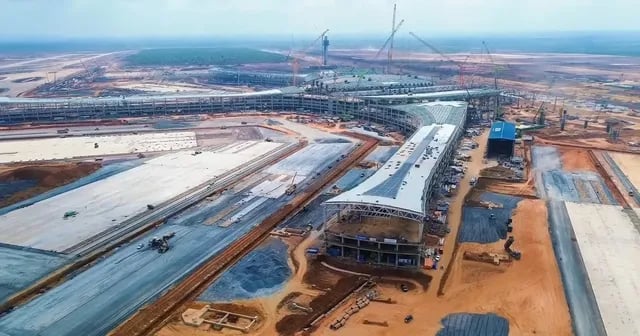
ACV (Vietnam Airports Corporation) has sent a document to the Ministry of Construction, the Ho Chi Minh City People’s Committee, and the Dong Nai People’s Committee to request consideration of arranging railway lines within the scope of Long Thành International Airport.
ACV said Đại Quang Minh Real Estate Investment Joint Stock Company has submitted a document to ACV seeking feedback on the route plan and station locations for the Thủ Thiêm–Long Thành railway project.
ACV also coordinated with relevant units on an investment plan for a metro segment within the Long Thành airport area. The plan is for a project extending the Ben Thanh–Suoi Tien metro line to the City Hall area of Ho Chi Minh City and the Long Thành airport.
ACV said the expected scope would include three railway lines: the North–South high-speed rail line; the Thủ Thiêm–Long Thành line; and an extension of the Ben Thanh–Suoi Tien metro line to the City Hall, the Long Thành airport, with construction of railway stations connecting to the airport.
For the project extending the Ben Thanh–Suoi Tien line to the City Hall and the Long Thành airport, ACV stated it has not yet received master planning or route proposals, nor approved station locations. As a result, ACV said it lacks sufficient basis to review and provide feedback to the investors of the railway projects.
ACV asked the Ministry of Construction to lead, or assign competent authorities to lead, a re-examination of overall planning. ACV said the aim is to ensure all railway lines around the Long Thành airport area are arranged to avoid overload in space planning among lines, construction conflicts, and potential operational risks between the railways and the airport.
ACV also requested the Ministry of Construction, the Ho Chi Minh City People’s Committee, and the Dong Nai People’s Committee to direct railway project investors to actively cooperate, develop route plans and station locations, and ensure synchronization and consistency across planning, construction, and operation.
Premium gym chains are entering a “golden era” that is ending or already in decline, as rising operating costs collide with shifting consumer preferences toward more flexible, community-based ways to exercise. Long-term memberships are shrinking, margins are pressured by higher rents and facility expenses, and competition from smaller, more personalized…