•
•
•
•
•
•
•
•
•
•
•
•
•
•
•
•
•
•
•
•
•
•
•
•
•
•
•
•
•
•
•
•
•


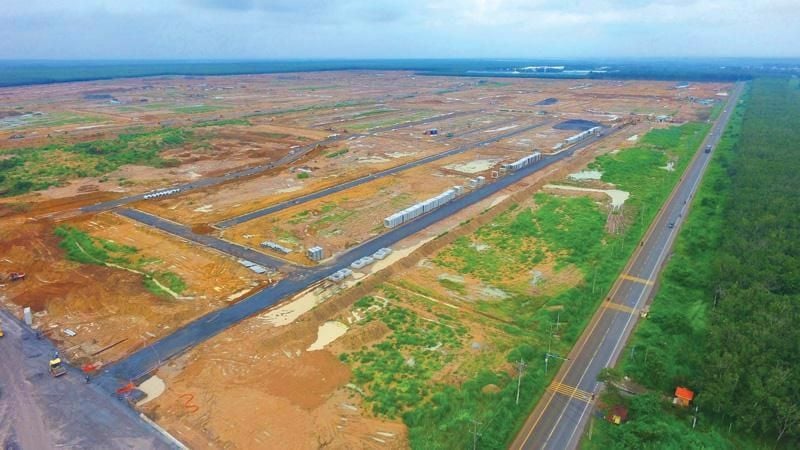
The draft decree sets out a legal framework to address long-standing, lingering projects by defining procedures for reviewing conditions, adjusting changes, and determining additional financial obligations. On April 29, 2026, the Ministry of Justice released the appraisal dossier for the draft Government Decree guiding the implementation of special mechanisms and policies to remove difficulties and bottlenecks for lingering projects under Resolution 29/2026/QH16 dated April 24, 2026. The dossier was prepared by the Ministry of Agriculture and Environment.
On April 24, 2026, the National Assembly passed Resolution 29/2026 on special mechanisms and policies to address breaches of land law by organizations and individuals that occurred before the 2024 Land Law took effect, and to remove difficulties and bottlenecks for lingering projects. The draft decree is intended to guide the implementation of these special mechanisms and policies.
The draft decree comprises five chapters and fourteen articles. Chapter II provides a unified framework for projects that have been issued land-use certificates not in accordance with regulations. It focuses on reviewing conditions, adjusting changes, and determining additional financial obligations. The draft also establishes mechanisms and procedures for handling projects involving violations related to investor selection and land management, while allowing such projects to continue to be allocated land or leased land under special policies.
To determine which processing mechanism applies, the policy defines principles for classifying projects based on Articles 4 and 5 of Resolution 170/2024/QH15 dated November 30, 2024, which addresses land and land-related issues identified in inspection conclusions and judgments in Ho Chi Minh City, Da Nang, and Khanh Hoa, to select the appropriate processing sequence.
On that basis, the decree will reference procedures for reviewing continued land use, completing legal formalities, and re-determining land prices and financial obligations to ensure consistency in handling projects.
Chapter IV sets out the process for reviewing and deciding whether a project may continue to use land, including clear authority and processing time limits. Under the draft, the Finance Department will lead the review of conditions for each project, compile results, and prepare files for submission to the provincial People’s Committee.
Within no more than five working days from receipt of a complete file, the provincial People’s Committee must decide whether to permit the project to continue. Following that decision, the Department of Agriculture and Environment will advise on land allocation, leasing, or changes in land use in accordance with law.
If a project does not meet the criteria to continue, the draft provides that it will be handled under land-recovery procedures due to violations of land law, to ensure legal consistency.
According to the draft, as of March 30, 2025, the country recorded 4,489 projects with land-related difficulties, covering 198,428.1 hectares and total investments of 3,352,946.9 billion VND.
Under Resolution 29, for violations by organizations or individuals that occurred before the 2024 Land Law took effect, competent authorities will not pursue criminal liability in two cases: (1) where there is no embezzlement or waste of state assets; and (2) where embezzlement or waste exists, provided that conditions (1) are met and all consequences have been remedied.
The resolution also provides for suspending enforcement, waivers, reductions, and expunging criminal records for cases with final judgments.
The draft decree is designed to support timely removal of bottlenecks and help free up land resources for projects affected by long-standing land-related difficulties.

Premium gym chains are entering a “golden era” that is ending or already in decline, as rising operating costs collide with shifting consumer preferences toward more flexible, community-based ways to exercise. Long-term memberships are shrinking, margins are pressured by higher rents and facility expenses, and competition from smaller, more personalized…