•
•
•
•
•
•
•
•
•
•
•
•
•
•
•
•
•
•
•
•
•
•
•
•
•
•
•
•
•
•
•
•
•


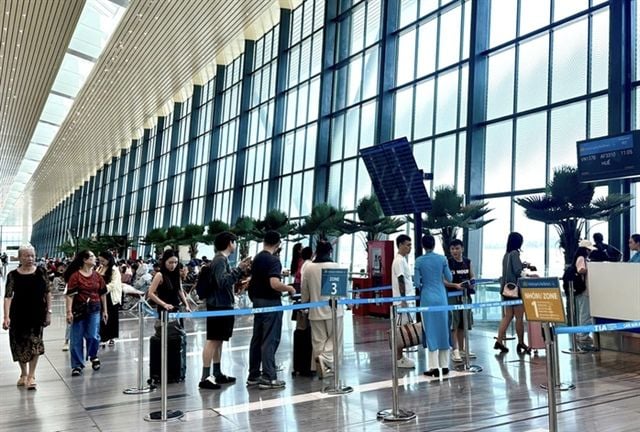
Air passengers at Tan Son Nhat International Airport surged on the final day of the holiday, with Hanoi–Ho Chi Minh City airfares remaining high. On May 3, 2026, Tan Son Nhat reported as many as 795 flights operating that day, up sharply from earlier days. This day recorded the highest flight volume at Tan Son Nhat across the two holiday periods—the Hung Kings' commemorations and the 30 April–1 May break. Total passengers were expected to reach about 136,800, an increase over previous days. Of these, outbound passengers numbered more than 61,700 and arrivals exceeded 75,000, reflecting strong demand to return to Ho Chi Minh City and southern provinces on the holiday’s last day. Domestically, passenger numbers rose by more than 46,500, evenly split among Terminal 1 (operated by VietJet) and Terminal 3 (Vietnam Airlines, Pacific Airlines, Vasco, Bamboo Airways, Vietravel Airlines, Sun PhuQuoc Airways). To handle the surge, Tan Son Nhat International Airport coordinated with agencies to implement passenger service plans, ensure security and safe operations during the two holidays, and to promptly coordinate with units to update flight arrivals and departures in real time to balance resources during peak hours. Quick market observation at noon on 3 May found airlines selling many Hanoi–Ho Chi Minh City departures with the lowest price around 3.33 million VND per passenger. Regular fares for Vietjet, Vietravel Airlines and Sun PhuQuoc Airways on this route were around 3.6–3.7 million VND per passenger, while Vietnam Airlines commonly priced around 4 million VND per leg. Accordingly, a family of four would spend about 13.3–16 million VND for the Hanoi–HCMC leg. From tomorrow, May 4, fares on this route are expected to ease to roughly 2.5–2.7 million VND per passenger. Passengers are advised to check in online within 24 hours prior to departure via the airline’s website or app or on VNeID to complete procedures quickly and minimize airport wait times. Thái Phương; Photo: Lam Giang





Premium gym chains are entering a “golden era” that is ending or already in decline, as rising operating costs collide with shifting consumer preferences toward more flexible, community-based ways to exercise. Long-term memberships are shrinking, margins are pressured by higher rents and facility expenses, and competition from smaller, more personalized…