•
•
•
•
•
•
•
•
•
•
•
•
•
•
•
•
•
•
•
•
•
•
•
•
•
•
•
•
•
•
•
•
•



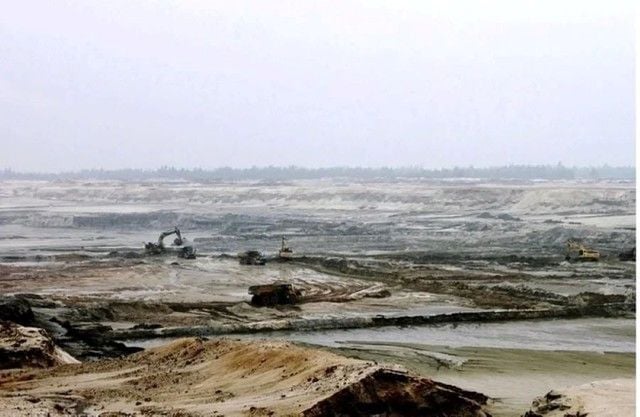
During a public meeting on April 29, 2026, fish-farming households in Group 4, Tan Thanh Ward, Ca Mau province, brought dead fish to the meeting to demonstrate the impact on their stocks. At a working session on May 7, Deputy Chairman Le Van Su of Ca Mau Province discussed the damage handling plan with the project investor and contracting units in Tan Thanh ward. He stressed that the handling must be objective, balancing the interests of all parties, and acknowledged that while the airport project is a key project, it cannot allow violations of local people’s rights and livelihoods. Environmental monitoring data identified a technical cause originating from constructing a low embankment, resulting in a breach along the Duong Xuong canal during sand filling. Sampling results showed salinity levels ranging from 9.84% to 14.36%, with a peak at 22%, exceeding the safe threshold for freshwater ecosystems. The incident directly affected 85.38 hectares of production across 92 households. From a financial perspective, this damage places substantial pressure on compensation due to large differences in profitability between farming models. Specifically, per 1,000 m2, eel farming requires an investment of 238 million VND with expected profit of 100 million VND, while rice yields about 800,000 VND per crop. Thus, the economic value per hectare of eel farming is about 125 times higher than rice, making compensation calculations complex and dependent on investment costs and actual income. As of the report, the inter-agency task force has completed damage inventories for 39 of the 92 households. To fully address salinity, the agreed technical plan includes installing two large pumping stations to drain and desalinize brackish water during rainfall; currently, the entire canal network in the area shows high salinity, making manual desalination infeasible. The Ca Mau Provincial People’s Committee requires ACV and the contractor to immediately tighten supervision processes to prevent further saline leaks in subsequent stages and to promptly agree on a financial support plan to help residents restore production as soon as possible.
Premium gym chains are entering a “golden era” that is ending or already in decline, as rising operating costs collide with shifting consumer preferences toward more flexible, community-based ways to exercise. Long-term memberships are shrinking, margins are pressured by higher rents and facility expenses, and competition from smaller, more personalized…