•
•
•
•
•
•
•
•
•
•
•
•
•
•
•
•
•
•
•
•
•
•
•
•
•
•
•
•
•
•
•
•
•


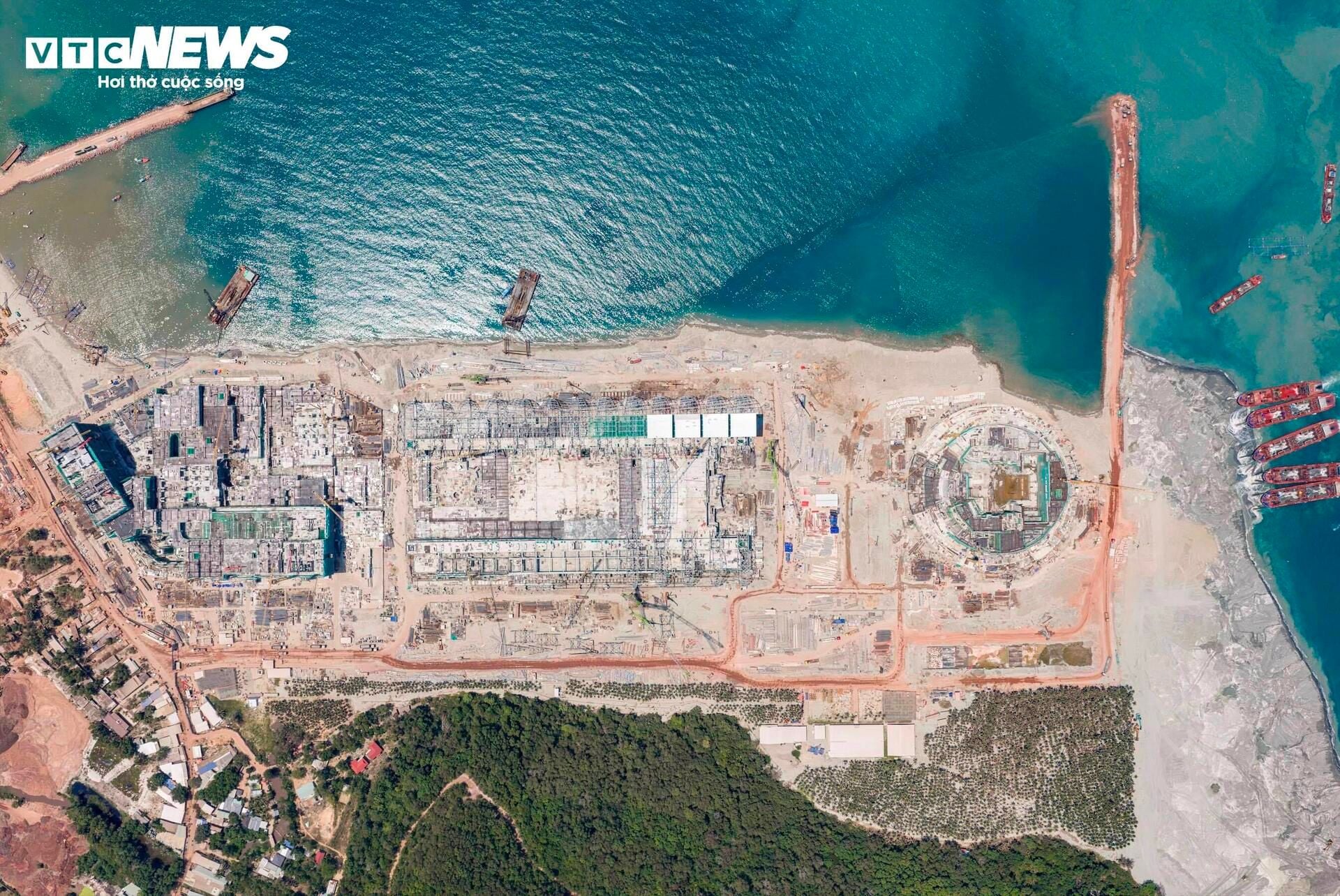
Vietnam will host the Asia-Pacific Economic Cooperation (APEC) summit for the third time in 2027, with the central venue planned for the Phu Quoc Special Economic Zone in An Giang province. The preparation includes 21 key projects to support APEC 2027, with total investment running into the hundreds of trillions of dong, as Phu Quoc moves into a pivotal development phase.
The centerpiece of the complex, the APEC Conference Center, has advanced toward its milestone, with the steel structure accounting for about 90% of the work. The center is designed with a steel roof frame featuring wave-like curves that are intended to define the project’s signature character.
According to the latest progress report, 13 of 13 spans on the sea-side U-axis have been erected, while 5 of 13 spans on the mountain-side A-axis have been completed.
The facility covers about 11,050 square meters and includes an 81-meter-wide, column-free span, intended to set a global benchmark. To achieve this width without central columns, the steel roof is estimated to weigh about 12,000 tonnes. The roof is distributed and suspended from two sides rather than supported directly by the ground.
Alongside the conference center, the multipurpose hall is also progressing. The reinforced concrete framework has reached roughly 85% completion. By the end of April, the first steel components are scheduled to be delivered to the site to begin intensive assembly.
Exterior finishing is planned for 30 October 2026, while interior completion is targeted for 31 January 2027. The interior phase in early 2027 is expected to position the facility as a premier MICE venue, aligned with international standards and benchmarks such as Marina Bay Sands (Singapore) and the International Convention Centre Sydney (Australia).
When operational, the complex is set to serve not only APEC 2027 but also function as a strategic platform for major international events, helping place Vietnam at the center of regional and global gatherings.




Premium gym chains are entering a “golden era” that is ending or already in decline, as rising operating costs collide with shifting consumer preferences toward more flexible, community-based ways to exercise. Long-term memberships are shrinking, margins are pressured by higher rents and facility expenses, and competition from smaller, more personalized…




