•
•
•
•
•
•
•
•
•
•
•
•
•
•
•
•
•
•
•
•
•
•
•
•
•
•
•
•
•
•
•
•
•


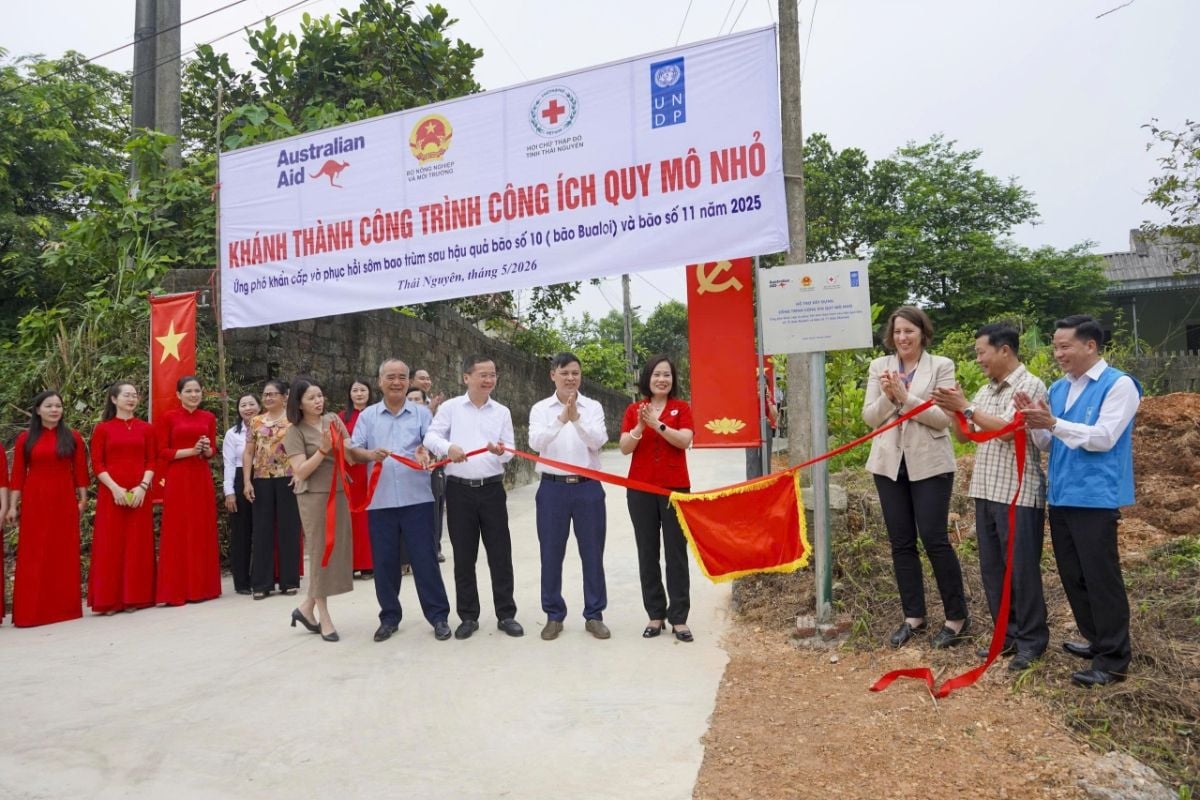
The disaster-resilient housing project in Thai Nguyen, supported by Australia and the UNDP, is designed to help residents recover from the 2025 typhoons. Beyond providing shelter, the initiative aims to strengthen long-term resilience to climate change and improve community protection against increasingly severe extreme weather.
During a working trip to Thai Nguyen on May 6, 2026, international delegates visited disaster-affected areas, witnessed the handover of an upgraded rural road, and attended the groundbreaking ceremony for new housing for residents.
In October 2025, Typhoons Matmo and Bualoi triggered widespread floods and landslides across northern and central provinces. In Thai Nguyen, floodwaters on the Cau River surpassed historic flood levels, inundating more than 200,000 homes and seriously affecting households, particularly the poor and vulnerable living along the river. The province’s total economic damages were estimated at 4,295.6 billion VND.
A grant of non-reimbursable assistance for emergency response and early recovery covering Thai Nguyen was also announced.
In response, the Australian Government supported Vietnam’s post-disaster reconstruction activities. The project prioritizes assistance for vulnerable groups, including the poor, near-poor, women, ethnic minorities, children, the elderly, people with disabilities, and communities displaced by disasters.
One core component is to build and repair 60 houses for households heavily affected by the storms, providing safer housing against increasingly extreme weather events. The program also includes constructing and upgrading rural road corridors to improve connectivity for travel and production.
Beyond housing and infrastructure, the initiative strengthens local disaster-response capacity for village-level rapid-response teams, provides rescue equipment, delivers multipurpose cash assistance, and supports livelihood restoration. Local cooperatives receive backing to resume production quickly, create jobs, and stabilize incomes for affected communities.
Renée Deschamps, Australia’s Deputy Ambassador to Vietnam, said Australia remains committed to supporting Vietnamese people in difficult times. “Being here in Thai Nguyen today, witnessing the positive impact of Australia’s support and the resilience of the people after last year’s floods is deeply moving,” she said.
At the groundbreaking, Hoàng Thị Liên, a beneficiary, said her family’s previous house was severely damaged by floods. She said the new home support will help her family stabilize and reduce risks from future disasters.
Mr. Nong Quang Nhất, Vice Chairman of the Thai Nguyen People’s Committee, praised collaboration among the Vietnamese Government, Australia, and UNDP. He said climate change is driving more severe impacts in many countries, including Vietnam, and that timely support has helped communities stabilize and restore livelihoods.
In addition to housing construction and repairs, the project upgrades two rural road corridors to improve connectivity and safety during the monsoon season and to support commerce and local livelihoods.
UNDP Vietnam said lessons learned from the Thai Nguyen project will inform future emergency response, recovery, and resilience-building efforts in Vietnam.
From the Ministry of Agriculture and Rural Development, Mr. Nguyễn Văn Tiến, Deputy Director of the Department of Dyke Management and Disaster Prevention, stated that investing in repairing and upgrading rural roads helps mitigate flood damages while restoring connectivity—supporting travel, production, trade, and access to essential services. He linked this approach to early recovery tied to sustainable development.
The article also notes the importance of building a national disaster picture for Vietnam over the next 10–15 years.

Premium gym chains are entering a “golden era” that is ending or already in decline, as rising operating costs collide with shifting consumer preferences toward more flexible, community-based ways to exercise. Long-term memberships are shrinking, margins are pressured by higher rents and facility expenses, and competition from smaller, more personalized…