•
•
•
•
•
•
•
•
•
•
•
•
•
•
•
•
•
•
•
•
•
•
•
•
•
•
•
•
•
•
•
•
•


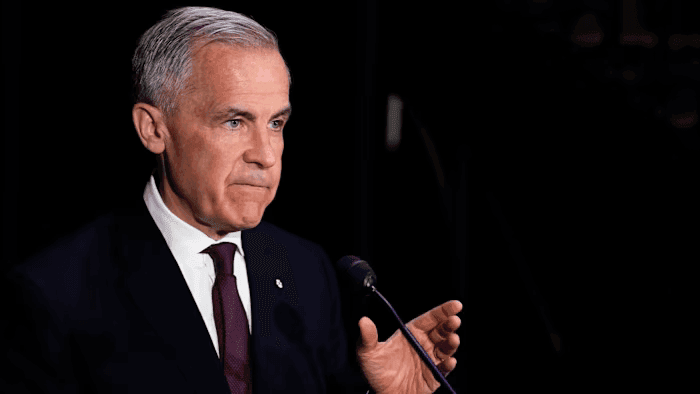
Canada’s Prime Minister Mark Carney announced the creation of a federal national investment fund, the Canada Strong Fund, with a size of CAD 25 billion (about USD 18.4 billion). The fund is intended to finance projects of national importance while generating financial returns for Canadians, and it would be the first federally funded national investment fund in the country.
Carney said the initiative is part of a broader effort to bolster growth and position Canada as the strongest economy among the G7 amid high tariffs on key exports under U.S. President Donald Trump. He said the fund would work with the private sector to finance 15 infrastructure projects coordinated by the Major Projects Office (MPO).
The MPO was established in August last year to promote projects of national significance. Carney said the fund would scale over time by recycling capital from existing assets and reinvesting profits, creating opportunities for future generations.
He added that Canadians could participate through a product designed for individual investors. Carney compared the approach to national investment funds used in other resource-rich countries, noting that Canada has not previously had a federally funded equivalent.
Jon Shell, president of Social Capital Partners in Toronto, said the Canada Strong Fund can be compared to Norway’s sovereign wealth fund or Alberta’s fund. He said the key difference is the objective: Norway and Alberta’s funds are designed to preserve and grow wealth from natural resources, while the Canadian fund—if implemented properly—would act as a source of capital for an industrial strategy aimed at improving economic self-sufficiency.
The announcement comes ahead of the Spring Economic Update, which Finance Minister Francois-Philippe Champagne is scheduled to present to Parliament on Tuesday (28 April). Carney said the update would include “good news” on the deficit.
According to the article, in 2025 Canada’s budget deficit rose to CAD 78 billion from CAD 42 billion the previous year, partly due to government defense spending. Ottawa forecast the deficit would fall to CAD 57 billion in the 2029–2030 fiscal year.
Carney said Canada has benefited from rising oil prices following regional tensions in the Middle East. Earlier this month, he also announced plans to host the first investment summit in Toronto in September to promote foreign direct investment and help Canada reach CAD 1 trillion in investment over the next five years.
However, the article notes that several major Canadian industries expressed disappointment with the slow pace of regulatory reform. Simplifying and accelerating procedures is viewed as essential to helping Canada mitigate the impact of U.S.-led trade tensions under the Trump administration.
When asked whether the new fund overlaps with the Canada Infrastructure Bank (CIB), established in 2017 under the previous government, Carney said the CIB primarily provides loans. He said the new initiative would be designed to generate market-based returns for Canadians.
Carney concluded: “This is a fund of the Canadian people, and all of us will benefit.”







Premium gym chains are entering a “golden era” that is ending or already in decline, as rising operating costs collide with shifting consumer preferences toward more flexible, community-based ways to exercise. Long-term memberships are shrinking, margins are pressured by higher rents and facility expenses, and competition from smaller, more personalized…