•
•
•
•
•
•
•
•
•
•
•
•
•
•
•
•
•
•
•
•
•
•
•
•
•
•
•
•
•
•
•
•
•


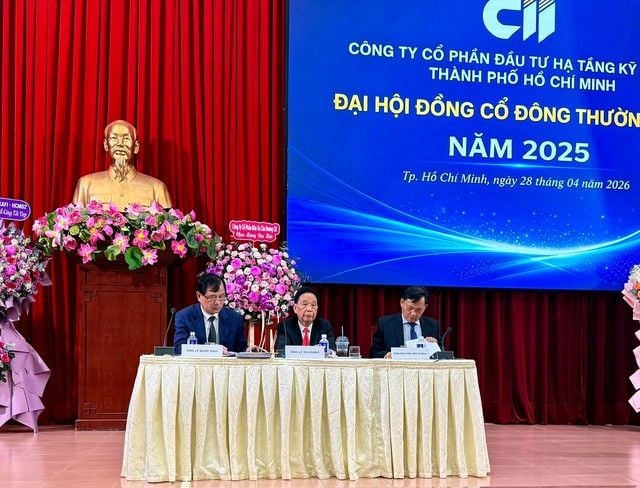
At the 2026 annual general meeting (AGM), CII leadership held direct discussions with shareholders on interest costs, dividend sustainability, and the feasibility of the Hang Xanh TOD project. Management said the company will maintain cash dividends supported by cash flow, while addressing concerns that new borrowing could be used to fund dividends and potentially erode profits.
Shareholders raised questions about whether interest expenses are eroding earnings and whether the company could face a cycle of “new debt to pay existing dividends.” They also asked about free cash flow from BOT projects after debt service and the origin of the 16% cash dividend planned for 2026.
CEO Le Quoc Binh denied that CII would refinance to pay dividends. He said cash flow is secured from mature real estate projects, including NBB2 and NBB3, as part of a strategy to use real estate cash generation to fund long-term infrastructure.
On BOT cash flows, Binh said depreciation and interest costs are large in the early stage. He added that this segment is expected to balance by 2029 and then begin contributing significant surplus after principal repayment.
To reduce liquidity pressure, management said the company plans to issue 25-year convertible bonds to restructure debt into a longer maturity profile.
Management also stated that a large realized profit has been completed but must be booked on the books under strict accounting standards (VAS). The company accepts lower book profits to comply, while maintaining that actual cash flow remains robust enough to sustain dividends.
Another focus was the Hang Xanh TOD mega-project. Shareholders questioned the market’s ability to absorb the development and the financial strength required to maximize the land bank, including whether CII would seek strategic partners.
Le Quoc Binh said that, globally, there are no TOD projects that incur losses. He described the project as located at the intersection of Metro lines 3 and 5 in Ho Chi Minh City, with a focus on offices and services for small and medium-sized businesses (SMBs). He said this direction provides liquidity advantages compared with traditional real estate projects.
Management reported that dozens of financial institutions from Singapore and Japan have expressed interest in partnering. CII will act as proposer and develop core infrastructure, while office and retail towers would be shared with capable international operators.
Shareholders also asked for clarification on debt barriers and capital tied up in Thu Thiem. They requested legal clearance updates and suggested that CII consider selling land parcels to recover capital faster rather than allowing interest costs to continue eroding profits.
In response, CII leadership said all BT infrastructure has been settled and offset by real land, with no capital being sunk. The company said it is mainly facing opportunity costs while waiting for the legal clearance process, expected to complete in 2025–2026.
Management said it is prepared to wholesale sell land parcels if they are priced to recover invested capital, instead of holding land until price peaks. It described this flexibility as a way to counter interest costs and ensure financial safety for the system.
Binh cited the 2014 market freeze as a lesson, saying the company will follow a “build fast, sell near market price, and recover capital early” approach. He added that partnering and profit-sharing on projects such as The River helps liquidity by enabling 80–90% of products to be sold immediately, reducing inventory risk.
At the close of the meeting, shareholders approved all board proposals.
For 2026, CII targets total revenue of 3,720 billion VND, after-tax profit attributable to parent shareholders of 225 billion VND, and maintaining cash dividend payout of up to 16%.
To prepare capital, the meeting approved issuing 6,719.8 billion VND of 25-year convertible bonds at 10% interest in the first four periods.
Shareholders also approved a debt guarantee of 27,093 billion VND for the Sai Gon–My Thuan Expressway BOT project to ensure project progress.
Premium gym chains are entering a “golden era” that is ending or already in decline, as rising operating costs collide with shifting consumer preferences toward more flexible, community-based ways to exercise. Long-term memberships are shrinking, margins are pressured by higher rents and facility expenses, and competition from smaller, more personalized…