•
•
•
•
•
•
•
•
•
•
•
•
•
•
•
•
•
•
•
•
•
•
•
•
•
•
•
•
•
•
•
•
•


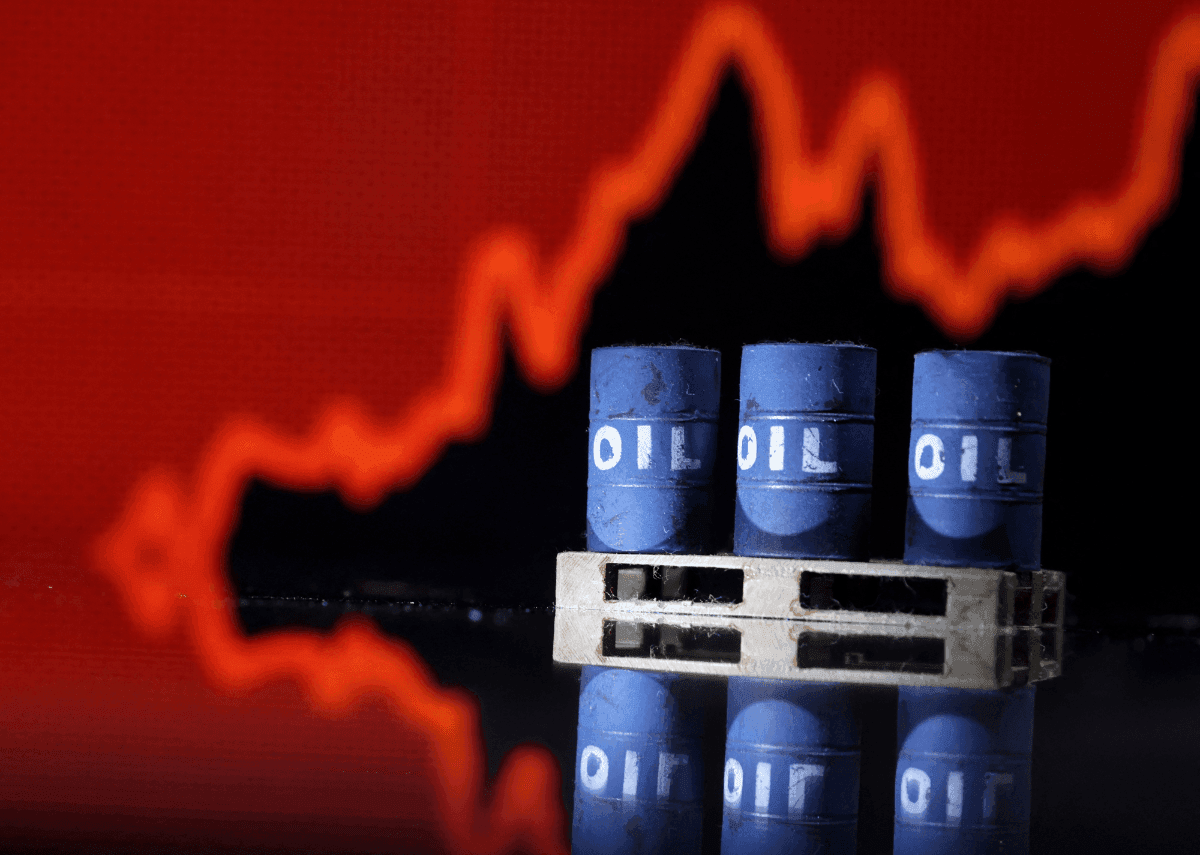
With the Hormuz Strait still blocked and Gulf oil infrastructure struggling to recover after heavy damage during the US–Iran conflict, Goldman Sachs and Citigroup have raised their oil price forecasts. In Monday’s trading session (Apr 27), Brent crude futures in London rose 2.75% to close at $108.23 per barrel, while WTI futures in New York gained 2.09% to settle at $96.37 per barrel.
Brent and WTI had gained about 16% and 15%, respectively, in the previous week as peace negotiations between the US and Iran stalled and tensions in the Hormuz Strait resurfaced. Goldman Sachs said the current price path reflects a “Hormuz shock” intended to offset supply risks.
In a report published last weekend, Goldman Sachs’ commodity analysts forecast Brent futures to average around $90 per barrel in the last three months of this year, up from a prior forecast of $80 per barrel. The note said the updated outlook implies prices about $30 higher than the firm’s pre-war forecast.
Goldman also projected that Middle Eastern oil exports will not return to normal until late June, rather than mid-May as previously expected. The crisis, it said, has reduced global oil inventories by as much as 12 million barrels per day in April.
For quarterly averages, Goldman expects Brent to average around $100 per barrel in Q2 before easing to $93 per barrel in Q3. For WTI, it forecast an average of about $83 per barrel in Q4, up from the prior estimate of $75 per barrel.
Goldman noted that oil prices have risen more than 20% since April 17, when US–Iran negotiations stalled and the US Navy began blocking the Hormuz Strait. It also referenced that when the new conflict began, Brent rose to nearly $120 per barrel in early March.
The firm said prices remain below the March peak, potentially reflecting expectations that the strait will reopen—reducing the risk premium and lowering stockpiling activity. It added that long-dated Brent futures still point to declines, with December contracts trading around $84.80 per barrel.
Goldman warned of a persistent “scar” on Gulf production, forecasting a decline of about 500,000 barrels per day lasting for some time, largely due to losses in Iraq. It also cautioned that the macroeconomic impact of higher energy prices could be larger than suggested by price data, given the scale of the shock.
Citigroup’s forecast suggests Brent could rise to $120 per barrel over the next three months, averaging $110, $95, and $80 per barrel in Q2, Q3, and Q4 2026, respectively. Previously, Citi expected $95, $80, and $75 per quarter.
In Citi’s base scenario, the Hormuz Strait is opened before the end of May, later than previously expected. Under that scenario, global oil inventories are expected to fall to their lowest in more than a decade by end-July, with a 50% probability.
Citi’s analysts said Iran has both economic and geopolitical motives to keep Hormuz closed. The report said this strategy would tighten global oil supplies further, accelerate the drawdown of fuel stocks, and push prices higher.
According to Citi, total Middle East oil output has fallen by about 500 million barrels since the conflict began. If Hormuz remains closed through May, Citi said total losses could reach 1.3 billion barrels.
Citi’s worst-case scenario, with a 30% probability, envisions Brent rising to $150 per barrel if disruption lasts through end-June. In an extremely adverse scenario involving damage to critical infrastructure, Citi said prices could rise to $160–180 per barrel and remain at those levels.



Premium gym chains are entering a “golden era” that is ending or already in decline, as rising operating costs collide with shifting consumer preferences toward more flexible, community-based ways to exercise. Long-term memberships are shrinking, margins are pressured by higher rents and facility expenses, and competition from smaller, more personalized…