•
•
•
•
•
•
•
•
•
•
•
•
•
•
•
•
•
•
•
•
•
•
•
•
•
•
•
•
•
•
•
•
•


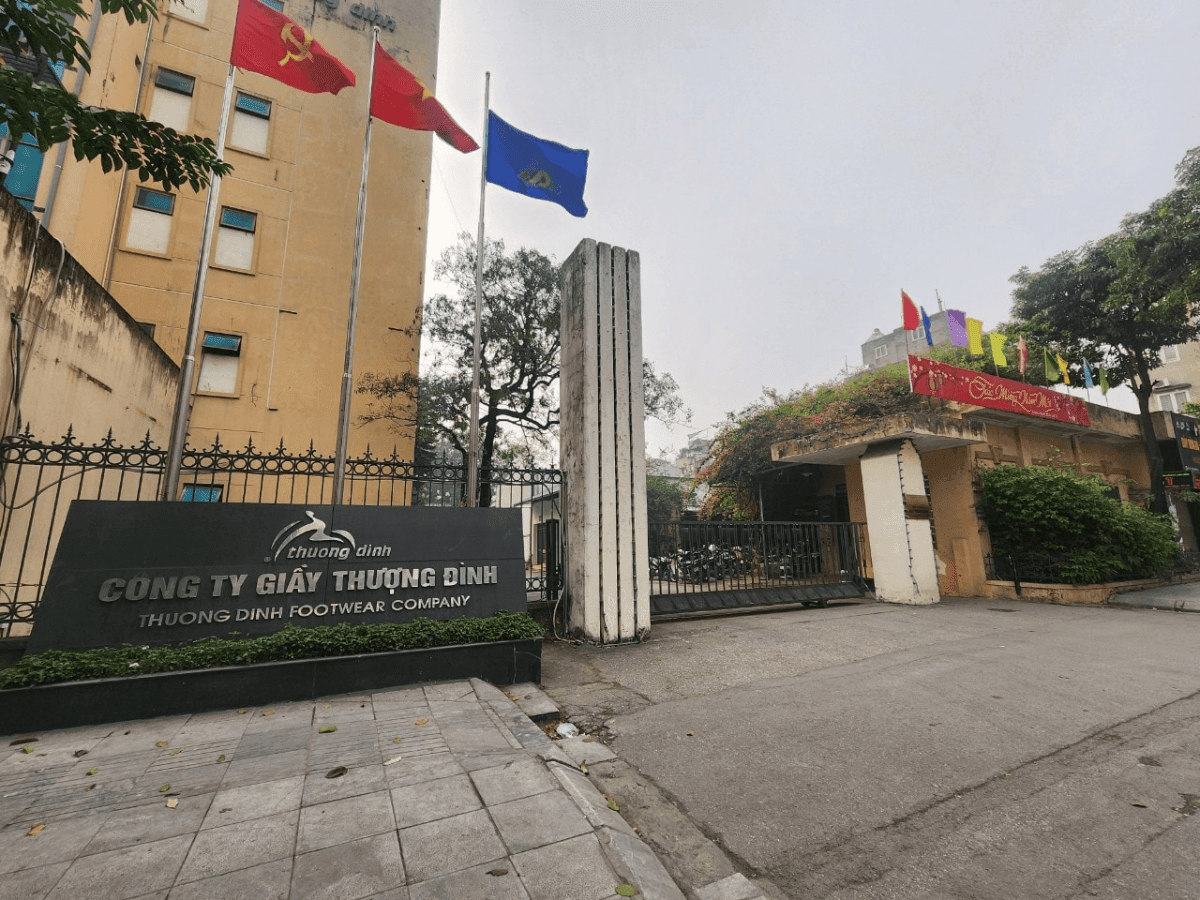
Giay Thuong Dinh Joint Stock Company (GTD) has announced a remediation plan for shares currently restricted on UPCoM, centered on a large capital increase scheduled for 2026. The company said the plan is intended to address negative equity, strengthen production and business activities, and resolve issues highlighted in recent audit opinions.
GTD’s shares were placed on the watch list due to multiple years of audit opinions with qualifications and the presence of negative equity. As of the end of 2025, the company reported cumulative losses of 105.7 billion VND and negative equity of 12.4 billion VND.
The company attributed the negative equity mainly to weak business performance and large provisions for inventories and bad debts. In addition, the audit process also pointed to a high level of unconfirmed debt, with over 60% of receivables and nearly 18% of payables still unconfirmed at the time of the audit, contributing to repeated auditor qualifications.
To remedy the situation, Giay Thuong Dinh plans to conduct a private placement of 216.5 million shares at 10,000 VND per share. The company estimates the transaction could raise approximately 2,165 billion VND.
The company stated it will continue working with customers and partners to collect debts, finalize confirmation documents, and improve the transparency of financial reporting. The capital increase is also expected to help address negative equity and provide resources for operations.
A significant portion of the mobilized funds is planned for a real estate project on land plot 277 Nguyen Trai in Hanoi. The project is linked to the company’s plan to relocate its factory to Dong Van Industrial Park in Ninh Binh.
GTD said the real estate project has a total investment of about 9,907 billion VND, covering a mixed-use housing, office, service, and school complex. Under the plan, the company expects to use about 20% of its own funds for the project, with the remainder raised from borrowings and other legitimate sources.
In addition, part of the private placement proceeds will be used to cover factory relocation costs and to supplement working capital.
The capital increase and restructuring plan has drawn participation from Vinaconex (Vietnam Construction and Import-Export Corporation). According to the AGM materials, Vinaconex is expected to receive the transfer of 2.23 million GTD shares, equivalent to 24.03% of charter capital, without a public offer.
Separately, a Vinaconex-related party, An Quý Hung Holding, has increased its ownership in Giay Thuong Dinh to around 24%. If combined with Vinaconex’s expected stake, the VCG group could hold up to about 48% of Giay Thuong Dinh’s charter capital after the deals.
Beyond share transfers, Vinaconex has also registered to participate in the private placement, planning to buy 53.1 million shares. Meanwhile, An Quý Hung Holding plans to buy about 51.9 million shares, indicating active involvement in the restructuring process.
Alongside ownership changes, Giay Thuong Dinh’s leadership team has seen notable personnel adjustments, including appointments of individuals connected to Vinaconex’s ecosystem to key positions. The company’s disclosures suggest Vinaconex’s influence may extend beyond ownership to management.
Despite the restructuring efforts, GTD’s financial position remains weak. The 2025 audit report also highlighted uncertainties related to the company’s ability to continue as a going concern.
In the company’s view, the large-scale capital increase and Vinaconex’s involvement are key to the remediation plan. However, the effectiveness of the plan will depend on the pace of fundraising, the implementation of the real estate project on the “golden” site, and improvements in business performance in the coming years.





Premium gym chains are entering a “golden era” that is ending or already in decline, as rising operating costs collide with shifting consumer preferences toward more flexible, community-based ways to exercise. Long-term memberships are shrinking, margins are pressured by higher rents and facility expenses, and competition from smaller, more personalized…




