•
•
•
•
•
•
•
•
•
•
•
•
•
•
•
•
•
•
•
•
•
•
•
•
•
•
•
•
•
•
•
•
•


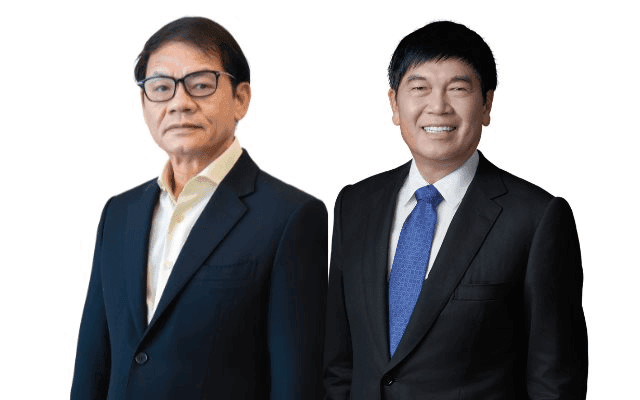
Close ties between two Vietnamese businessmen with the surname Trần—THACO’s Trần Bá Dương and Hoa Phát’s Trần Đình Long—are drawing attention as major domestic players cooperate to build a value chain across rail and urban infrastructure. In February 2025, the Prime Minister urged large enterprises to propose mechanisms for major projects such as the North–South high-speed railway. THACO was asked to study and transfer technology to produce railcars and locomotives, while Hoa Phát was asked to study high-speed rail rails.
At THACO’s 2025 annual general meeting, Trần Đình Long discussed expanding cooperation with VinFast, THACO, and Thành Công in the industrial sector, particularly automotive and transport. He said Hoa Phát would not only participate in the North–South high-speed rail project but also contribute to major rail projects overall. Under the cooperation approach, Hoa Phát would supply steel for rails, stations, and tunnels, while railcar production would be handled primarily by THACO.
By the end of May 2025, Hoa Phát signed a contract with SMS Group (Germany) to provide technology and a production line for railway rails and shaped steel, with annual capacity of 700,000 tons.
In late December 2025, Hoa Phát began construction of the Rail and Special Steel Plant in Dung Quất (Quảng Ngãi), with total investment of over 10 trillion VND. The plant is designed for 700,000 tons per year and is expected to produce high-speed rail rails and steel shapes in Q2 2027.
In early 2026, for the Hanoi Metro Line 2 project (Ben Thanh – Tham Lương) with total investment exceeding 55 trillion VND, THACO was selected as the main EPC contractor to manage the full scope from design to equipment procurement and construction and installation. Previously, a consortium including Hoa Phát, Đại Dũng, and CC1 also proposed participation in the metro line. While Hoa Phát was not viewed as directly participating in the EPC package, it is considered to have opportunities to supply building materials and infrastructure components.
The two companies also joined the consortium for the Red River boulevard axis project, valued at 855 trillion VND.
On December 19, 2025, Hanoi launched the groundbreaking for the Trục Đại lộ Cảnh quan sông Hồng (Red River Boulevard Axis) project by the Đại Quang Minh – Văn Phú – MIK Group – THACO – T&T Group – Hoa Phát consortium, with Đại Quang Minh Investment (a THACO subsidiary) designated as the coordinating representative.
The project covers about 11,000 hectares from Hong Hà Bridge to Me Sở Bridge across 19 communes/wards in Hanoi. It includes an 80-kilometer boulevard axis, a landscape park and entertainment system totaling about 3,300 hectares, and up to 2,100 hectares of land clearance to support urban redevelopment. The project is divided into four independent component projects.
At Hoa Phát’s 2026 annual general meeting on April 21, Trần Long described the project as very large with a 100-year vision, saying it could transform the area into a major architectural landmark and build a new urban district similar to those in Korea or China. He also said that if realized, the project could attract 30–40 million visitors per year and host dozens of themed parks.

Premium gym chains are entering a “golden era” that is ending or already in decline, as rising operating costs collide with shifting consumer preferences toward more flexible, community-based ways to exercise. Long-term memberships are shrinking, margins are pressured by higher rents and facility expenses, and competition from smaller, more personalized…