•
•
•
•
•
•
•
•
•
•
•
•
•
•
•
•
•
•
•
•
•
•
•
•
•
•
•
•
•
•
•
•
•


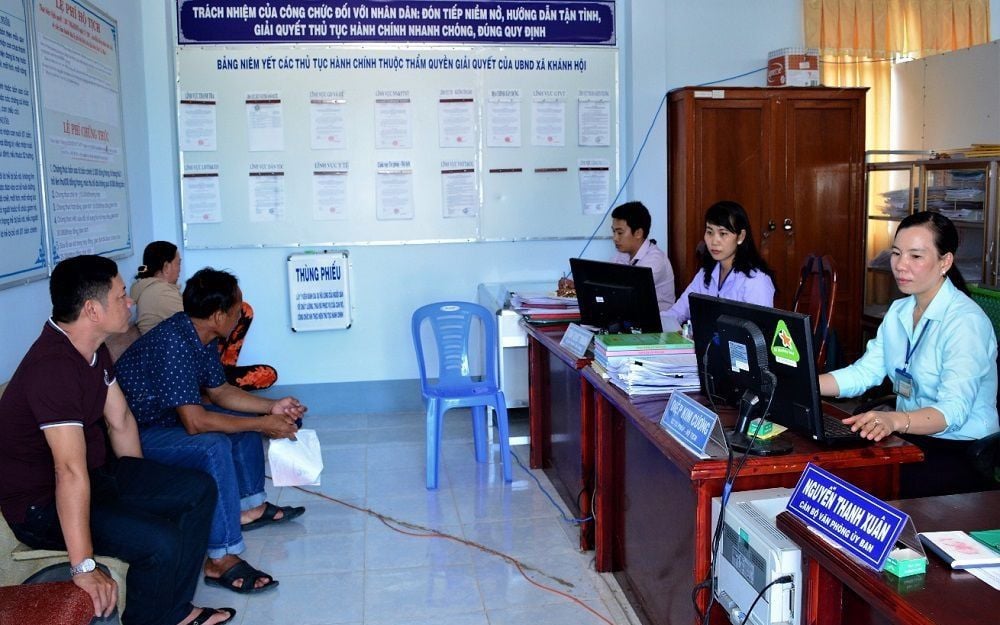
Following the reorganization of the apparatus, a large volume of work has been concentrated at the commune level. However, in some localities, professional staff are not evenly distributed; certain areas lack specialized personnel, causing difficulties in management, coordination, and task handling.
According to a report from the Ministry of Home Affairs, in the first quarter of 2026 the ministry continued to advise competent authorities to timely direct ministries, sectors, and localities to implement and ensure the necessary conditions for operating the two-tier local government model, meeting requirements for efficiency, effectiveness, and stability.
The ministry also monitors implementation, receives feedback, and promptly provides guidance to localities to align with central direction.
To date, many difficulties and obstacles have been resolved, including work related to organizational structure, consolidating key positions, and issuing regulations on the functions and duties of provincial and commune-level specialized agencies.
However, after nearly a year of operating the two-tier local government model, difficulties remain in the areas of infrastructure, information technology, and human resources.
Ms. Nguyen Thi Tu Thanh, Deputy Head of the Local Government Department (Ministry of Home Affairs), said that the database and digital infrastructure for handling administrative procedures have shown initial effectiveness. Nevertheless, in some places the infrastructure remains incomplete, lacks consistency, and some local-specific facilities have not been fully operational on the new system.
At the local level, after rearrangement and decentralization, a large volume of work has been assigned to the commune level. In some localities, the professional workforce is not uniform: some sectors still lack specialized staff, and some units must operate from several different offices, complicating governance, coordination, and task processing.
In the coming period, the Ministry of Home Affairs intends to focus on five major groups of solutions for operating the two-tier local government.
The ministry will continue to refine the institutional framework, especially regulations on decentralization and delegation, the organization of the apparatus, and personnel management. The goal is to ensure clear assignment of people, tasks, and responsibilities and to enhance the effectiveness and efficiency of state management.
It will also raise the quality of cadres and civil servants, particularly at the local level, and continue reviewing and reallocating commune-level staff to better match task requirements.
Administrative procedure reform will be advanced alongside improving digital infrastructure and data, ensuring interconnection, uniformity, and greater stability between central and local levels.
Additionally, the ministry will continue to efficiently manage public assets, offices, and surplus land in line with local needs to avoid waste. It will strengthen monitoring, urging, inspection, and timely solutions to overcome difficulties.
According to the head of the Local Government Department, the Ministry of Home Affairs has advised the Prime Minister to issue a plan to summarize after one year of implementing the rearrangement of administrative units and the two-tier local government operations nationwide.
The aim is to conduct a comprehensive, objective one-year review of results nationwide, clearly indicating notable outcomes and typical achievements, while also identifying limitations and difficulties, their reasons, and lessons learned.
In the second quarter of 2026, the Ministry of Home Affairs will continue to prioritize institutional refinement, focusing on drafting and enacting many important laws and ordinances to align with the operating requirements of the two-tier local government model.






Premium gym chains are entering a “golden era” that is ending or already in decline, as rising operating costs collide with shifting consumer preferences toward more flexible, community-based ways to exercise. Long-term memberships are shrinking, margins are pressured by higher rents and facility expenses, and competition from smaller, more personalized…




