•
•
•
•
•
•
•
•
•
•
•
•
•
•
•
•
•
•
•
•
•
•
•
•
•
•
•
•
•
•
•
•
•


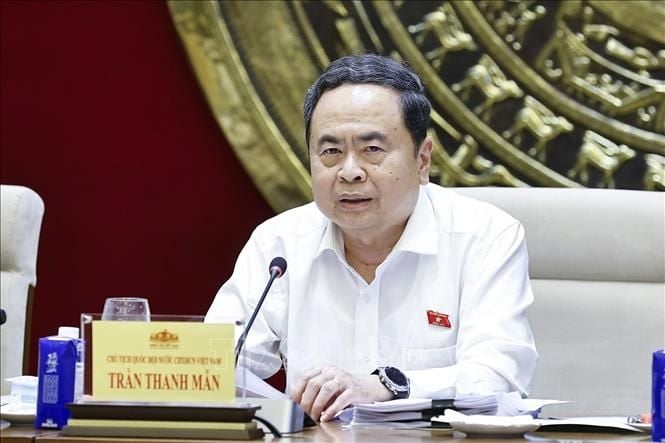
At a press conference at the National Assembly House, National Assembly Chairman Trần Thanh Mẫn, who also chairs the Steering Committee for the comprehensive review of the legal normative framework, presided over a Standing Board meeting. He said the task is a very important one: the first and largest round of a comprehensive review to implement Resolution 09 of the Politburo and directives from General Secretary and President Tô Lâm at the first session of the 16th National Assembly, with the aim of completing the structure of the legal system in a fundamental and coherent manner.
The Chairman warned that if the work is not carried out seriously, it would waste resources and miss the opportunity to reform the institutional framework that he described as a bottleneck to development. He emphasized that the review is not a routine administrative exercise, but a “total inventory of the regime,” serving as strategic preparation for national development in the new period.
Chairman Trần Thanh Mẫn outlined guiding principles for the coming period, saying the review must be tied to development requirements and address specific questions, including which legal provisions are hindering development and which provisions are overlapping, conflicting, or no longer suitable. He also stressed that people and enterprises should be placed at the center of the process, and that the review should listen to practice and seek broad input—especially from those directly affected.
On key tasks ahead, the Chairman asked agencies to promptly complete overdue duties. After the meeting, the Standing Committee of the Steering Committee will issue a concluding document to agencies with overdue tasks to reinforce responsibility in completing important assignments.
He urged the review to be focused with clear priorities, concentrating on areas with a large impact on development, including decentralization and delegation; science, technology, and innovation; private sector development; and international integration. Agencies, organizations, and localities were asked to adhere to the Steering Committee’s contents, requirements, and guidance, and to promptly report complex issues arising during implementation.
The Ministry of Justice, as the standing secretary of the Steering Committee, was tasked with maintaining a hotline to promptly receive, answer, and guide agencies and localities throughout the implementation process.
The Chairman stressed broad public consultation with the people, enterprises, and other affected groups, including civil servants who enforce laws, about difficulties and obstacles in legal provisions. He said the results of the comprehensive review must be “correct, targeted, and substantive.”
He further stated that the process should be objective, scientific, and receptive to feedback, with no evasiveness. He called for bold proposals to amend provisions that are no longer appropriate.
Regarding provisions related to decentralization, delegation of authority, administrative procedures, digital data, and online public services, the Chairman specified that revisions must align with the two-tier local government model. He also said the review results must include concrete recommendations, clearly identifying the scope and the content to be amended, replaced, or repealed, and avoiding generalities, formality, or lack of feasibility.







Premium gym chains are entering a “golden era” that is ending or already in decline, as rising operating costs collide with shifting consumer preferences toward more flexible, community-based ways to exercise. Long-term memberships are shrinking, margins are pressured by higher rents and facility expenses, and competition from smaller, more personalized…



