•
•
•
•
•
•
•
•
•
•
•
•
•
•
•
•
•
•
•
•
•
•
•
•
•
•
•
•
•
•
•
•
•


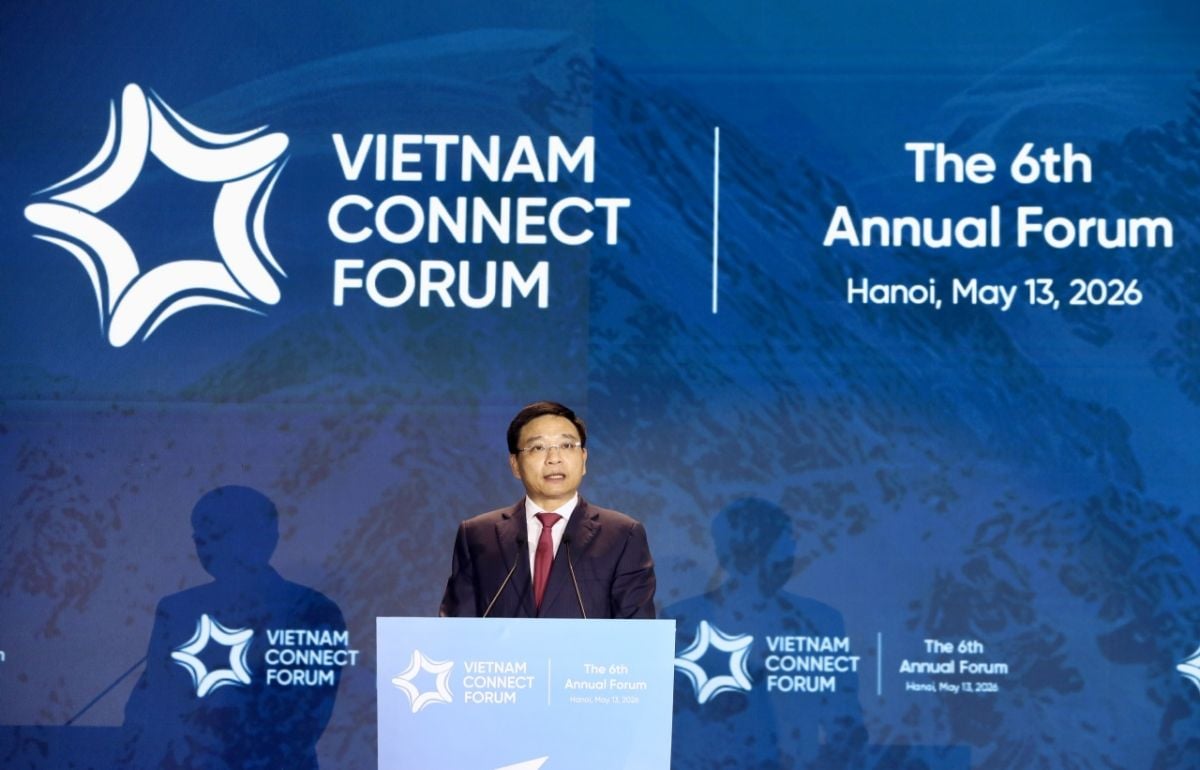
Deputy Prime Minister Nguyen Van Thang said Vietnam will create new momentum for rapid and sustainable growth in the current development phase by strengthening cooperation and synergy between the foreign-invested sector and the domestic economy. He made the remarks at the Sixth Vietnam Connect Forum (VCF 2026) on the afternoon of May 13, 2026, themed “Foreign-invested economy and domestic private sector join forces to boost sustainable growth in the new phase.” The Deputy Prime Minister also praised the forum’s organization as practical and meaningful.
The forum highlighted that the world economy is entering a period of deep structural change, including strategic competition among major economies, supply-chain restructuring, and green and digital transformations, alongside advances in AI, semiconductors, data, and strategic technologies. In this context, international investors are placing greater emphasis on investment quality, institutions, policy stability, strategic infrastructure, high-quality human resources, green energy, data infrastructure, innovation capacity, and the reliability and predictability of the investment environment.
Vietnam, the Deputy Prime Minister said, continues to stand out as an attractive destination for foreign direct investment. Vietnam currently hosts more than 46,500 active FDI projects with total registered capital of over USD 543 billion, and cumulative implemented capital of around USD 357.6 billion. The FDI sector accounts for over 20% of GDP and about 70% of export turnover, while supporting millions of jobs. With global capital flows cooling in many regions, Vietnam remains among the leading Asian destinations for FDI, reflecting international confidence in Vietnam’s growth prospects, political–social stability, and investment climate.
While acknowledging positive outcomes, the Deputy Prime Minister said the quality of linkages between the foreign-invested sector and the domestic economy has not met expectations. He noted that many Vietnamese enterprises still operate in lower value-added segments, domestic-content rates remain limited in some industries, and local firms’ capacity to absorb supply-chain requirements has not fully kept pace.
“Not only assessing how much capital investors bring to Vietnam, but more importantly, what technology they bring, what value addition they create, how they train human resources, how many Vietnamese firms they connect to the supply chain, and their contributions to green transformation, digital transformation, and strengthening domestic capacities.”
He said Vietnam’s long-standing principle is to treat the foreign-invested sector as an important part of the national economy, developing it in a long-term, fair, cooperative, and competitive manner alongside other sectors. In the new phase, Vietnam is shifting from broad FDI attraction toward selective, high-quality, efficient, and sustainable investment cooperation. New-generation FDI, he said, should not only come for manufacturing or market access, but to co-create new value, new capabilities, and a stronger position in global value chains.
Under the government’s near-term directions, five major priorities were outlined:
Vietnam aims to become a high-income country by 2045, which the Deputy Prime Minister said requires a new growth model based on innovation, technology, high-quality human resources, and effective coordination across economic sectors. He urged the business community and foreign investors to continue long-term partnership with Vietnam as strategic development partners within global value chains, while urging Vietnamese firms to innovate, upgrade governance and technology, and deepen participation in international production networks.
The Vietnamese government pledged to maintain a transparent, stable, safe, and competitive investment environment and to actively address anti-dumping, environmental violations, and outdated technologies to ensure long-term, compliant investment activity.
The article also referenced related chapters and analyses on FDI strategy, upgrading global value chains, and collaboration between Intel and Fab 9, emphasizing a future-oriented approach to attract higher-quality investment and deepen local participation in global supply chains.
Premium gym chains are entering a “golden era” that is ending or already in decline, as rising operating costs collide with shifting consumer preferences toward more flexible, community-based ways to exercise. Long-term memberships are shrinking, margins are pressured by higher rents and facility expenses, and competition from smaller, more personalized…