•
•
•
•
•
•
•
•
•
•
•
•
•
•
•
•
•
•
•
•
•
•
•
•
•
•
•
•
•
•
•
•
•


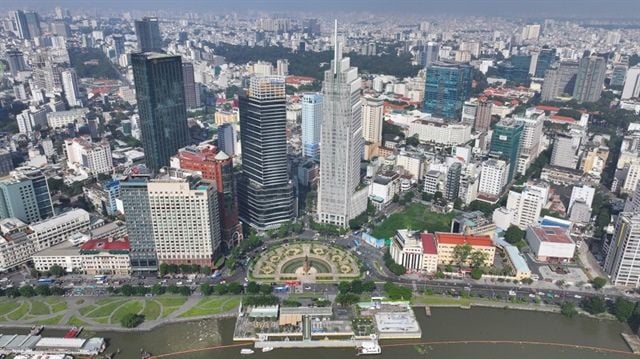
Urban governments in special municipalities need greater autonomy to better reflect local needs and improve economic outcomes. The Party and the State are pursuing decentralization through legislation on special municipalities, with the aim of strengthening local self-government while maintaining national coordination.
Decentralization and local self-government are presented as essential requirements of modern public administration, particularly as large cities increasingly play central roles in economic and social development.
One theoretical foundation is the principle of subsidiarity: policies implemented closer to citizens can be more effective because local administrations have a better understanding of local realities. This approach is also intended to reduce administrativeization—processes that are often inflexible and slow to adapt to changing conditions.
Economically, decentralization is linked to the diversity of local needs and preferences. Empowering local authorities is expected to help policies match those needs more closely, improving economic efficiency. In addition, interlocal competition theory suggests that when local governments have policy and fiscal autonomy, they can compete to attract residents and investment. For large cities, the ability to design tailored policy packages—covering taxes, fees, and service quality—is described as a key competitiveness factor.
Beyond economic performance, stronger decentralization is also expected to affect accountability and transparency. When decision-making power is closer to the people, social oversight increases, which can help curb waste or abuse of authority. However, the article stresses that decentralization should not be treated as a mechanical transfer of power.
A key prerequisite is balancing the fiscal framework among government levels. If localities receive many tasks without sufficient resources, governance effectiveness can be undermined. Decentralization therefore needs to be paired with coherent design of revenue sharing, revenue transfers, and budget control, while the central government maintains macro-level coordination to support national financial system stability.
For special municipalities, the demand for fiscal resources is described as especially acute due to heavy investment needs in infrastructure and public services. The article argues that, alongside functional decentralization, more flexible financial mechanisms are required, including higher budgetary autonomy, diverse funding sources, and appropriate financial instruments.
Scientific analysis in the article frames decentralization and autonomy as strategic governance directions rather than purely technical tools. For special municipalities, it says a sufficiently broad space of autonomy is necessary to unleash development potential while remaining within the national framework—requiring a balance between decentralization and coordination, autonomy and control.
The article describes Japan as a model of balancing local autonomy with central coordination, particularly in local spending for general education, basic health care, social welfare, and infrastructure development.
In Japan, the central government is said to fund strategic sectors and also act as an architect balancing fiscal capacity across regions. The central government holds large tax bases and sets macro-level regulation, including consumption tax, national income tax, and local taxes. Local budgets are described as resting on three pillars: allocations from the central government, local tax revenues, and bond issuance.
Local taxes are presented as a major source of local government funding. The article lists key revenue sources as personal income tax, local corporate tax, local consumption tax, and property tax.
To support decentralization and local budget devolution, Japan has passed laws on local taxation and on the distribution of local taxes, alongside local self-government laws. Local tax collection is administered under the Local Tax Act. Local authorities are required to enact local tax regulations based on that law and may levy other local taxes.
The article also notes that the Local Tax Bureau carries out decentralization reforms and drafts local tax amendments aligned with changes in Japan’s economic and social environment, implemented based on the responsibility and assessment of each local government.
Instead of strictly separating taxes, Japan is described as using a “dual taxation” mechanism that combines tax decentralization with tax base sharing. Under this approach, a single tax base—such as personal income or corporate profits—falls under both national and local tax controls, but under different rules and names.
Examples provided include individuals paying national income tax to the central government and local resident tax to local government. Businesses pay national corporate income tax at the national level and local business tax at the local level. The article says this enables both levels of government to share a broad, stable tax base, supporting sustainable revenue without mixing tax administration.
Because of regional economic disparities, the central government uses part of national tax revenues to transfer to localities through local tax distribution laws. The article emphasizes that this is not treated as a subsidy, but as a way to ensure localities have sufficient resources to provide minimum public services to national standards. It characterizes this as “conditional autonomy,” where local independence coexists with national unity.
The article argues that budget devolution is not static; it is a complex structure that must be continuously adjusted to accommodate economic and social changes. It presents Japan’s model as a lesson that effective decentralization is not simply about dividing tasks or money, but about building a coherent ecosystem of functions, resources, and regulatory mechanisms.
In conclusion, the article states that budget devolution and related policy design should not be viewed as fragmentation of power, but as a reorganization intended to maximize efficiency. It argues that granting special autonomy to urban authorities in Vietnam is described as an essential step to unleash productive potential, requiring trust and accountability based on outcomes rather than process control.
When cities are empowered to decide their own economic direction, the article says they can become engines driving national development, citing Japan’s large cities as an example.

Premium gym chains are entering a “golden era” that is ending or already in decline, as rising operating costs collide with shifting consumer preferences toward more flexible, community-based ways to exercise. Long-term memberships are shrinking, margins are pressured by higher rents and facility expenses, and competition from smaller, more personalized…