•
•
•
•
•
•
•
•
•
•
•
•
•
•
•
•
•
•
•
•
•
•
•
•
•
•
•
•
•
•
•
•
•


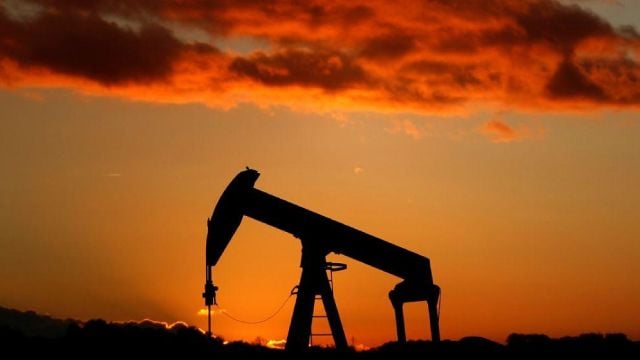
Devon Energy (NYSE: DVN) reported first-quarter 2026 results, saying the quarter reflected stronger-than-expected operational execution, lower capital spending and robust free cash flow. The company also provided updates on its pending merger with Coterra Energy.
Devon said oil production averaged 387,000 barrels per day in the quarter, at the top end of its guidance range. Capital spending was 6% below the midpoint of guidance, which CEO Clay Gaspar attributed to drilling and completion efficiencies and operational execution across the company’s program.
The results supported $816 million of free cash flow during the quarter. Gaspar said the outcome reflected operational excellence and financial discipline and was not an isolated performance.
Gaspar said Devon expects to achieve its $1 billion business optimization target ahead of schedule. He cited contributions from capital efficiency, production optimization, commercial improvements and corporate cost reductions.
Management described the initiative as a continuing operating model rather than a one-time cost program, and said the same approach will be applied to the integration of Coterra after the merger closes.
Devon highlighted technology and artificial intelligence as a major theme of the call. Gaspar said the company has used an internal, firewalled AI tool called ChatDVN for three years and described three waves of AI adoption, including improving access to internal data and redesigning processes around AI.
John Raines, senior vice president of asset management, said Devon has deployed AI-driven autonomous artificial lift optimization on more than 850 wells, with plans to expand toward 1,500 wells across the portfolio. Raines said a 2025 pilot of the company’s smart gas lift program showed a 2% to 3% uplift, and early results from broader implementation have exceeded the pilot phase.
Gaspar said Devon and Coterra shareholders voted overwhelmingly on May 4 to approve the merger, which Devon expected to close the following day. He said the combination would create one of the largest independent exploration and production companies in the U.S., with increased scale, deeper inventory and a stronger free cash flow profile.
Devon expects to provide combined full-year guidance in mid-June after management and the board align on the company’s plan.
Gaspar said the $1 billion synergy target should be considered the floor, not the ceiling. He said integration teams had already identified 156 distinct value capture opportunities, including drilling and completion capital optimization, production upside and capital reallocation within the combined portfolio.
Subject to formal board approval, Devon plans to increase its dividend by more than 30% on a per-share basis starting in the second quarter. Gaspar also said both companies paused share repurchase programs between announcement and close to build cash during a stronger commodity price environment. Devon expects its buyback program to resume immediately after closing, with the potential to increase repurchase activity beyond legacy levels.
Management emphasized that Devon will conduct a full review of the combined company’s assets after the merger. Gaspar said every asset has to compete for capital and earn its place in the portfolio, while cautioning that the company does not have predetermined outcomes.
He said applying expected merger synergies could change how assets rank, particularly if lower drilling and completion costs or improved production performance enhance returns.
On possible divestitures, CFO Jeff Ritenour said Devon would evaluate transactions on an after-tax net present value basis. He said the company would consider structures such as exchanges or joint ventures where appropriate to reduce tax impact and maximize free cash flow.
On Permian natural gas pricing, management said Devon has only marginal exposure to Waha pricing and has worked to reduce that exposure through transportation capacity and production management. Gaspar said the company has pulled back production from higher gas-oil ratio wells during periods of weak pricing.
Ritenour said the Blackcomb Pipeline, expected to come online later this year, should further limit Devon’s Waha exposure to roughly 10% to 15% going forward.
Ritenour also addressed taxes, saying Devon’s first-quarter tax results benefited from a shift between deferred and current taxes. He said higher commodity prices and capital efficiency were increasing pre-tax income and accelerating use of the company’s tax shield. On a standalone Devon basis, he said full-year current taxes were still expected to be around 10%, though higher in coming quarters than in the first quarter.
Gaspar said the company’s larger free cash flow base after the Coterra deal will be allocated across dividends, share repurchases and debt repayment, subject to board discussions. Ritenour said investors should expect the combined company to maintain balance sheet strength consistent with the historical approach of both Devon and Coterra.
Devon also highlighted its investment in Fervo Energy, which recently filed an S-1 for an initial public offering. Gaspar said the filing provides a public marker for Devon’s investment and reflects value created through a partnership applying Devon’s expertise in geoscience, horizontal drilling, completions and data analytics to geothermal energy.
Trey Lowe, senior vice president and chief technology officer, said Devon remains focused on supporting Fervo as the company continues to de-risk enhanced geothermal systems. He said demand for firm, always-on power in the U.S., especially in the western part of the country, has strengthened the investment case.
On the macro environment, Gaspar said Devon continues to monitor global oil supply and demand, international storage levels and the back end of the oil futures curve rather than making decisions based on short-term price moves. Ritenour said Devon’s marketing team has seen benefits from its oil export program, including premiums relative to domestic opportunities in the back half of the first quarter, with continued strength expected in the second quarter.
Devon Energy Corporation (NYSE: DVN) is an independent oil and gas exploration and production company headquartered in Oklahoma City, Oklahoma. The company focuses on the exploration, development, production and marketing of hydrocarbons, including crude oil, natural gas liquids (NGLs) and natural gas. Devon operates as an upstream energy company that acquires, evaluates and develops onshore resource plays using a combination of drilling, completion and production optimization techniques.
Core business activities include identifying and developing energy reserves, operating well programs and managing reservoir performance to generate production and cash flow.
Premium gym chains are entering a “golden era” that is ending or already in decline, as rising operating costs collide with shifting consumer preferences toward more flexible, community-based ways to exercise. Long-term memberships are shrinking, margins are pressured by higher rents and facility expenses, and competition from smaller, more personalized…