•
•
•
•
•
•
•
•
•
•
•
•
•
•
•
•
•
•
•
•
•
•
•
•
•
•
•
•
•
•
•
•
•


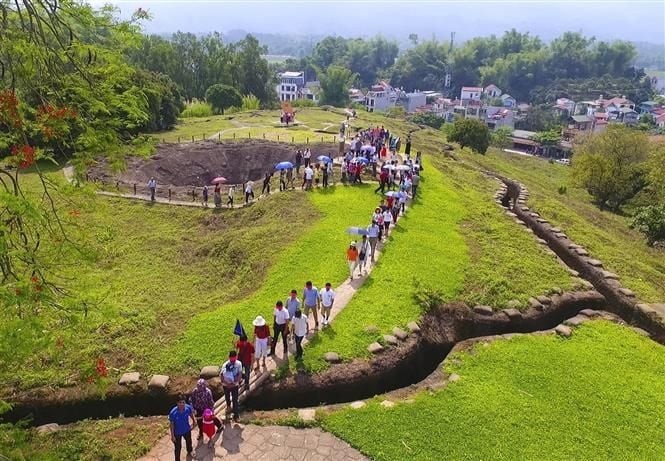
From the “Six-House” model supported by digital-content creators to the plan to use Starlink to address connectivity gaps, the Vietnam Private Sector Forum 2026 (VPSF 2026) dialogue in Dien Bien Province highlighted practical solutions to turn local challenges into opportunities for a new phase of economic development.
On May 10, 2026, the fourth local dialogue of VPSF 2026 was held in Dien Bien Province under the theme “Institutional breakthroughs — Public-private synergy.” The event brought together local authorities and enterprises to discuss recommendations and concrete measures aimed at positioning Dien Bien as a dynamic growth pole in Vietnam’s Northern mountainous region.
Opening the session, Mr. Dang Hong Anh, Chairman of the Vietnam Young Entrepreneurs Association and chair of VPSF 2026, said the private sector’s role has evolved. He noted that in an era of rising national strength, the private economy is no longer only an “important engine,” but a “pioneer force” in innovation and technology leadership.
Mr. Nguyen Van Doat, Vice-Chairman of Dien Bien Province’s People’s Committee, said the forum’s core differentiator is the shift from “advocacy and facilitation” to “co-creating” real solutions and policies to help the province achieve its two-digit GRDP growth target in the coming years.
Dien Bien is at a critical inflection point. GRDP growth reached 8.5% in 2025, and the province targets growth of over 11% in 2026. In the first four months of 2026, total social investment reached VND 5,370 billion, up 18.5% year-on-year, while state budget revenue rose 1.2 times.
Mr. Doat outlined three strategic pillars for 2026–2030: (i) green, smart and circular agriculture, including high-value products such as macadamia on nearly 12,360 hectares and coffee on 8,377 hectares; (ii) historical-ecological tourism and resort development, leveraging the Dien Bien Phu victory’s global value and the culture of 19 ethnic groups; and (iii) renewable energy and strategic infrastructure, including accelerating the Sơn La–Điện Biên–Cửa khẩu Tây Trang expressway and wind and solar projects.
He also pointed to flagship projects that reflect growing investor interest, including Vingroup’s Northwest New Urban Area with investment of over VND 23,660 billion, Sun Group’s cable-car and cultural tourism complex worth over VND 2,000 billion, and TH Group’s hot-spring resort area at VND 2,500 billion.
Despite strong potential, local enterprises face constraints. Businesses identified four main bottlenecks: (1) incomplete transport infrastructure that keeps logistics costs high; (2) difficulties in land access and access to specialized credit; (3) limited innovation capacity and technology adoption; and (4) skill shortages that do not meet the demands of the digital economy.
Mr. Dang Hong Anh said Dien Bien has focused on attracting and implementing large-scale momentum projects across tourism, urban development, high-tech agriculture, renewable energy, and modern infrastructure. He described these efforts as gradually forming a new development ecosystem for the province.
The dialogue recorded 33 groups of recommendations from the business community. Of these, 15% were addressed on-site, 3% committed to action with a timeline, and 82% will be compiled for reporting at VPSF 2026’s high-level dialogue with the Prime Minister.
Among the proposals gaining support were a “green channel” mechanism to cut 70–90% of administrative procedures, and the establishment of a public–private venture fund to support startup innovation.
Mr. Tran Van Son, Director of HTX For a Dien Bien Development, proposed a “Three-front Battle” approach to drive breakthroughs: a mindset shift (from traditional farming to an agricultural economy), a technical–technological front (including AI and IoT applications), and a market–outlet front.
A key proposal was the Six-House model, expanded with a “Digital Content Creators House” to promote agricultural products directly through livestreaming—turning each village into a digital marketplace hub.
In the cross-terrain context, digital transformation was framed as a way to “erase geographic distance.” Mr. Le Minh Duong, Director of Viettel Dien Bien, proposed applying blockchain to trace coffee and macadamia origins, using IoT sensors to monitor crop health and AI cameras to supervise large-scale plantations.
To address the “wave trough” challenge in 200 villages, Viettel plans to deploy Starlink low-earth-orbit satellite technology from July 2026. The initiative is intended to serve as key infrastructure enabling ethnic minority residents to participate in the “Sustainable Livestream Hub,” which provides training in digital sales to support livelihoods.
Premium gym chains are entering a “golden era” that is ending or already in decline, as rising operating costs collide with shifting consumer preferences toward more flexible, community-based ways to exercise. Long-term memberships are shrinking, margins are pressured by higher rents and facility expenses, and competition from smaller, more personalized…