•
•
•
•
•
•
•
•
•
•
•
•
•
•
•
•
•
•
•
•
•
•
•
•
•
•
•
•
•
•
•
•
•


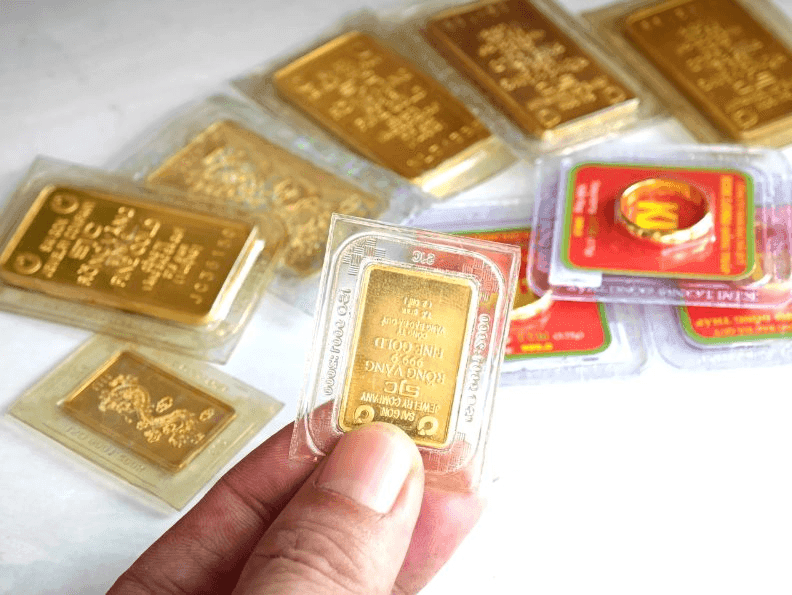
Domestic gold prices declined over the trading week, with both bullion and jewelry falling as global gold faced pressure from a stronger U.S. dollar and rising U.S. Treasury yields. Early in the week, SJC bullion was quoted around 168.3 million dong per tael (buy) and 171.3 million dong per tael (sell), before reversing and dropping through the midweek sessions.
By the end of the week on April 26, prices were generally at 166.3 million dong per tael (buy) and 168.8 million dong per tael (sell), down about 2 million dong on the buy side and 2.5 million dong on the sell side. Some brands, such as Mi Hong, maintained higher bid prices, but the overall downward trend remained intact.
Gold jewelry followed a similar pattern. At Bao Tin Manh Hai, prices moved from 168–171 million dong per tael at the start of the week to 165.8–168.7 million dong per tael by week’s close, a decline of roughly 2–2.5 million dong per tael. The downward momentum was sometimes stronger on the buy side, suggesting cautious demand.
World gold prices also weakened, with gold trading around 4,708 USD per ounce. The main drivers cited were a firmer U.S. dollar—supported by the dollar index reaching a two-week high—and higher U.S. Treasury yields, with the 10-year yield around 4.32%. When the greenback strengthens, gold-denominated assets typically become less attractive to investors holding other currencies.
Geopolitical tensions in the Middle East continued to escalate. The U.S. reportedly blocked two Iranian oil tankers, while Tehran increased checks in the Hormuz Strait, one of the world’s most important oil transit routes. This pushed oil prices to around 94.5 USD per barrel, raising inflation concerns. However, rather than supporting gold, the developments reinforced expectations that interest rates may stay high for longer, adding pressure to the precious metal.
The dominance of the U.S. dollar in global finance was also highlighted. According to SWIFT data, the share of the USD in international transactions rose to 51.1% in March, the highest in years and well above the euro and other major currencies. This was described as further weakening gold’s appeal in the short term.
In Europe, economic signals were mixed: the euro area recorded the strongest contraction in private-sector activity in 17 months, while manufacturing showed signs of improvement. Together, these macro factors contributed to a more cautious market stance.
Market participants are awaiting several key events, including the Federal Reserve’s policy meeting and a series of data releases such as GDP, PMI, and inflation. While gold’s long-term outlook remains supported by safe-haven demand, the article notes that for now the metal is moving sideways amid a strong dollar and capital shifting to other investment channels.





Premium gym chains are entering a “golden era” that is ending or already in decline, as rising operating costs collide with shifting consumer preferences toward more flexible, community-based ways to exercise. Long-term memberships are shrinking, margins are pressured by higher rents and facility expenses, and competition from smaller, more personalized…