•
•
•
•
•
•
•
•
•
•
•
•
•
•
•
•
•
•
•
•
•
•
•
•
•
•
•
•
•
•
•
•
•


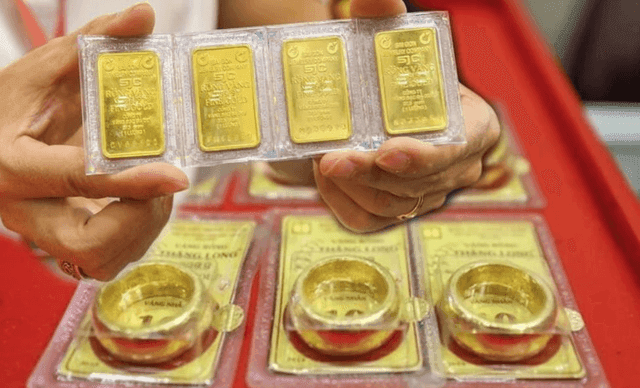
Domestic gold prices edged up slightly on April 25 compared with the early session, with typical adjustments of about 100,000 dong per tola on both the bid and ask across many major brands.
Bullion gold prices at SJC, DOJI, Bao Tin Minh Chau, Bao Tin Manh Hai, and Phu Quy rose from 166.2-168.7 million dong per tola to 166.3-168.8 million dong per tola.
Mi Hong, meanwhile, lowered its buy price by 200,000 dong per tola to 167.3 million dong per tola, while its selling price decreased by 200,000 dong per tola to 168.8 million dong per tola.
In the jewelry segment, prices moved in different directions. SJC fell 200,000 dong per tola on both the buy and sell sides to 165.8-168.3 million dong per tola.
Bao Tin Minh Chau, DOJI, and Phu Quy rose 100,000 dong per tola on both sides to 165.8-168.8 million dong per tola. Bao Tin Manh Hai also increased by 100,000 dong per tola on both sides to 165.8-168.7 million dong per tola.
On the Friday session, world gold prices remained on track for the first weekly decline in five weeks. Inflation concerns persisted, and uncertainty around the US-Iran conflict kept the market cautious.
Spot gold rose at times by more than 1% during the session, but for the week as a whole it fell more than 2%, trading around 4,708 USD per ounce.
Gold had fallen sharply through March as the US-Iran conflict pushed the dollar higher and raised inflation concerns, weighing on gold demand.
More recently, the conflict has been in a stalemate, with the Hormuz Strait still closed even as military actions have decreased. Investors have therefore focused largely on news developments, including remarks from US President Donald Trump, which raised hopes for a peace agreement while also warning of possible renewed attacks.
Iranian Foreign Minister Abbas Araqchi is expected to be in Islamabad (Pakistan) on Friday to discuss the possibility of resuming peace talks with the US, according to Pakistani authorities, with no plans for direct meetings with US negotiators. Separately, Israel and Lebanon extended their ceasefire for three more weeks.
“The market today is almost driven by timely news due to the high degree of uncertainty. Recent news trends lean toward the possibility of reaching some agreement with Iran, and markets are viewing the situation more positively. Energy prices are cooling somewhat,” said Daniel Pavilonis, senior market strategist at RJO Futures.
UBS analyst Giovanni Staunovo added: “Gold prices have fallen this week as oil prices rose, fueling expectations of higher interest rates, while the dollar and bond yields also rose— all of which are correlated.”
The 10-year U.S. Treasury yield rose 1.5% for the week, increasing the opportunity cost of holding gold. The dollar was also headed for its first weekly gain in three weeks, making gold more expensive for investors holding other currencies.






Premium gym chains are entering a “golden era” that is ending or already in decline, as rising operating costs collide with shifting consumer preferences toward more flexible, community-based ways to exercise. Long-term memberships are shrinking, margins are pressured by higher rents and facility expenses, and competition from smaller, more personalized…