•
•
•
•
•
•
•
•
•
•
•
•
•
•
•
•
•
•
•
•
•
•
•
•
•
•
•
•
•
•
•
•
•


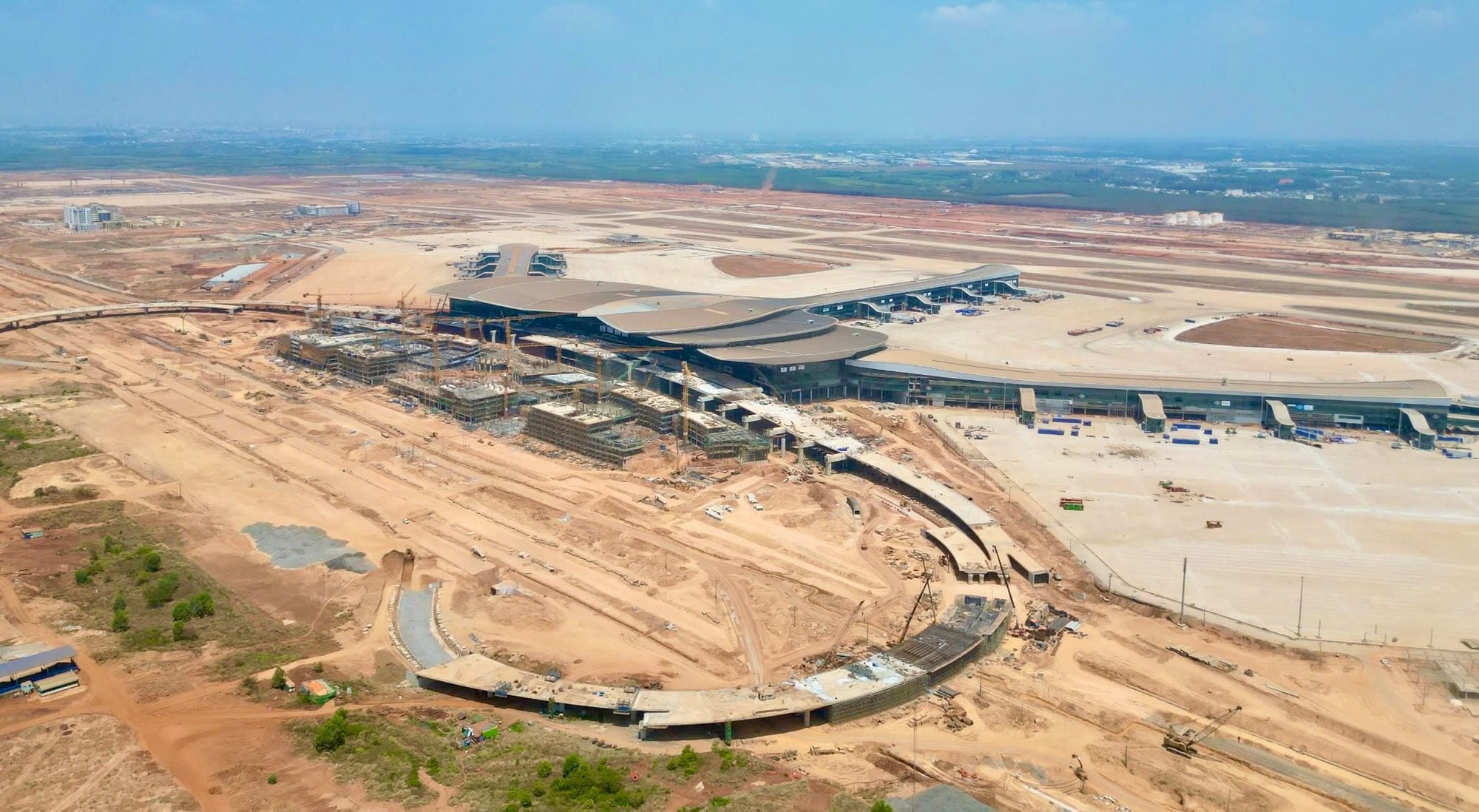
The People’s Committee of Dong Nai Province has issued a decision approving the master planning task for an area at a 1/2,000 scale that will form a new urban area at the western gateway to Long Thành airport. The urban area is expected to attract 400,000–450,000 people by 2045.
The planning aims to improve space and land-use efficiency by leveraging local potential to develop key economic sectors, while ensuring national security and defense and supporting sustainable development.
Development directions are aligned with the vision for the Long Thành airport urban area, including management and investment in construction, building a modern gateway urban area, and creating a synchronized, modern, sustainable urban-service space to drive growth in the western airport area and the southern economic region.
The plan is designed to optimize the exploitation of infrastructure and ensure efficient connections with Long Thành airport and inter-regional corridors, including Ho Chi Minh City Ring Road 3, the Bien Hoa–Vũng Tàu expressway, and the Thủ Thiêm–Long Thành railway.
The planning area is a sub-zone of the Long Thành urban area with main functions including an urban area, a free trade zone, a financial-commercial center, and airport-support services closely linked to Long Thành airport.
The orientation is to become an urban gateway space with an important role in international exchange and integration, while also serving as a driving area to establish a new development image for Long Thành and the Southeast region.
The plan prioritizes urban and commercial-service functions that match the airport’s advantages. It focuses on non-aeronautical economic activities such as retail, dining, accommodation, offices, conferences-exhibitions, and experiential services to increase attractiveness, mobilize development resources, and enhance land-use efficiency.
The area is also intended to function as an important traffic hub, ensuring connectivity to the airport and linkage with regional driving axes.
The urban space will be organized under a Transit-Oriented Development (TOD) model, prioritizing public transport and improving walkability and cycling. It also emphasizes mixed-use development and higher density to optimize land use, attract residents, reduce personal-vehicle traffic pressure, and create a compact, multi-functional urban space.
Long Thành airport covers about 5,000 hectares (among the world’s top 6) and has total investment exceeding USD 16 billion. The airport is planned to meet ICAO’s 4F high standard.
When all phases are completed, the airport is expected to handle about 100 million passengers and 5 million tonnes of cargo annually, positioning it as one of the region’s major aviation hubs in the Asia-Pacific and elevating Dong Nai’s role from a regional connector to a national-strategic international gateway.

Premium gym chains are entering a “golden era” that is ending or already in decline, as rising operating costs collide with shifting consumer preferences toward more flexible, community-based ways to exercise. Long-term memberships are shrinking, margins are pressured by higher rents and facility expenses, and competition from smaller, more personalized…