•
•
•
•
•
•
•
•
•
•
•
•
•
•
•
•
•
•
•
•
•
•
•
•
•
•
•
•
•
•
•
•
•


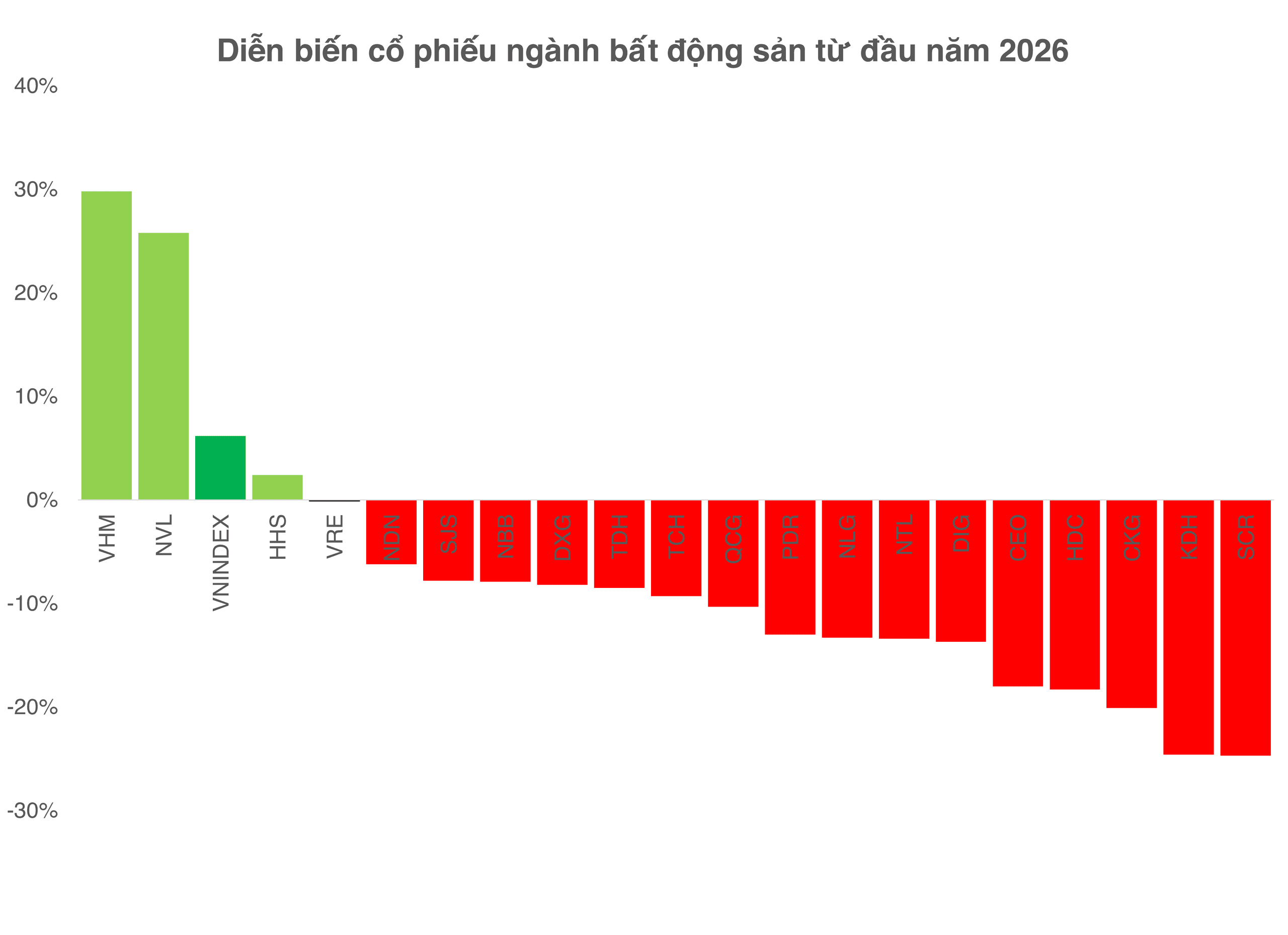
Most real estate stocks have lost momentum after a positive recovery in 2025, showing signs of fatigue in the first half of 2026. While the VN-Index reached new highs in May, the performance of real estate shares on the board has been notably weaker.
In the first half of May 2026, the VN-Index rose to a new high of 1,927 points and stayed around the 1,900-point level, supported mainly by stocks within the Vingroup ecosystem. However, behind the index’s gains, most real estate stocks recorded declines.
From the start of 2026 through the close on May 11, only 3 of 20 real estate stocks tracked registered price gains: HHS (+0.024%), NVL (+25.8%), and VHM (+29.8%). The remaining names fell, including several sharp corrections such as SCR (-24.7%), KDH (-24.6%), CKG (-20.1%), HDC (-18.3%), CEO (-18%), DIG (-13.7%), NTL (-13.4%), and PDR (-13%).
This pattern contrasts with 2025, when the interest rate environment was lower and liquidity returned strongly to real estate. Throughout 2025, 15 of 20 stocks in the list rose, but more than five months into 2026, most have reversed.
The developments suggest that interest rates are increasingly affecting credit-sensitive real estate stocks directly. Although the housing market is considered to have moved past the toughest phase in terms of legal and liquidity conditions, financing-cost pressures have returned, narrowing growth expectations.
VIS Rating assessed that the residential real estate sector in 2026 faces more challenges than in the prior recovery phase. While new supply in Hanoi and Ho Chi Minh City rose by about 22% in 2025 due to an improved legal environment, real estate prices remain high and mortgage rates are expected to rise by about 3–4% year over year in 2026.
VIS Rating also reported that apartment absorption fell to 95% in 2025, down from 106% in the previous year. The agency said this points to a more cautious buying mood as funding costs rise and prices stay elevated.
VIS Rating noted that real estate lending is expected to be tightened further following the State Bank’s direction. In that context, developers may rely more on bond issuances, equity fundraising, and M&A to meet project funding needs.
The agency said this dynamic could contribute to stronger divergence in developers’ financial health and credit profiles. Developers that can execute and hand over projects are expected to maintain positive liquidity in 2026 through sales cash flow, while those facing legal issues or relying heavily on resort real estate may continue to experience refinancing and cash flow pressures.
VIS Rating added that the credit profiles of certain firms, including NVL, API, and NRC, remain weak due to negative cash flow, limited cash, and stalled project progress.
On market developments, Mr. Nguyen Van Truc, Head of the NSI analytics unit, said that the VN-Index surpassing 1,900 points in May should be viewed cautiously rather than with excessive enthusiasm. He noted that the current rise does not reflect broad economic consensus, but is driven mainly by large-cap stocks.
Mr. Nguyen Van Truc also advised investors to be particularly careful with companies facing near-term debt maturities as credit tightening continues.
Premium gym chains are entering a “golden era” that is ending or already in decline, as rising operating costs collide with shifting consumer preferences toward more flexible, community-based ways to exercise. Long-term memberships are shrinking, margins are pressured by higher rents and facility expenses, and competition from smaller, more personalized…