•
•
•
•
•
•
•
•
•
•
•
•
•
•
•
•
•
•
•
•
•
•
•
•
•
•
•
•
•
•
•
•
•


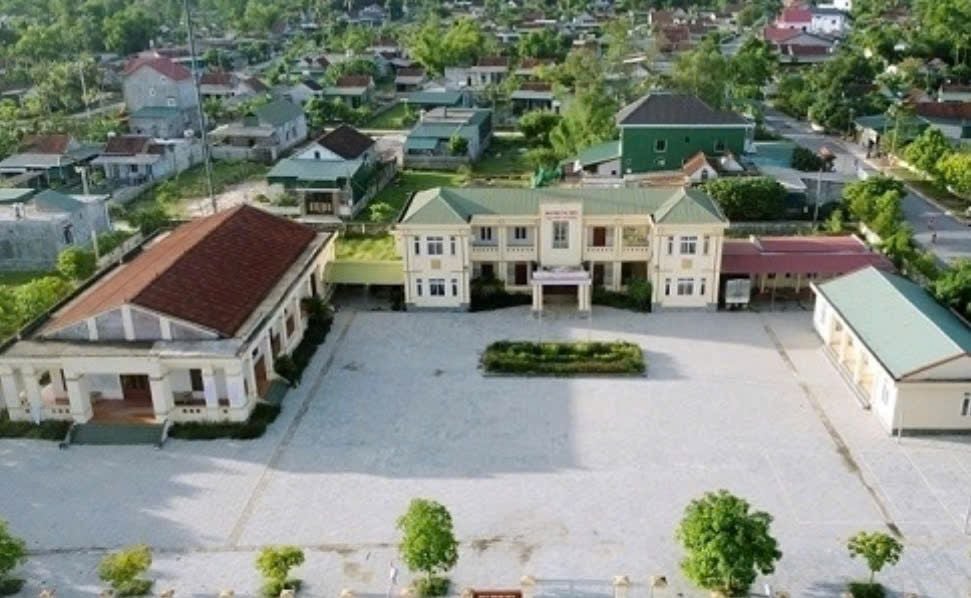
The Ministry of Finance is drafting a Government Resolution on a special mechanism and policy to accelerate the handling and exploitation of surplus housing and land, amid efforts to streamline government apparatus. The draft seeks to simplify procedures, allow transfer of assets in their current condition, and expand options for changing their intended use.
Local authorities report that by the end of January 2026, nearly 26,000 housing and land facilities had completed Step 1, identifying the entities responsible for management, use and exploitation. However, more than 10,000 facilities remain in Step 2, described as the crucial stage that determines how effectively assets can be exploited.
As localities move to implement Step 2, several obstacles have emerged. Surplus housing and land are sometimes offices or service facilities of agencies, organizations and units, meaning their existing design and functional use may no longer be suitable after transfer to a local managing or operating body. This has created a need for a special mechanism covering procedures, lease rates, and the duration of price listing to speed up putting these facilities into use and prevent deterioration and waste.
Other reported issues include missing or lost legal documents for the properties, cases where assets have been allocated as housing or encroached upon, and delays in completing required legal dossiers. In addition, forcibly relocating households and restoring sites to a clean condition before processing is difficult because the relevant agencies or units do not have the authority, functions or manpower to do so.
Some surplus housing and land have also not been promptly used for public projects such as libraries, parks, or cultural and sports facilities, due to the need to complete procedures to convert use, liquidate land assets, and adjust master plans.
To address these shortcomings and the urgent need to promptly handle surplus public assets, the Ministry of Finance proposes a set of mechanisms for surplus housing and land resulting from reorganizing civil service and administrative units.
Based on requests from the owning agency or unit, the competent authority would decide to transfer management and handling to local authorities in their current state. This would include cases with no or lost legal documents, as well as cases involving housing or encroached assets. The draft states that this would not require obtaining the opinion of the Chairman of the Provincial People’s Committee.
For surplus housing and land converted for public-use purposes (such as gardens, playgrounds, and public facilities), where the existing building on the land is not suitable for the new purpose and does not require an investment project, the authority may decide to convert the use under Article 16 of Government Decree 186/2025/NĐ-CP. Under this approach, demolition or removal of buildings or structures on the land would be permitted to implement the new land-use plan, even if the asset could still be usable or has not yet been depreciated.
For surplus housing and land redirected, transferred, or converted for office use, public-service facilities, national defense or security, updates to land-use planning, construction planning, and other sector planning would be carried out after the decision to redirect, transfer or convert has been issued.
The Ministry also proposes that surplus housing and land with a decision to transfer to local management be handled through land allocation or land lease. The recipient must return to the State the remaining value of the house and attached assets at the time of land allocation or lease, including cases where demolition occurs before transfer.
If the asset has not been tracked in accounting books, the residual value would be determined according to the Ministry of Finance’s rules on depreciation of fixed assets.
For houses and assets built on land owned by another organization or individual, if the recipient organization does not need the asset, the transferring authority would issue a decision to hand over the house and attached assets to the land-owning organization or individual. The recipient would then return to the State the remaining value according to the accounting books at the time of the decision.
If the land-owner organization or individual does not wish to receive the asset, the asset would be liquidated through demolition, and the land would be returned to the land-owning party.
The Resolution is expected to be submitted to the Government in Q2 2026, with a five-year validity period for these special mechanisms.
Premium gym chains are entering a “golden era” that is ending or already in decline, as rising operating costs collide with shifting consumer preferences toward more flexible, community-based ways to exercise. Long-term memberships are shrinking, margins are pressured by higher rents and facility expenses, and competition from smaller, more personalized…