•
•
•
•
•
•
•
•
•
•
•
•
•
•
•
•
•
•
•
•
•
•
•
•
•
•
•
•
•
•
•
•
•


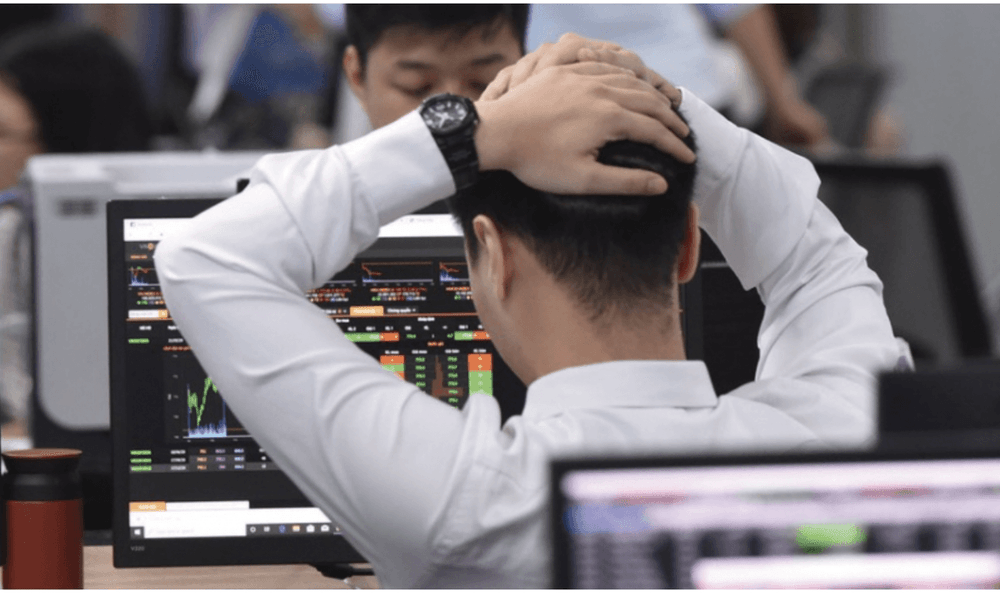
Liquidity across three stock exchanges surged to nearly 32,000 billion dong, indicating a highly active trading session. Foreign investors remained net sellers, offloading 1,515.5 billion dong overall, including net selling of 2,004.6 billion dong in matched trades.
The session featured a clear rotation pattern. Heavy selling pressure hit the VinGroup bloc, but funds quickly shifted to other large-cap stocks, particularly state-owned enterprises, helping limit the downside.
At one point, many VinGroup stocks were pushed to the floor. By the close, only VRE remained at the floor, while VHM fell 6.68% and VIC declined 1.44%, weighing on the index.
The VN-Index closed down 2.73 points to around 1,898.37. However, excluding the VinGroup impact, the broader index rose by nearly 7 points, suggesting internal strength despite the headline decline.
Breadth was not broadly positive, with 144 gainers and 168 decliners, reflecting ongoing downside pressure. Declines were concentrated in real estate, driven largely by VinGroup-linked weakness. Private banks and securities also saw selling pressure, including STB, ACB, EIB, VIX, and VCD. Consumer names such as VPL, SAB, PNJ, and VNM also declined.
On the upside, the state-owned enterprise group rebounded strongly after the Prime Minister directed the government to finalize the privatization plan for state-owned enterprises in May. The development helped channel liquidity into stocks with clearer standalone narratives.
GAS reached the ceiling, while the energy–oil and gas sector traded actively. BSR, PLX, GVR, and ACV all rose sharply. State-owned banks also supported the market, with VCB, BID, and CTG advancing.
The session’s structure suggests potential for a more sustainable market foundation if liquidity continues rotating across multiple sectors rather than relying heavily on VinGroup.
Foreign buyers’ net purchases in matched trades were led by the Oil & Gas and Food & Beverage groups. Top net buys included MSN, BSR, HPG, PLX, PVT, GEX, VPL, PC1, GEE, and BAF.
On the sell side, foreigners’ net selling in matched trades was led by the Banking group. Top net sells included FPT, ACB, VHM, STB, VIC, BID, CTG, GMD, and VNM.
Individual domestic investors bought a net 15.3 billion dong, with net buys in matched trades totaling 1,074.9 billion dong. They bought across 6 of 18 sectors, led by Banking. Top individual buys included STB, FPT, VHM, HCM, ACB, VIX, SSI, VNM, VCB, and TCB.
Individuals were net sellers in 12 of 18 sectors, mainly in Oil & Gas and Basic Materials. Top net sells included BSR, MSN, PLX, VPI, SHB, GEE, PVD, EVF, and VSC.
Domestic institutions bought a net 1,809.5 billion dong, including 1,143.4 billion dong in matched trades. The largest net buys included VIC, ACB, VPI, SHB, FPT, VNM, CTG, GMD, TCB, and MBB. Top net sells among domestic institutions included STB, FUEMAV30, HCM, GEX, SSI, VPL, MSN, VCI, HPG, and BAF.
Total negotiated deals reached 5,632.4 billion dong, up 172.2%, and accounted for 17.3% of total trading value. VIC recorded a negotiated deal of 4 million shares worth about 840 billion dong, sold by domestic individuals to domestic institutions. MSB saw more than 560 billion dong bought by foreign participants from domestic individuals. Negotiated trades among domestic individuals also included HCM (497.5 billion dong) and VPB (363.9 billion dong).
The share of liquidity increased in Securities, Electrical Equipment, Oil & Gas, Marine Transport, Gas, Mining, Rubber, and Telecommunications. It declined in Real Estate, Banks, Construction and Materials, Steel, Retail, Chemicals, Warehousing, and Aviation.
In matched trades, liquidity shifted toward large-cap VN30 stocks, while the share going to mid-cap VNMID and small-cap VNSML declined.
The market is still seeking a new equilibrium, and trading remains relatively light despite the higher overall liquidity.

Premium gym chains are entering a “golden era” that is ending or already in decline, as rising operating costs collide with shifting consumer preferences toward more flexible, community-based ways to exercise. Long-term memberships are shrinking, margins are pressured by higher rents and facility expenses, and competition from smaller, more personalized…