•
•
•
•
•
•
•
•
•
•
•
•
•
•
•
•
•
•
•
•
•
•
•
•
•
•
•
•
•
•
•
•
•


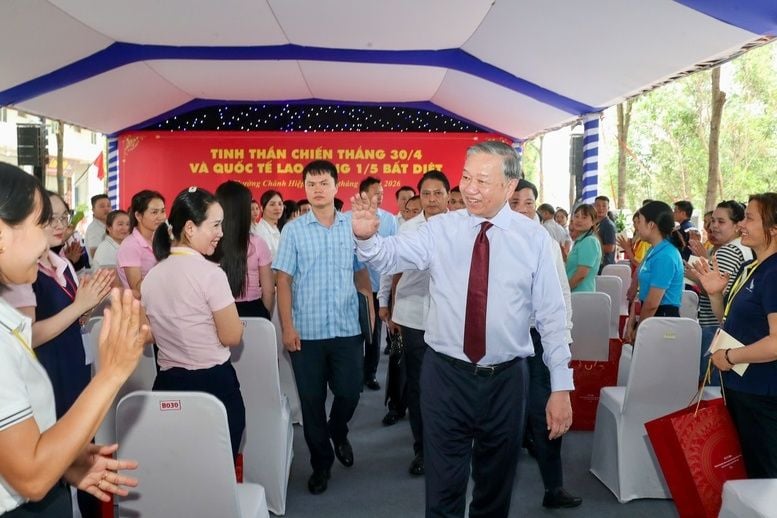
On 27 April, marking the 51st anniversary of the Liberation of the South and national reunification (April 30, 1975 – April 30, 2026) and International Workers’ Day on May 1, General Secretary and President To Lam visited and encouraged workers in Ho Chi Minh City. The Vietnam Economic Journal / VnEconomy publishes the full text of To Lam’s remarks to workers in the city.
I came to ask about the living conditions, jobs, and welfare of the workers; to listen to their thoughts, aspirations, and the difficulties they face in daily life; and to share with them the sincere care from the Party, the State, the Fatherland Front, the Trade Union, and the city authorities for the working class—especially those facing hardship, illness, low income, cramped housing, and limited access to education for their children.
From what I observed and from the reports of the Vietnam General Confederation of Labour and the Ho Chi Minh City authorities, and from the honest sharing of workers today, I feel empathy and a sense of duty for the challenges faced by workers. I am moved to see many exemplary stories: workers who, despite difficult circumstances or serious illness, stay resilient, optimistic, and continue to work and support their families; workers who are eager to learn, diligent, and creative, contributing improvements to technology and processes, boosting productivity; union officials who tirelessly visit dormitories, workshops, and workers’ households to understand difficulties and mobilize support.
These stories are simple but precious. The everyday virtues of Vietnamese workers—diligence, perseverance, resilience, responsibility, caring for family, loyalty to colleagues, to the enterprise, to the Trade Union, and to the country—shine through.
I am also pleased to note that in recent times the unions, the Ho Chi Minh City authorities, enterprises, and the broader community have undertaken meaningful programs to improve workers’ lives: housing programs, health care, gifts to workers in need, support for workers’ children, assistance to workers facing serious illness or workplace accidents, and unemployment support. While these efforts do not solve all problems, they are warm, humane, and reflect the inherent goodness of our system: no one should be left behind.
However, I also share the difficulties and hardships that workers still face. Many tenants live in small rooms; living conditions are cramped; families worry about education for children, access to medical care, healthcare costs, living expenses, prices, meals, commuting, and workplace safety. Some workers save little despite hard work. When illness or misfortune strikes, some families fall into hardship.
We must face these realities squarely, listen carefully, and address them with responsibility and compassion. Caring for workers is not only about material support during holidays; more importantly, it is about stable employment, higher incomes, safer workplaces, decent housing, accessible schools and healthcare, and opportunities for cultural and spiritual enrichment. Workers should live in conditions commensurate with their contributions to the enterprise, to the city, and to the country.
I urge Ho Chi Minh City to continue treating the well-being of workers as a central political task, pursued regularly and over the long term. The city should assess housing needs—social housing, worker residences—along with schools, kindergartens, clinics, cultural facilities, and community spaces in industrial zones and other areas with dense worker populations. Ensure workers have not only jobs but also stable housing; not only incomes but also conditions to educate their children and support parents back home; not just labor, but rest, learning, recreation, and a richer spiritual life for workers.
I urge the trade unions to be closer to workers, understand them better, and articulate their voices while protecting their legitimate rights and interests. The union should be present when workers face difficulties: illness, wage arrears, unemployment, workplace accidents, or life crises. The union should be more than a venue for mobilizing campaigns; it must be a warm home and reliable support for its members.
I also urge enterprises and employers to continue prioritizing workers. Workers are not merely hired labor; they are partners in sustainable development. To be sustainable, enterprises must ensure fair wages, benefits, safe working conditions, and safe operations; listen to workers’ ideas, respect their dignity, and create opportunities for training and skill development. When workers feel secure and attached to their workplace, enterprises will be stronger, more stable, and better positioned for long-term growth.
I welcome and will consider workers’ proposals on further training, investment in science and technology, and encouragement of innovation. These changes contribute to higher productivity, higher incomes, and better living standards. I also acknowledge the concerns about wages and the need to ensure living standards.
Our country is entering a new development phase with opportunities and challenges. Science and technology are evolving rapidly; productivity, quality, and professional skills demands are higher than before. Therefore, I hope all workers will maintain faith, unite, and strive for advancement; actively acquire new skills, enhance their crafts, embrace industrial discipline and labor discipline, and, if possible, improve digital skills and foreign language abilities.
Each worker should learn one new skill, do their job better each day, propose innovations, improve processes, conserve resources, ensure safety, and raise product quality.
Innovation does not have to be exotic. It can begin with a simpler operation, a more scientifically arranged production line, an idea that saves time, reduces accidents, lightens workload, and increases productivity. If these simple innovations are valued and disseminated, they can generate immense strength for the enterprise, the economy, and the country.
I also hope that even in difficult times, workers maintain health, care for their families, educate their children, live with solidarity and kindness, and support one another in dormitories, workshops, and communities. Vietnamese workers are not only proficient in labor; they are also admirable in heart and in the sense of community in times of hardship.
Today’s meeting is not merely a courtesy call. It is a reminder that behind growth targets, behind factories, and production lines, there are the concrete lives of individual workers and their families. Each policy and timely action can ease a family’s hardship, strengthen a sick person’s resolve, enable a child to attend school, and restore a worker’s faith in the future.
I believe that, with Ho Chi Minh City’s traditional spirit of solidarity and the responsibility of the Party Committee, the government, the Fatherland Front, the Trade Union, enterprises, and society at large, workers’ lives will continue to improve. I also believe that Ho Chi Minh City’s workers will continue to uphold the tradition of diligence, creativity, solidarity, and compassion; balancing care for their families with contributing to the city named after Uncle Ho and to our beloved Vietnam.
I will receive and thank workers’ suggestions, and I believe these proposals align with the Party’s guidelines and State policy for the coming period, in labor and national development, as well as improving people’s lives.
On this occasion, I extend heartfelt greetings, wishes for health, happiness, and success to all workers in Ho Chi Minh City and across the country. May workers’ families be healthy, prosperous, safe, and happy. May the Trade Union grow stronger and truly be a trusted support for workers and the working class. May Ho Chi Minh City continue to develop dynamically, civilly, and compassionately, at the forefront of improving the lives of the people, especially for workers facing difficulties. I wish good health to all comrades, workers, and laborers!








Premium gym chains are entering a “golden era” that is ending or already in decline, as rising operating costs collide with shifting consumer preferences toward more flexible, community-based ways to exercise. Long-term memberships are shrinking, margins are pressured by higher rents and facility expenses, and competition from smaller, more personalized…


