•
•
•
•
•
•
•
•
•
•
•
•
•
•
•
•
•
•
•
•
•
•
•
•
•
•
•
•
•
•
•
•
•


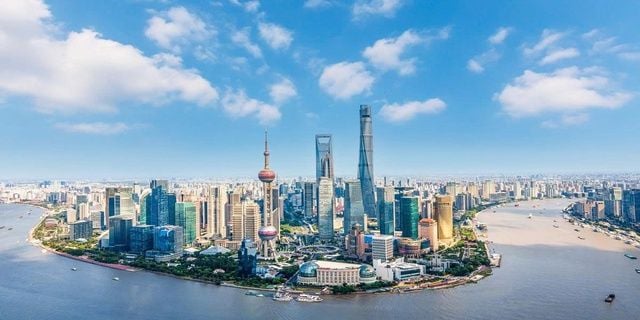
After 40 years in which German automakers helped set the pace at the early car shows in China, many have ceded leadership in the world’s largest auto market. The shift has coincided with the rise of domestic Chinese brands, which have increasingly shaped demand among a younger, more tech-oriented consumer base.
When Volkswagen attended the first car show in Shanghai in 1985, Chinese visitors were reportedly drawn to the quality of the company’s promotional materials. Carl Hahn, then Volkswagen CEO, recalled that brochures were quickly taken from shelves and that the paper and printing quality helped create a sense of aspiration around owning a car.
Having dominated internal combustion engine vehicles for decades, German brands are now facing a market in which more than a quarter of new cars sold are fully electric. As China’s auto market expanded and domestic manufacturers rolled out more user-friendly electric vehicles, German automakers gradually lost share.
Data from S&P Global Mobility shows German automakers’ total sales fell 25% over five years, reaching 3.9 million vehicles in 2025.
Analysts say competitive pressure is expected to increase further this year as Chinese carmakers move into the premium segment, targeting wealthy customers who previously associated German brands with a quality benchmark.
Beatrix Keim, a China expert in the German automotive industry with more than 30 years of experience at VW, BMW and Jaguar Land Rover, argues that the story is partly about how Germany approached entry and how it interpreted China’s long-term goals.
Keim points to the joint venture model established in the 1980s. In 1984, Volkswagen was among Western automakers that formed a joint venture in China with SAIC. Under the arrangement, market entry was linked to technology transfer, with German experts training Chinese colleagues until they were no longer needed.
Keim says this was not naive: technology transfer was the price of entering the market. The deeper issue, she argues, was underestimating China’s ambition. Rather than aiming only to catch up, China sought to surpass.
Keim cites Volkswagen’s earlier success in China, including the VW Santana, which at one point held more than 40% market share. She says a key misstep was viewing China through European assumptions.
She links these shifts to competitive outcomes, including BYD surpassing VW, and Xiaomi building cars in three years to compete with Porsche. Keim also notes that domestic Chinese brands now control about 69% of their own market.
Keim says China’s turning point began in 2012, when China advanced its Five-Year Plans. She argues that Western automakers misread the strategic importance of these long-term frameworks.
In her account, China’s EV strategy was not driven primarily by climate goals but by strategic constraints: China could not compete with Western internal combustion engine technology, so it focused on batteries and software. She also describes the state and the broader Chinese economy as operating as a unified system, a model she says is not mirrored in the West.
Premium gym chains are entering a “golden era” that is ending or already in decline, as rising operating costs collide with shifting consumer preferences toward more flexible, community-based ways to exercise. Long-term memberships are shrinking, margins are pressured by higher rents and facility expenses, and competition from smaller, more personalized…