•
•
•
•
•
•
•
•
•
•
•
•
•
•
•
•
•
•
•
•
•
•
•
•
•
•
•
•
•
•
•
•
•


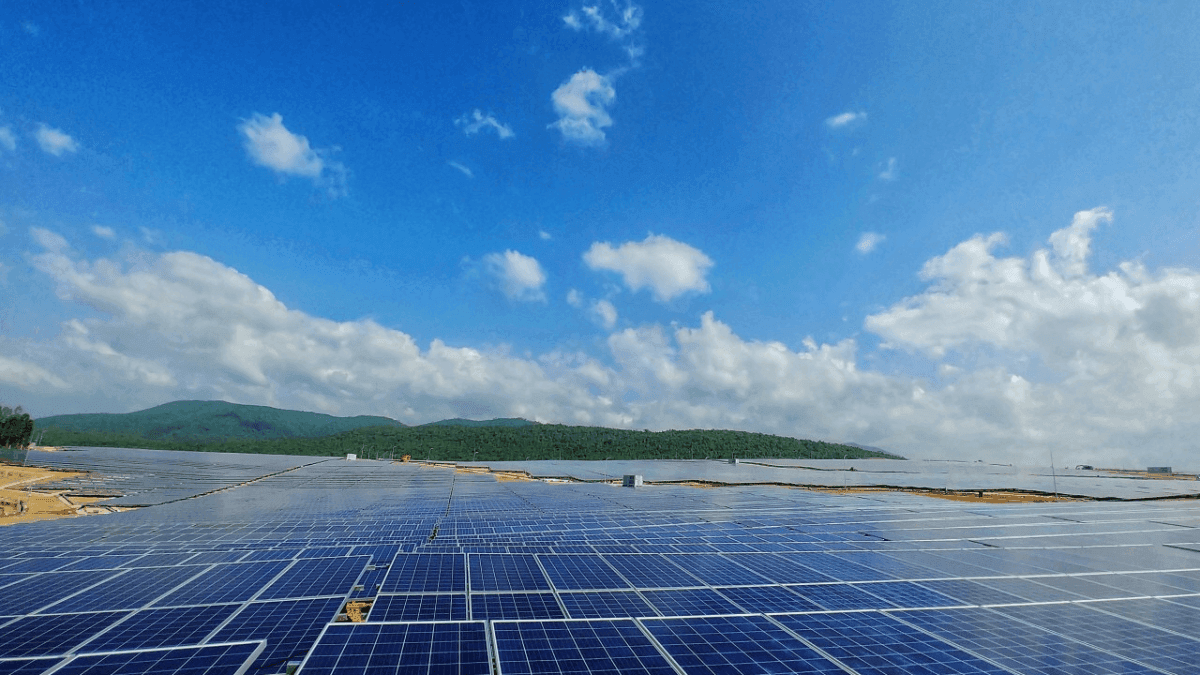
The Gia Lai People’s Committee has issued a decision approving the investment policy for the Hoai Duc solar power plant project through a competitive bidding process to select an investor.
The Hoai Duc solar power plant has a design capacity of 50 MW, with an expected annual electricity output of about 86 million kWh. The plant will connect to the national grid at 110 kV via a double-circuit 110 kV transmission line from the plant’s step-up substation to the interconnection point on the 110 kV Hoai Nhon – Phu My line.
The project will be implemented on about 46 hectares in Bong Son Ward, with total investment of more than 789 billion VND.
Under the approved schedule, from March to May 2026 the province will complete procedures to approve the investment policy and organize investor selection. From June to November 2026, the project will carry out sector-specific procedures, feasibility study verification, investment approval, negotiation and signing of the power purchase agreement, technical design, while also conducting site clearance and land-related procedures.
The project is expected to start in December 2026 and be completed, with commercial operation targeted for March 2028. The operation term is 50 years.
As planned, in 2026 Gia Lai will organize bidding to select investors for 67 energy projects, mainly large-scale wind and solar.
Earlier in April, Gia Lai’s People’s Committee approved investors for four renewable energy projects with total investment of nearly 4,900 billion VND, including: Nhon Hoa 2 solar plant (about 1,500 billion VND), Nhon Hoa 1 solar plant (over 830 billion VND), Nhon Hoa 3 wind plant (about 1,700 billion VND), and Nhon Hoa 1A solar plant (over 830 billion VND).
These projects are expected to begin construction from November 2026 and be completed and put into operation by February 2028.






Premium gym chains are entering a “golden era” that is ending or already in decline, as rising operating costs collide with shifting consumer preferences toward more flexible, community-based ways to exercise. Long-term memberships are shrinking, margins are pressured by higher rents and facility expenses, and competition from smaller, more personalized…



