•
•
•
•
•
•
•
•
•
•
•
•
•
•
•
•
•
•
•
•
•
•
•
•
•
•
•
•
•
•
•
•
•


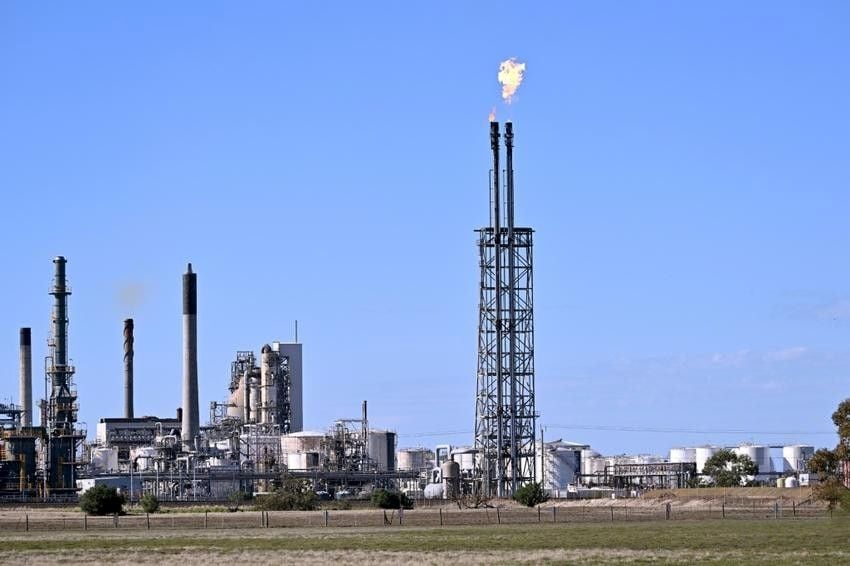
Although more than 190 countries agreed at COP28 in Dubai in 2023 to transition away from fossil fuels, progress has been slower than expected. Economic constraints, political interests, lobbying pressure, and global financing challenges are making the objective of “getting off oil” markedly difficult.
Recent geopolitical developments, particularly the conflict in the Middle East, have highlighted how deeply the global economy relies on oil. Disruption of the Hormuz Strait—described as the energy artery—has created a choke effect on energy supplies and global trade.
While some argue that such shocks strengthen the case for reducing fossil-fuel dependence, the article says the world remains unprepared for a rapid transition.
The article points to economics as a central barrier. Oil prices influence not only energy costs but also financial markets, where many assets are linked to the hydrocarbon sector.
“We cannot implement the transition by shutting fossil fuel companies overnight, because that would trigger a global economic catastrophe never seen before,” said Claudio Angelo, International Policy Coordinator at Climate Analytics.
For many Middle Eastern countries—including Iraq, Kuwait, and Saudi Arabia—oil is described as a major revenue source and the backbone of the economy. Even more diversified economies, such as Brazil, could face a severe downturn if crude exports were reduced abruptly.
Angelo also argues that economies not fully dependent on oil would still be affected if export revenues from energy were cut suddenly, framing the transition as a large-scale economic restructuring rather than only a technology or environmental issue.
Beyond economic factors, the article identifies political will as decisive. It notes that, in theory, developed countries such as the U.S., Canada, and Australia have enough leverage to push for a green transition.
“I think for these countries the issue is mainly political will,” said Bill Hare, Executive Director of Climate Analytics.
In practice, policy decisions are described as being shaped by short-term economic interests, voter pressure, and internal political calculations. In a globally fragile economy, the article says growth and energy security priorities often take precedence over long-term climate goals.
It also cites a return to resource-based political trends that has slowed climate commitments. “There is a perspective in the West, led by the U.S., to revert to the growth model that had been tried before,” said Leonardo Stanley, a researcher at the Center for State and Society Studies (Argentina).
The article further highlights the role of lobbying. It states that the oil and gas industry is among the strongest lobbying forces globally and that, over the past 30 years, it has sought to extend timelines for delaying changes.
“Over the past 30 years, they have sought to extend the time to delay changes,” Angelo noted.
A key question raised is who pays for the transition. The article says leaving fossil fuels requires enormous capital for both oil-producing countries and those dependent on energy imports.
“To begin this process, there must be willingness from major economies to build an international financial system that supports the transition,” Hare emphasized.
So far, the article says there is limited consensus on cost-sharing, making it difficult for many developing countries to meet climate commitments.
Despite these constraints, it also points to positive signals from renewable energy. Renewable energy accounted for nearly half of global electricity capacity in 2025—a record high. It adds that China has emerged as a leader in wind and solar development, while Pakistan has shown strong growth in solar energy.
In the United States and Australia, the article says expanding renewable energy has helped reduce electricity costs in some regions, illustrating economic potential in the transition.
The article concludes that the shift away from fossil fuels is long and complex, shaped by economic, geopolitical, and market-power incentives that pull in different directions. It argues that turning commitments into outcomes requires more than rhetoric—specifically, stronger political will and sufficient financial resources.
It also notes that around 60 countries met to discuss a roadmap for phasing out fossil fuels, signaling continued international engagement. Global conferences continue to debate ambition, energy security, and practical pathways toward eliminating fossil fuels as policymakers weigh cost, risk, and resilience.






Premium gym chains are entering a “golden era” that is ending or already in decline, as rising operating costs collide with shifting consumer preferences toward more flexible, community-based ways to exercise. Long-term memberships are shrinking, margins are pressured by higher rents and facility expenses, and competition from smaller, more personalized…