•
•
•
•
•
•
•
•
•
•
•
•
•
•
•
•
•
•
•
•
•
•
•
•
•
•
•
•
•
•
•
•
•


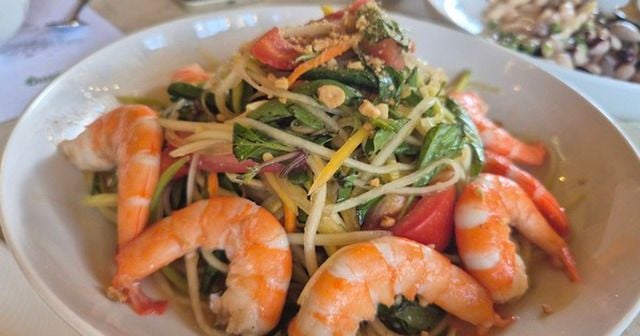
At a conference in Ho Chi Minh City on May 8, organized by the Ministry of Agriculture and Rural Development to boost exports of agriculture, forestry and fisheries, Le Van Quang, General Director of Minh Phu Seafood Group (commonly known as the “shrimp king”), shared observations on the shrimp market and implications for Vietnam’s export-oriented seafood industry.
Mr. Quang said the global economy is in a difficult phase, with inflation leading consumers to tighten spending. As a result, buyers are increasingly seeking cheaper options and switching to smaller shrimp sizes—typically by one to two size categories—to reduce costs.
This trend has created challenges for processing enterprises and intensified pressure on shrimp farmers, contributing to losses and a reduction in farming area.
According to Mr. Quang, customer demand has shifted toward smaller shrimp, mainly in the 60–120 per kilogram range. By contrast, Vietnamese farmers typically farm and harvest shrimp at 20–60 per kilogram.
He said the mismatch between market demand and domestic production has led to a shortage of small-sized shrimp needed for high value-added processing. As a result, many enterprises have been forced to import shrimp from India and Ecuador to supply export processing needs.
Mr. Quang noted that control procedures for imported shrimp are currently very strict, including inspection of each batch and even every kilogram of imported shrimp.
Based on the situation, he recommended simplifying control procedures for imported shrimp to enable export processing, arguing that Vietnamese shrimp exporters already ship more than 90% of their output.
Mr. Quang also said Vietnam’s high value-added processing capacity is large, but domestic supply can meet only about 50–70% of raw material demand.
To respond to changing market requirements, Minh Phu continues participating in trade fairs and meeting customers in the United States, Canada, China, Korea, Japan and other markets to better understand demand and adjust production accordingly.
The company also guides farmers to adjust farming methods to align with actual customer needs.
Mr. Quang said that approach helped the company sign the largest contracts in its history in April and May 2026.
In the first four months of 2026, Minh Phu exported nearly USD 160 million, up 10% year-on-year.
In its 2025 annual report, the company reported revenue of VND 14,598 billion and after-tax profit of VND 532 billion.
For 2026, Minh Phu targets revenue of VND 23,114 billion, up 58%, and after-tax profit of VND 1,104.5 billion, up 107.6% compared with the previous year.
Premium gym chains are entering a “golden era” that is ending or already in decline, as rising operating costs collide with shifting consumer preferences toward more flexible, community-based ways to exercise. Long-term memberships are shrinking, margins are pressured by higher rents and facility expenses, and competition from smaller, more personalized…