•
•
•
•
•
•
•
•
•
•
•
•
•
•
•
•
•
•
•
•
•
•
•
•
•
•
•
•
•
•
•
•
•


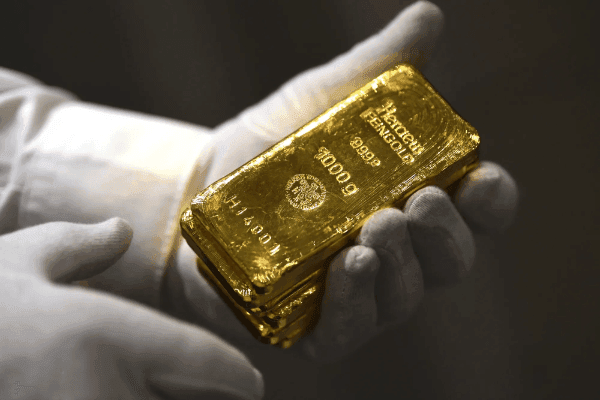
Crude oil prices rose sharply, weighing on gold early in the session, but the precious metal found support as the U.S. dollar weakened slightly. At the close, spot gold in New York traded at $4,821.6 per ounce, down $9.8 from last week’s close (down 0.2%). Spot silver was $79.85/oz, down $1.10 (about 1.4%).
On the COMEX futures market, gold for June 2026 fell 1%, closing at $4,828.8/oz. During the session, spot gold briefly dropped to $4,736.50/oz, the lowest level in more than a week, as renewed U.S.–Iran tensions pushed crude oil prices and the U.S. dollar higher. Later, as the dollar weakened again, gold pared losses and held above the key $4,800/oz level.
Over the weekend, developments in the Middle East remained volatile. One day after Iran announced the opening of the Hormuz Strait, Iran said the strait would be closed and refused to continue peace talks with the United States. U.S. forces continued to blockade Iranian ports in the Hormuz Strait, and President Donald Trump warned that Iran had made optimistic statements about reaching an agreement with Tehran.
In an interview with PBS News on Monday, Trump threatened Iran with U.S. military force, saying that “many bombs would be dropped” if no agreement is reached. The threat came before a two-week ceasefire between the United States and Iran ends at midnight on Tuesday (April 21) U.S. time. Trump also continued to call for Iran to fully open the Hormuz Strait, and in a Truth Social post earlier in the week said the U.S. blockade of Hormuz is “destroying Iran,” adding that the blockade would not be lifted until an agreement is reached.
These developments pushed crude oil prices higher on Monday. WTI crude rose nearly 7% in New York, while Brent futures gained more than 5% in London. Higher oil prices can increase global inflation pressures, raising the likelihood that central banks—such as the U.S. Federal Reserve—keep rates higher for longer.
Such rate expectations are generally unfavorable for gold and silver, which do not pay interest. In this session, gold faced early headwinds as the U.S. dollar strengthened, but the pressure eased later as the dollar weakened again. The Dollar Index fell 0.04%, closing at 98.05.
Fawad Razaqzada of City Index and Forex.com told Reuters that the Middle East situation is “again tense,” prompting a shift in the gold outlook toward a softer path. He added that oil is positioned to rise sharply again, pushing the U.S. dollar and U.S. Treasury yields higher.
Data from CME’s FedWatch Tool showed markets pricing in roughly a 100% probability that the Fed will hold rates unchanged at the upcoming meeting scheduled for April 28–29. For the remaining Fed meetings in 2026, the most likely scenario is a 25 basis point rate cut in December, but the probability is around 37%.
Reflecting higher-for-longer rate expectations tied to the war’s impact, the 10-year U.S. Treasury yield is near 4.26%, compared with below 4% before the war.
According to Kitco Metals analyst Jim Wyckoff, gold for June delivery needs to close decisively above major resistance at $5,000/oz to start a new rally.
Standard Chartered’s Suki Cooper said gold appears to be forming a new base, but tensions in the Gulf and inflation concerns could continue to pressure gold downward over the next two months. She forecast gold to average about $4,605/oz in Q2 and rise to around $4,850/oz in Q3.
The world’s largest gold ETF, SPDR Gold Trust, recorded a net outflow of about 0.9 tonnes in the session, reducing holdings to 1,059.8 tonnes. On Friday, the fund bought nearly 8 tonnes.
In early trading on Asia today, both gold and silver rose slightly. At 6:50 a.m. Vietnam time, spot gold was up $0.7/oz from the U.S. close to $4,822.3/oz. Spot silver rose $0.18/oz to $80.40/oz.
That level of spot gold equated to about 153.1 million VND per tael, using Vietcombank’s USD selling rate. Vietcombank’s USD rate stood at 26,098 dong (buy) and 26,358 dong (sell).
Premium gym chains are entering a “golden era” that is ending or already in decline, as rising operating costs collide with shifting consumer preferences toward more flexible, community-based ways to exercise. Long-term memberships are shrinking, margins are pressured by higher rents and facility expenses, and competition from smaller, more personalized…