At 9:30 a.m. on April 29, domestic
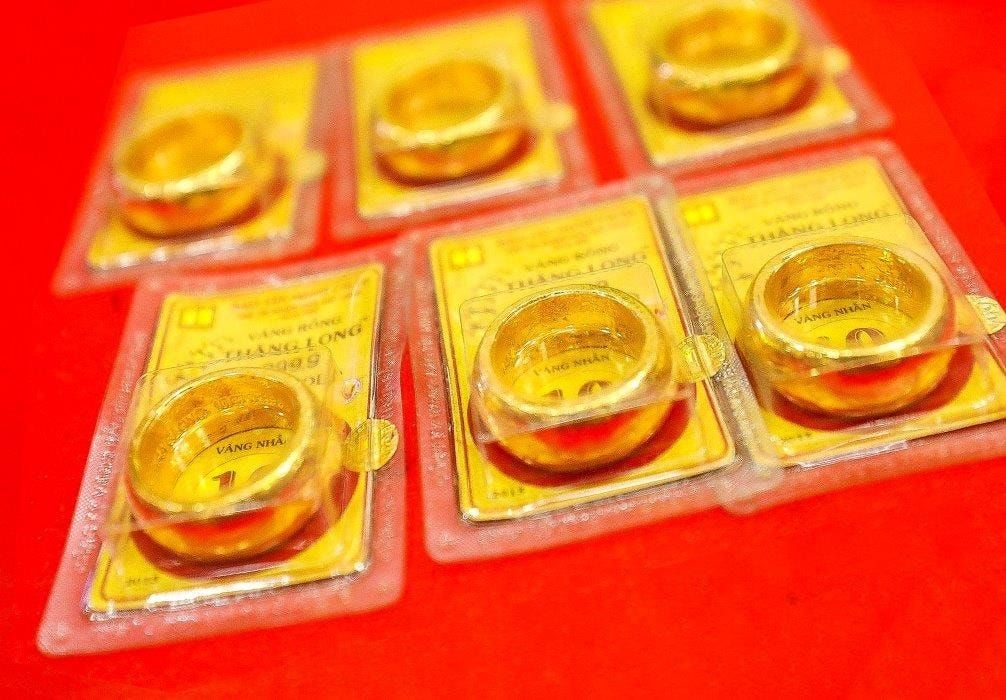
gold prices continued to fall sharply compared with the previous session's close, with declines of about 1.5 million to 2 million dong per tael for both jewelry gold and bullion. Specifically, bullion gold at SJC, PNJ, DOJI, Bao Tin Minh Chau, and Bao Tin Manh Hai was quoted at 163–166 million dong per tael (buy — sell), down by 1.5 million dong per tael from the previous session. In the jewelry segment, SJC fell to 162.5–165.5 million dong per tael, down 1.5 million; PNJ and DOJI posted larger declines to 162.6–165.6 and 162.5–165.5 million per tael respectively; Bao Tin Minh Chau and Bao Tin Mạnh Hai retreated to around 163–166 million dong per tael. On the domestic market, early morning trading showed no change in quoted prices as major dealers had not updated their price boards yet. Specifically, bullion at SJC, PNJ, DOJI, Bao Tin Minh Chau, and Bao Tin Manh Hai remained at 164.5–167.5 million dong per tael (buy — sell), indicating price stability. In the jewelry segment, SJC quoted 164–167 million dong per tael, with PNJ, DOJI, and Bao Tin Minh Chau trading at 164.5–167.5 million dong per tael, and Bao Tin Manh Hai slightly higher at around 167.4 million per tael. On the international market, spot gold opened around 4,607 USD per ounce, up 0.27% from the previous close, after having fallen more than 2.4% in the first two sessions of the week, following a 2.5% drop in the prior week. Gold recovered after hitting a low in more than three weeks as oil prices rose amid stalled US-Iran talks, with markets weighing inflation risks and rate expectations ahead of central bank decisions. A Reuters report cited that a U.S. official said President Donald Trump was not satisfied with Iran's latest proposal to resolve the two-month conflict, reducing hopes for a resolution affecting energy supply, inflation, and casualties. Brent crude rose above $110 per barrel as the Hormuz Strait route remains largely closed. An analyst from Julius Baer noted that the gold price drop reflected the rally in oil prices due to stalled US-Iran talks, and that markets were more concerned about potential tighter monetary policy from the conflict than about global growth. Higher oil prices amplify inflationary pressure and raise the likelihood of higher rates. While gold is often seen as an inflation hedge, higher rates reduce its appeal as a non-yielding asset. Japan’s central bank kept rates unchanged, but a number of policymakers signaled concern about inflationary pressure from the Middle East situation. Many expect the U.S. Federal Reserve to hold rates at the end of its two-day meeting, and investors are watching decisions from other major central banks this week, including the ECB, the Bank of England, and the Bank of Canada. In the domestic market, the morning session showed prices were largely flat versus the previous close, with bullion at 164.5–167.5 million dong per tael and jewelry at 164–167 million dong per tael across brands, indicating a stable price level with minimal dispersion.