•
•
•
•
•
•
•
•
•
•
•
•
•
•
•
•
•
•
•
•
•
•
•
•
•
•
•
•
•
•
•
•
•


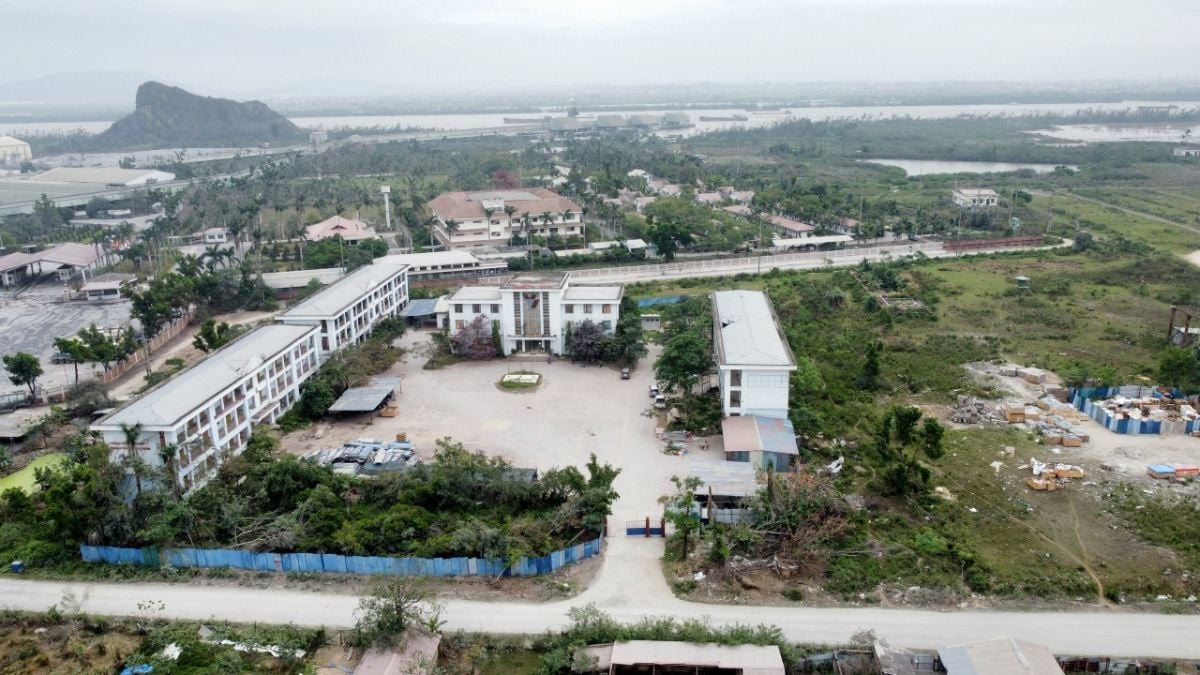
Hai Phong’s shipbuilding industry decline has contributed to abandoned shipyards and several stalled projects across the city, including developments in industrial, educational and tourism sectors. A report from the Hai Phong Department of Finance says more than 125 hectares of land tied to seven large projects have been left in limbo, wasting land and invested capital. The city is reviewing land reclamation and the termination of non-viable projects to optimize resources and improve the investment climate.
Since 2002, the Hai Phong City People’s Committee leased 47,768 m2 of land in the Do Son Tourist Area (now part of Do Son Ward) to Nam Cường Hà Nội Joint Stock Company for the Luxury Tourism–Entertainment Center project. The plan targeted high-end tourism in Do Son and included a 5-star hotel with 177 rooms, a conference center, a swimming pool, a resort area, bungalows, a high-end golf practice area, tennis courts and a restaurant.
In 2018, the city adjusted the project and split it into two zones. Zone A covers 22,470.9 m2 for a 5-star hotel and ancillary facilities, while Zone B covers 25,297.4 m2 for luxury resorts, bungalows and high-end recreational activities. To date, Zone A has had a hotel constructed, while Zone B has only been cleared and remains idle.
Large urban and tourism developments in Hai Phong have faced planning and legal procedure bottlenecks for years. The report cites land and clearance issues affecting cement plant-related projects.
In 1996, the Ministry of Planning and Investment (now the Ministry of Finance) issued an investment certificate for the Phúc Sơn Cement Plant to Phúc Sơn Cement Company, an FDI joint venture between Lucky Cement Group (Taiwan) and Vietnamese partners. Hai Duong Province’s (now Hai Phong) People’s Committee leased 711,545 m2 of land in Kinh Môn for the cement plant.
For Hai Phong, the report also lists Phase 1 land of 481,830 m2 and Phase 2 expansion land of 229,732 m2. The expansion area has not yet been cleared. According to the Department of Agriculture and Environment, the investor did not cooperate with local authorities to complete land clearance for the 229,732 m2.
In 2007, Vocational College Vinashin was allocated 49,215 m2 in Hong An Ward to train manpower for modernizing the shipbuilding and maritime transport workforce. After a short period, operations ceased due to the shipbuilding downturn. In 2013, the college was transferred to Vietnam Maritime University, which used the site for security and defense training before returning it to the shipbuilding sector. The facility has been abandoned since 2015.
In 2007, Phà Rừng Shipyard Company was allocated 921,227 m2 of land in Bai Dang Ward (Hai Phong) and 895.5 billion VND to invest in a new 50,000-ton shipyard with a capacity of 16 ships per year. After land allocation, Phase 1 included some workshops and cranes. Phase 2 was not implemented, and the workshops and land were left idle. In 2023, Hai Phong’s Department of Planning and Investment (now the Department of Finance) confirmed that many workshop spaces showed signs of rental, with large portions of land left idle.
Nam Triệu Shipping Company was licensed from 2009 to 2010 to build an 11-story building on 900 m2 with accompanying facilities on more than 5,700 m2 in Hong Bang Ward. The building reached the shell stage, but the project has been idle since then, and the land and building have remained abandoned.
In 2007–2008, the Man B&W Diesel Plant and Mitsubishi Diesel Plant projects were launched by the Bạch Đằng and Nam Triệu shipyards on 10,260 m2 and 10,060 m2 respectively, with investments exceeding 215 billion VND. Despite some progress in Phase 1, the shipbuilding industry downturn halted both projects. The Man B&W Plant reportedly owes more than 60 billion VND in land rent.
In the western part of Hai Phong, there are 15 industrial clusters totaling more than 944 hectares. However, land allocation for the 2021–2025 period has not yet been arranged.
According to Hai Phong’s Department of Finance, the seven projects cited in the report account for more than 125 hectares of idle land left unused for many years. The department says this reduces investment effectiveness, weakens the business climate, hinders development planning, and results in lost resources for local development.
Based on these findings, the Department of Finance has proposed that the Hai Phong City government adjust and terminate the projects and recover land to prevent further waste and protect the investment climate and socio-economic development planning of Hai Phong.


Premium gym chains are entering a “golden era” that is ending or already in decline, as rising operating costs collide with shifting consumer preferences toward more flexible, community-based ways to exercise. Long-term memberships are shrinking, margins are pressured by higher rents and facility expenses, and competition from smaller, more personalized…