•
•
•
•
•
•
•
•
•
•
•
•
•
•
•
•
•
•
•
•
•
•
•
•
•
•
•
•
•
•
•
•
•


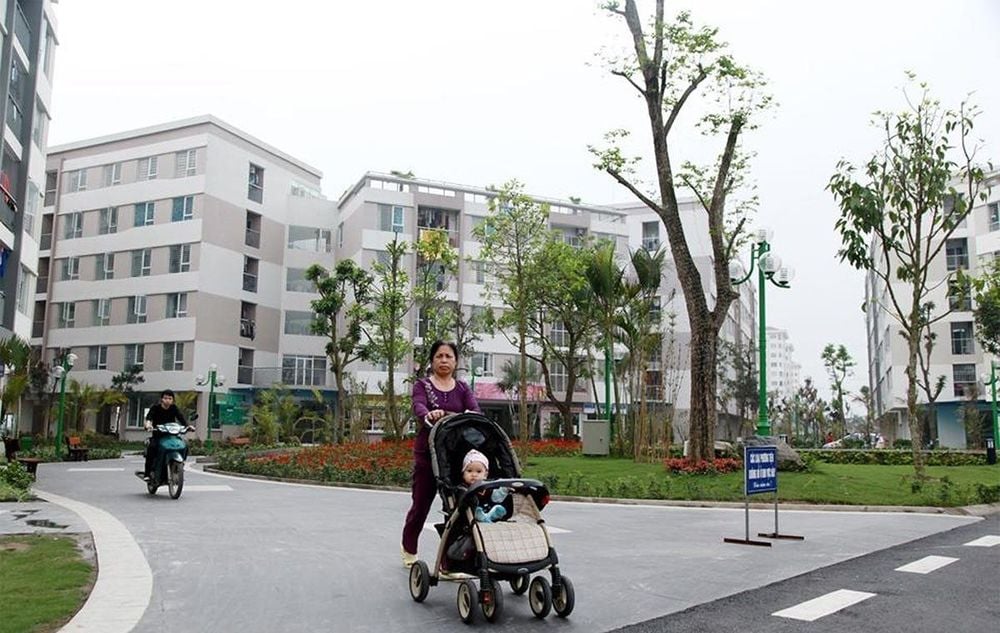
Ho Chi Minh City is accelerating the social housing development program in the context of rising demand from low-income people, workers, and urban laborers. In practice, many legal issues, especially relating to land and investment procedures, have become major bottlenecks, causing many projects to fall behind schedule or fail to start. A LOT OF ISSUES ARISE DURING PROCEDURES According to the Ho Chi Minh City People’s Committee, in recent times investors have proactively proposed social housing projects on various land funds, including land directly managed by the State, land not yet compensated for site clearance, as well as land leased with annual rent or paid upfront for the entire lease term. However, when going into specific procedures, numerous issues arise due to divergent interpretations and applications of the law. One notable obstacle relates to procedures for approving investment policy while delegating to the investor for projects not yet announced. Under current regulations, investors can propose a project aligned with the master plan and submit files for consideration. However, in practice, many investors propose projects on land they do not have legal rights to use, such as land used by residents or land under State management but lacking the necessary legal procedures. Review of the report and the proposal of the Department of Construction in Official Dispatch No. 11121/SXD-PTĐT dated 06/04/2026, and to remove obstacles in ongoing projects in the city, the Ho Chi Minh City People’s Committee has raised several issues for the Ministry of Agriculture and Environment to consider guidance on. First, the obstacle regarding implementing the concurrent approval of investment policy and delegation to the investor for projects where the land fund is directly managed by the State or land that has not yet been compensated or cleared and is currently used by residents, with project information not yet disclosed. The city asks the Ministry to provide guidance on cases where the investor does not have land use rights proposing to implement the project on land originating from State direct management or land used by residents, in line with the 1/2000 zoning plan approved and not yet publicized, whether it is possible to approve investment policy concurrently with delegation to the investor under Clause 1, Article 7 of Decree No. 192/2025/NĐ-CP? Second, the obstacle regarding implementing the concurrent approval of investment policy and delegation to the investor for a project on land leased by the State with annual rent and that has been issued a land use rights certificate to the economic entity currently leasing it for purposes other than residential use (agriculture, business production, etc.). According to Article 7 of Decree No. 192/2025/ND-CP dated 01/07/2025, the Government regulates procedures for approving investment policy concurrently with delegation to the investor for social housing projects that have not yet been approved for investment policy, or have not yet received a valid legal document to lead appraisal, to be submitted to the City People’s Committee for a decision approving investment policy concurrently with delegation to the investor. Many legal obstacles require resolution Currently, the City’s Department of Construction receives applications for approval of investment policy concurrently with delegation to the investor to implement social housing projects on land that complies with the 1/2000 master plan, originated from State land leased with annual rent, and that has a land use rights certificate for agricultural land or land used for business production. The City believes that under land law, a land-using entity with leased land does not have the right to transfer, mortgage, or contribute land-use rights; there is no provision addressing the right to change land use (Article 34 of the 2024 Land Law); and there is an obligation to use land for its intended purpose; return land when the State decides to recover the land, when the land use period ends and there is no extension by the competent state agency (Article 31 of the 2024 Land Law). Therefore, the City asks the Ministry to provide guidance on whether the case where an investor proposes to implement a project on land with origin from State land lease with annual rent and has a land use rights certificate for agricultural land or land used for business production, with consistency to land use rights, can be considered for investment policy approval concurrently with delegation to the investor under Clause 1, Article 7 of Decree No. 192/2025/NĐ-CP dated 01/07/2025? Third, whether a land-using economic entity proposing to change land use from non-residential to residential exceeds the land-user’s rights under land law. According to the City, delegating to the investor a project to a land user who is leasing land and changing the origin of land use from State- leased land to State-allocation land for housing be ensured under land laws? This is a necessary step to remove the legal bottlenecks hindering social housing development in Ho Chi Minh City. In the context of new mechanisms and policies issued by the National Assembly and Government to promote the sector, additional central guidance will help the locality implement uniformly and build investor confidence. Dong Nai: Approval of master plan for urban area of over 3,100 ha in Dai Phuoc Can Tho: Publicize 4 new social housing projects with nearly 3,600 units Ho Chi Minh City removes legal and credit bottlenecks to unlock social housing Date: Apr 22, 2026, 14:24 This is a translation of the Vietnamese content and preserves the structure of the original article content.


Premium gym chains are entering a “golden era” that is ending or already in decline, as rising operating costs collide with shifting consumer preferences toward more flexible, community-based ways to exercise. Long-term memberships are shrinking, margins are pressured by higher rents and facility expenses, and competition from smaller, more personalized…




