•
•
•
•
•
•
•
•
•
•
•
•
•
•
•
•
•
•
•
•
•
•
•
•
•
•
•
•
•
•
•
•
•


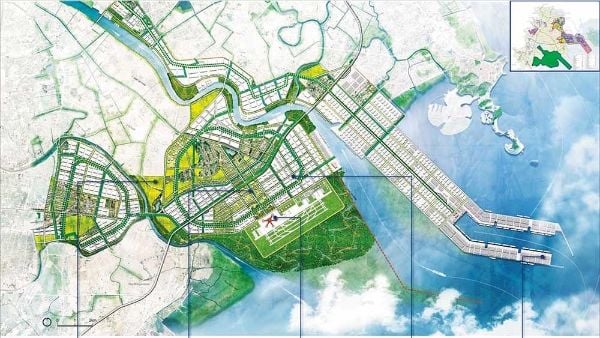
Hai Phong has approved its socioeconomic development plan for 2026-2030, targeting a modern, civilized, ecological and livable port city by 2030. The plan sets an average GRDP growth target of 13-14% per year and expects the city’s GRDP to account for about 6% of Vietnam’s national GDP.
Under the plan, Hai Phong targets average GRDP growth of 13-14% annually during 2026-2030. The industrial and construction sector is expected to grow about 15.2% per year, while services are projected to rise about 10.9% per year. Agriculture, forestry and fishery are expected to grow around 8% per year.
The city’s GRDP share is expected to be around 6% of national GDP. By 2030, per capita income is projected at about USD 11,247, and the digital economy is expected to contribute over 35% of GRDP.
Hai Phong also sets targets for industrial production, with the industrial production index (IIP) expected to grow 15.5-16% per year. The plan aims for processing and manufacturing to account for about 47-48% of GRDP, while high-tech products in manufacturing are expected to reach about 60% of the value of processed and manufactured goods.
Total investment for 2026-2030 is estimated at about VND 2.4 quadrillion, equivalent to around 43% of GRDP. Public investment is expected to account for about 10% of total investment.
By 2030, Hai Phong targets include state budget revenue of about VND 245.5 trillion, of which domestic revenue is around VND 122 trillion. Export turnover is forecast to exceed USD 75 billion.
On logistics and tourism, the plan sets port cargo throughput at about 380 million tons and about 25 million tourist arrivals. The city also expects the establishment of roughly 9,200 new enterprises each year, reaching about 87,000 operating enterprises by 2030. Labor productivity growth for the whole economy is projected at about 11% per year.
For rural development, the plan notes that after boundary expansion, targets will be adjusted to match the new scale. By 2030, Hai Phong aims for about 80% of communes to meet advanced rural standards and 50% to meet model rural standards.
On social security, the city targets 62-63% of the working-age workforce to participate in social insurance by 2030.
To transform the growth model and improve economic efficiency, Hai Phong plans to implement 12 key programs supported by more than 40 large-scale projects. The 12 key programs include adjustments to the city’s master plan and development plan, the Southern coastal economic zone plan, Hai Phong International Airport, and underground urban space.
The city will also prepare proposals to establish a Free Trade Zone, a dedicated economic zone, and a northern economic zone.
Planned projects include road links connecting National Route 5 and National Route 10, the Rao 3 Bridge to the coastal road, and beltways 2 and 3. The plan also includes the Ninh Binh–Hai Phong expressway, the East–West transport axis, and connections to Lạch Huyện port and Gia Bình’s airport.
Hai Phong will coordinate with national and regional projects such as the Lao Cai–Hanoi–Hai Phong railway, the Mong Cai–Ha Long–Hai Phong railway, Belt 5 around Hanoi, and capacity expansions at Cat Bi International Airport.
Beyond public investment, Hai Phong plans to mobilize private capital for five large-scale projects, including the Thanh Long Lake eco-tourism complex and Ben Tam Lake, envisioned as multi-purpose resort, leisure and high-quality service complexes. Other projects include the Hai Phong LNG gas-fired power plant and the Seraphin waste treatment plant in Hai Duong.
The plan states that the synchronized deployment of 12 key programs and more than 40 major projects will help build a modern, integrated infrastructure system, expand development space, strengthen regional linkages and improve competitiveness. It also positions planning and growth-model transformation as the strategic direction, with infrastructure and large-scale projects serving as direct growth drivers.
Premium gym chains are entering a “golden era” that is ending or already in decline, as rising operating costs collide with shifting consumer preferences toward more flexible, community-based ways to exercise. Long-term memberships are shrinking, margins are pressured by higher rents and facility expenses, and competition from smaller, more personalized…