•
•
•
•
•
•
•
•
•
•
•
•
•
•
•
•
•
•
•
•
•
•
•
•
•
•
•
•
•
•
•
•
•


Many large-scale urban and tourism development projects in Haiphong City have fallen into prolonged stagnation due to planning constraints and legal procedures. The Haiphong People’s Committee identified 466 projects and works in the city that are stuck, halted, or delayed. Of these, plans have been prepared for 315 projects, while 151 projects are still being processed, with a resolution expected before June 2026.
Among the projects awaiting decisions, several major urban and tourism developments have been left in limbo due to planning and legal issues, contributing to inefficient use of land resources and limiting urban development opportunities.
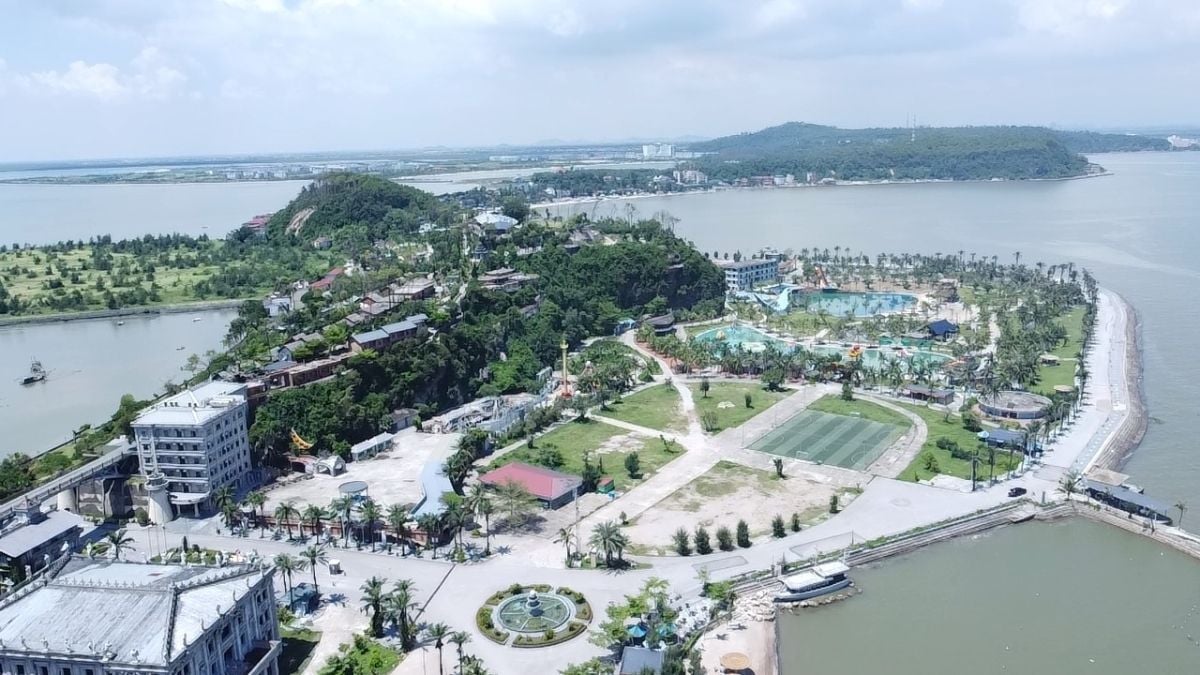
The Van Hương Luxury Tourist Village project in the Do Son tourism area, developed by Daso Haiphong Joint Stock Company, received initial investment approval from the Haiphong City People’s Committee in 2009, with total investment of about USD 133.3 million. The approved plan includes a villa area of 240–250 units, a 5-star hotel with 250–350 rooms, a commercial–culinary center, and an entertainment complex.
In practice, the investor has filled about 53 hectares of seawater and invested in a sea dyke system. However, the project has not moved forward to subsequent components due to prolonged legal issues. Authorities cited discrepancies during planning updates that left project boundaries unclear. Although the project was later reflected in the city’s master plan adjustment through 2040 with a vision to 2050, its land-use character and function have not been clearly defined.
As a result, adjusting land allocation and lease decisions lacks a solid legal basis. Authorities also said the expanded area has no transport connectivity to existing land, making land-use rights auctions to select investors impractical under current planning and regulations, while also creating a risk of future disputes. The project is also under substantial financial pressure.
Nearby, the Hon Dau International Tourism Area project in Do Son ward faces similar problems. In 2005, the investment policy to develop a large-scale tourism complex—comprising a conference center, hotel, park, and luxury resort—was reaffirmed. The investor has completed sea reclamation, built a 5 km dyke, and developed internal transport infrastructure, with some service facilities already operating.
The project has more than 50 hectares within the planning area, while over 31 hectares are outside the planning. Under the master plan, the area was not allocated housing land, but the planning has been amended five times, mainly expanding the area and partially converting tourism land to housing land.
Following updates to the master plan under Prime Minister’s Decision 323/QD-TTg dated March 30, 2023 (adjusting Haiphong’s master plan to 2040 with a vision to 2050), land-use classifications remain unclear. If current regulations require a full re-application, the project may need a comprehensive overhaul, affecting its original structure. In document 3522/VP-CN dated May 17, 2023, Deputy Prime Minister Trần Hồng Hà urged handling the project without legitimizing violations while ensuring the enterprise’s legitimate rights are preserved.
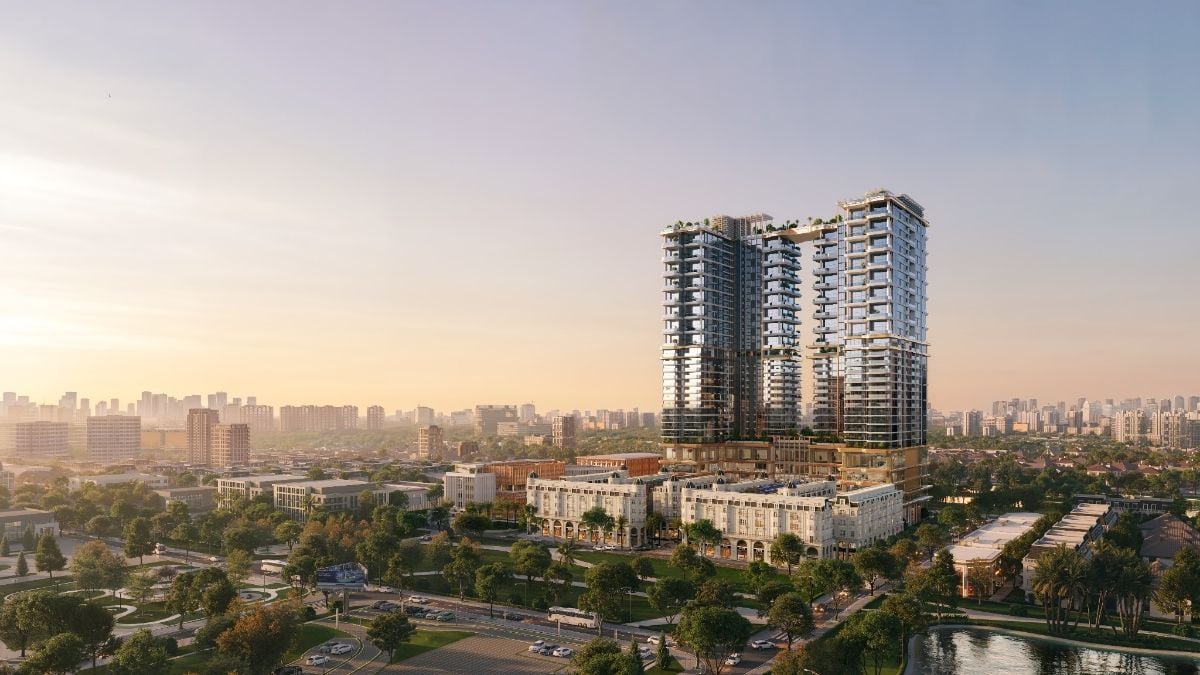
A luxury residential, hotel, shopping center, and office complex at 4 Trần Phú Street in Ngo Quyền ward, developed by Haiphong HDMon Investment Construction Joint Stock Company, covers 13,486 m2. Under the plan, it is designed as a 44-story high-rise with two basements, requiring investment of over VND 6,060 billion and serving around 2,760 people.
After obtaining land-use right certificates and signing a land lease in April 2022, the developer moved to a design competition. However, from October 2022 the project was forced to halt due to an ongoing case involving Trương Mỹ Lan and accomplices. The land is currently mortgaged at SCB to support enforcement actions, leaving the project stalled.
The Trading Center–Entertainment–5-star hotel and office complex in the Iron Market area (Hong Bà̂ng ward) was approved for investment in 2021. The planned 40-story tower with two basements has investment of over VND 6,060 billion. Groundbreaking began in May 2022 but the project remained idle for a long period.
Authorities noted that the investor paid more than VND 986 billion in land lease for over 15,187 m2 and that guarantees for project execution had been completed. The project also faced objective challenges in validating the feasibility study, particularly for the two basement levels; these issues were resolved in 2023. In May 2024, the Ministry of Construction announced the feasibility study results.
Although Haiphong City expected the project to deliver a landmark and improve the urban center, nearly four years after groundbreaking it has yet to start officially. The cited reason is that the investor has not completed the construction design and operating plan. To address the long delay, the city issued a 24-month extension for land use to consider continuation or land withdrawal under applicable law.
The Western Haiphong Development project titled “Commercial–Tourism–Cultural and Urban Area” (formerly in Hai Duong), developed by Nam Cuong Group Hanoi, was approved by the Prime Minister in 2001. The project covers about 331.56 hectares across Thach Khoi, Tu Minh, and Le Thanh Nghi wards (now part of Haiphong City).
After more than two decades, the project continues to face multiple bottlenecks, including unresolved boundary implementation requiring adjustments to proposed areas. Land clearance remains incomplete for about 9.1 hectares. Key components in sub-zone B (Islands of Ngoc, around 50 hectares) and high-rise housing in sub-zone A (around 2.4 hectares) have not progressed. Tax authorities also lack adequate data due to the project’s land-for-infrastructure swap structure. In addition, there are obstacles in handling portions of land already allocated but outside approved boundaries.
Among the 151 stalled projects, 7 cases fall under the Prime Minister’s authority, 126 fall under the Haiphong City People’s Committee, and 18 fall under commune-level authorities.

Premium gym chains are entering a “golden era” that is ending or already in decline, as rising operating costs collide with shifting consumer preferences toward more flexible, community-based ways to exercise. Long-term memberships are shrinking, margins are pressured by higher rents and facility expenses, and competition from smaller, more personalized…