•
•
•
•
•
•
•
•
•
•
•
•
•
•
•
•
•
•
•
•
•
•
•
•
•
•
•
•
•
•
•
•
•


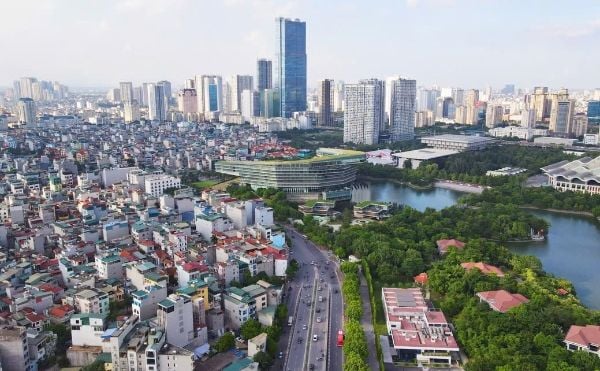
The core task of the agencies is to draft and advise the City People’s Committee and the City People’s Council on issuing the necessary legal documents to implement the Resolution, ensuring full legal basis, quality, and adherence to the required schedule.
At the same time, the agencies will actively study, review, propose amendments and additions, and issue legal normative documents to implement the National Assembly’s Resolution 258/2025/QH15 dated December 11, 2025.
In the first and second quarters of 2026, the agencies will develop and issue a set of criteria to determine projects within the scope of Resolution 258/2025/QH15.
In 2026 and subsequent years, they will review and compile a list of investment projects under management. They will then immediately organize the preparation of dossiers and documents for specific projects within the project scope, in accordance with the provisions of the National Assembly’s Resolution and the Hanoi City Council’s Resolution. The goal is to produce a concrete implementation plan for each project, ensuring early execution of the investment policy and enabling the approval, start, and implementation of large, important projects of the city.
When proposing projects to be implemented immediately under Resolution 258/2025/QH15, city departments, agencies, and district-level People’s Committees must review, assess, and clarify key issues. These include the necessity and urgency of the project, its scope, land acquisition boundaries, current land use status, affected parties, resettlement needs, funding sources, and implementation progress.
They must also propose an independent project for compensation, support, and resettlement before approving the investment policy.
The Department of Agriculture and Environment will lead, in coordination with relevant units, to consolidate independent compensation, support, and resettlement projects. It will monitor, urge, inspect, and periodically report results to the City People’s Committee.
In parallel, the agencies will review and identify areas requiring renovation, urban refurbishment, and redevelopment. This includes renovating and rebuilding old apartment buildings, renovating, refurbishing, and redeveloping a block or multiple blocks of urban areas, and studying and determining the scope and boundaries of projects.
They will prepare a list of urban renovation, refurbishment, and redevelopment projects, including renovation and rebuilding projects for apartment buildings, and renovation, refurbishment, and redevelopment of a block or multiple blocks to ensure they meet the targets. The projects must have full legal grounds, feasibility, and alignment with planning.
The Hanoi plan is intended to crystallize the special mechanisms permitted by the National Assembly. It aims to maximize the city’s autonomy and accountability in deciding, approving, adjusting investment policies, and selecting contractors and investors for large, important projects, while accelerating readiness and implementation of key projects and addressing practical difficulties and obstacles.




Premium gym chains are entering a “golden era” that is ending or already in decline, as rising operating costs collide with shifting consumer preferences toward more flexible, community-based ways to exercise. Long-term memberships are shrinking, margins are pressured by higher rents and facility expenses, and competition from smaller, more personalized…




