•
•
•
•
•
•
•
•
•
•
•
•
•
•
•
•
•
•
•
•
•
•
•
•
•
•
•
•
•
•
•
•
•


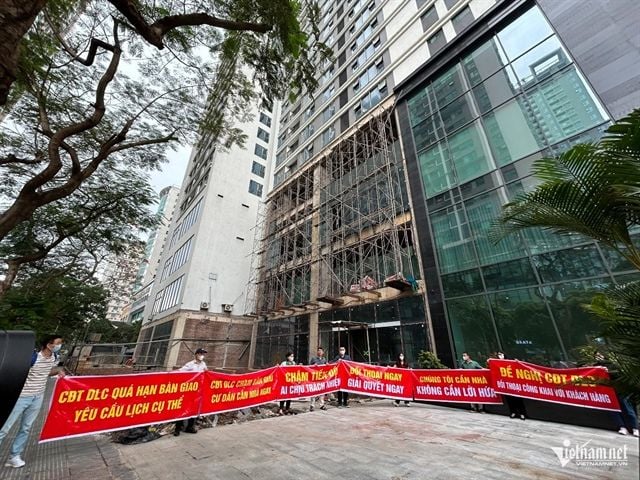
Harmony Square project has been repeatedly delayed in handing over units, leaving buyers bearing rent costs and loan repayments. On May 6, dozens of buyers gathered at the project to demand the developer guarantee their rights. Harmony Square is developed by DLC Real Estate Investment Co., Ltd. Many buyers express frustration as handover deadlines are repeatedly pushed back. In early 2021, I paid over 3 billion VND for a 74-square-meter apartment with the aim of settling in soon. According to the sale contract, the apartment was expected to be delivered in Q1 2022. However, the developer repeatedly adjusted the handover timeline. I bought the home under a bank loan schedule and had paid about 70% of the apartment value. “I have paid nearly 900 million of my own money and borrowed over 1.2 billion; as of now, 30% of the apartment value remains unpaid because the house has not been handed over.” After the grace period, the loan shifted to floating interest, at times up to 14% per year, creating huge financial pressure as I must pay principal and interest and rent. Over months, the project remains incomplete, forcing many buyers who rent homes to worry further. The project still lacks many items. The latest handover deadline reported by the developer for rough handover is Q1/2026 and for finished units is Q2/2026, but as of now, even rough handover has not occurred. Residents have visited the developer’s office, called the hotline, and sent emails multiple times but received no response. “Residents hope to meet with the developer’s representatives directly to understand the reasons for delays and the plan for future handover, but this is very difficult,” Huong said. The latest promised handover date for rough completion is Q2/2026, but given the current state, buyers worry when they will actually receive their homes. Similarly, Mr. Vu Xuan Long said he bought an apartment at Harmony Square in January 2022 and had paid the developer about 70% of the apartment value, equivalent to more than 2.4 billion VND. However, from 2022 to now, the developer has issued six notices delaying handover. The latest promise is handover in Q2/2026; as of May, the project remains quiet with no signs of completion. Long said the project’s delays over years have put his family under heavy financial pressure as they must rent housing while also paying monthly loan installments. “There are times when loan interest rose above 14% per year; I have to pay nearly 30 million VND each month including principal and interest. I still owe more than 1 billion, paying about 8 million for principal and 2 million for interest per month, while rental costs for the family are around 12 million per month,” Long said. He added that the delays were attributed to economic difficulties and the impact of Covid-19. In mid-May 2025, the developer said the project needed to adjust the technical design to ensure construction quality. Buyers have repeatedly demanded direct discussions with the developer to clarify progress, but no arrangement has been made. According to Long, buyers want direct dialogue with the developer to openly acknowledge difficulties and outline a concrete delivery schedule to reassure customers. In response to buyer complaints, VietNamNet reporters contacted Phung Van Hieu, Director of DLC Real Estate Investment Co., to clarify. Hieu said that the project’s technical design adjustments require a response from the Ministry of Construction. “The project has been approved and is still under construction. There is no attempt to avoid meeting customers. Regarding progress, the developer has sent a letter to customers,” Hieu said. He added that the developer aims to hand over to buyers according to the announced schedule in Q2/2026. Nguyen Le, VietnamNet



Premium gym chains are entering a “golden era” that is ending or already in decline, as rising operating costs collide with shifting consumer preferences toward more flexible, community-based ways to exercise. Long-term memberships are shrinking, margins are pressured by higher rents and facility expenses, and competition from smaller, more personalized…



