•
•
•
•
•
•
•
•
•
•
•
•
•
•
•
•
•
•
•
•
•
•
•
•
•
•
•
•
•
•
•
•
•


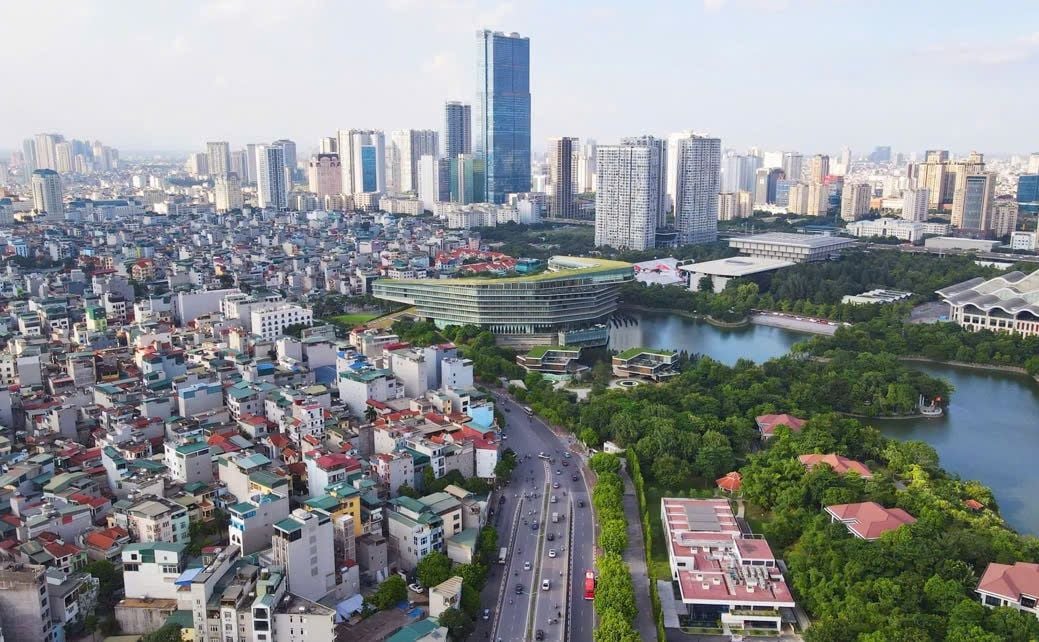
Two of Vietnam’s largest cities are among the world’s leading growth prospects for the coming decade, reflecting their increasingly prominent roles in the regional value chain.
Savills analyzed 245 cities worldwide and expects growth over the next decade to be concentrated strongly in Asia, where factors such as a young population, rapid urbanization, and shifts in global manufacturing converge. Vietnam features prominently in the results, with Ho Chi Minh City ranking second globally and Hanoi ranking fifth in the Growth Hubs Index of the fastest-growing cities. Their joint presence among the leaders points to strong growth potential and an increasingly clear role for Vietnam in the regional value chain.
Chris Marriott, CEO of Savills Southeast Asia, said Vietnam’s momentum is being supported by the advantage of a young population, which is creating strong momentum for regional economies. A large labor force, rising consumption, and rapid urbanization have boosted demand across real estate segments, including industrial and logistics, housing, and mixed-use developments.
Marriott also cited the “China+1” strategy, which continues to drive manufacturing relocation to emerging markets, with Vietnam standing out as a destination. He noted that foreign direct investment (FDI) inflows are rising, reinforcing production foundations and creating spillover effects for real estate—particularly in Ho Chi Minh City and Hanoi, where infrastructure, labor, and consumer demand are concentrated.
At the same time, Marriott cautioned that not every city with rapid growth can sustain long-term appeal. He pointed to a resilience-focused report indicating that leading cities such as New York, Tokyo, London, and Seoul share a common trait: balancing economic growth with quality of life while continually investing to enhance competitiveness.
In that framework, resilience is described as a practical criterion for evaluating cities, including economic fundamentals, a tech ecosystem, and ESG standards, as well as living environment quality. More importantly, the ability to implement development strategies efficiently and on schedule is highlighted as a key factor.
Neil MacGregor, CEO of Savills Vietnam, said Vietnam has ample momentum to sustain high growth, supported by infrastructure, foreign capital, and domestic demand. He added that the decisive factor will be the speed of implementation—markets that can turn plans into reality more quickly are expected to capture opportunities.
As resilience becomes a core yardstick for global cities, infrastructure is positioned as a foundational element enabling Vietnam to translate growth potential into sustainable development capacity.
MacGregor said large-scale public investment is gradually reshaping the market structure. He cited about 234 infrastructure projects underway, with estimated total investment of around 3.4 quadrillion VND. He pointed to key projects including Long Thanh airport, the Hanoi and Ho Chi Minh City metro systems, and more than 380 km of new North–South expressways, which are expected to open new corridors for economic development.
Infrastructure impact is described as extending beyond “hard” assets. Soft components—such as living standards, environmental factors, education, and health—can also influence corporate decisions and the attraction of high-quality labor, which are framed as core elements of long-term competitiveness.
With global growth centers continuing to shift toward Asia, Vietnam aims for double-digit growth anchored on two pillars: infrastructure investment and FDI. However, the report emphasizes that the decisive factor is not only the scale of investment but the ability to implement it effectively—covering project timelines, regulatory frameworks, and the financial environment.
That implementation capacity is expected to affect the pace at which new growth poles form, as well as the ability to expand urban space and future real estate supply. Looking ahead, experts said the market outlook remains favorable, supported by a stable economic base, continuing FDI inflows, and robust urbanization. The central question is framed as shifting from whether Vietnam can grow to how quickly and effectively growth drivers can be turned into reality.


Premium gym chains are entering a “golden era” that is ending or already in decline, as rising operating costs collide with shifting consumer preferences toward more flexible, community-based ways to exercise. Long-term memberships are shrinking, margins are pressured by higher rents and facility expenses, and competition from smaller, more personalized…




