•
•
•
•
•
•
•
•
•
•
•
•
•
•
•
•
•
•
•
•
•
•
•
•
•
•
•
•
•
•
•
•
•


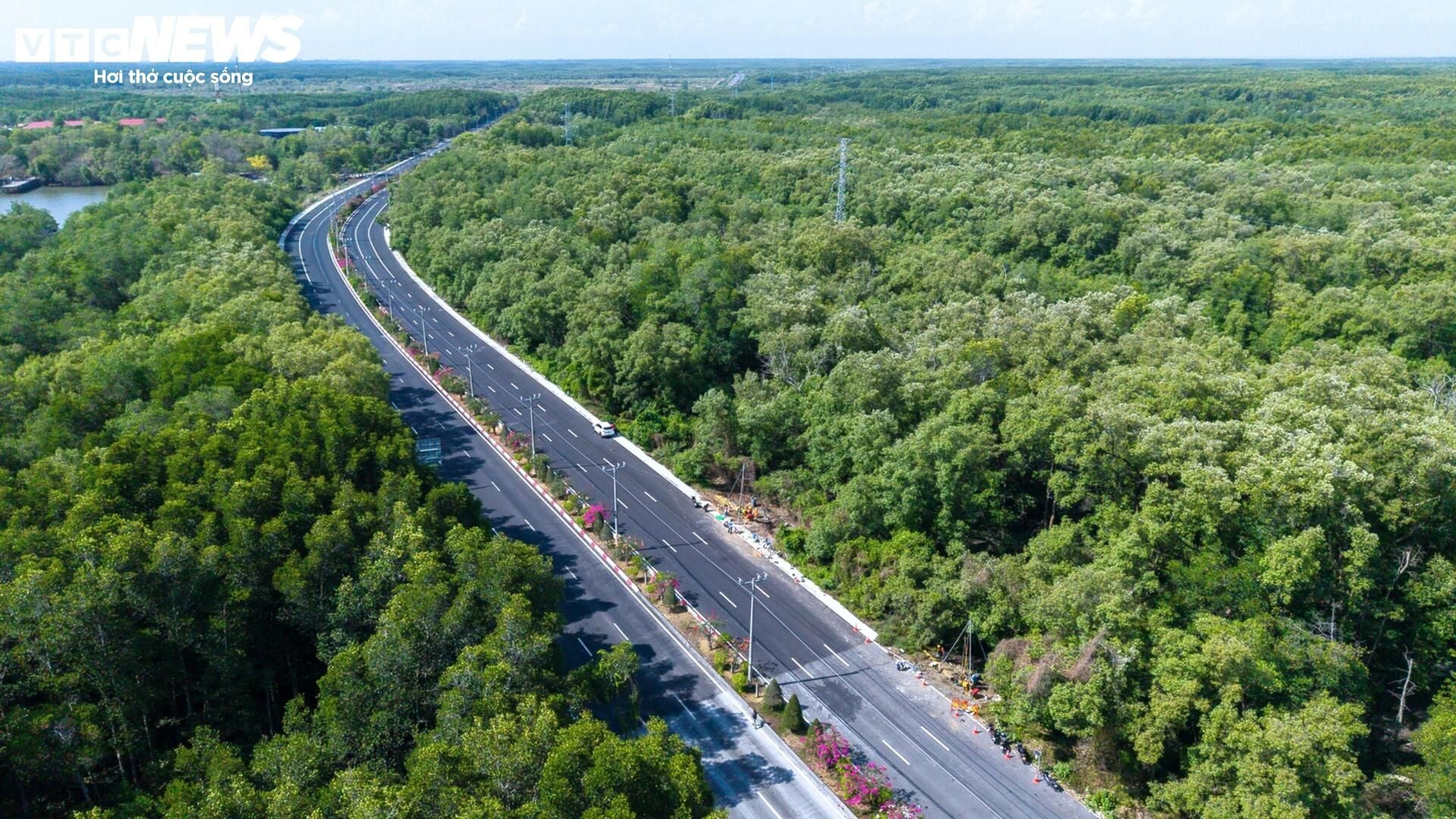
The Rừng Sác Road, a more than 36-kilometer route through Can Gio’s mangrove forest, has been approved by Ho Chi Minh City to study upgrading it to 10 lanes under a PPP framework. The plan aims to improve connectivity to the southern area of the city.
The road runs from the Bình Khánh ferry terminal in the north to Can Gio commune in the south, linking Can Gio district with central Ho Chi Minh City. Completed in 1986, it passes through the Can Gio mangrove biosphere reserve.
At present, the road has 4–6 lanes, with an approximate cross-section of 30 meters. The route includes eight bridges across various rivers. Traffic density is currently not very high, and buses remain a common mode of local travel, including Bus 75 connecting Can Gio with downtown Ho Chi Minh City.
The corridor is also characterized by mangrove green spaces and bougainvillea trees, contributing to the landscape of the southern area of Ho Chi Minh City. The Can Gio mangrove forest has been recognized by UNESCO as a World Biosphere Reserve.
Recently, the Ho Chi Minh City People’s Committee approved entrusting Can Gio Urban Tourism Joint Stock Company to prepare an investment policy proposal for a project to connect 15B and upgrade the Rừng Sác road under a PPP arrangement, in the BT contract form.
The study is described as necessary as Can Gio enters a development phase with major projects including the Can Gio Bridge, the Ben Thanh–Can Gio metro, an international transfer port, the Can Gio–Vũng Tàu sea-crossing route, and the Vinhomes Green Paradise coastal megacity. The proposal also notes that rising resident and visitor demand will increase connectivity needs.
Ho Chi Minh City authorities said the assignment is based on proposals submitted by the company, along with input from relevant departments and local authorities. The City’s Finance Department is responsible for ensuring the accuracy and legal basis of the proposal dossier.
The company must self-finance the study and proposal preparation without using city funds. It is also required to ensure the dossier includes all required contents and components.
Under the plan, the report must be completed within 12 months from 17/4. If the proposal is not approved after appraisal or if the deadline is missed, the approval to study will lapse and the company will bear all related costs.
If approved, the project is expected to be implemented in two phases during 2026–2028.
Phase one covers the segment connecting 15B, nearly 2 km from the D1–D3 junction (Tan My ward, old District 7) to the project boundary at the Can Gio Bridge. The plan calls for 6 lanes, including 4 motorized lanes and 2 parallel lanes.
Phase two upgrades the Rừng Sác road by more than 36 km, from the Ben Luc–Long Thành expressway junction to the trunk of the Can Gio coastal urban area. The road will be widened from 6 to 10 lanes, consisting of 8 motorized lanes and 2 parallel lanes.
In addition to the Rừng Sác upgrade, Can Gio is pursuing and studying several large-scale infrastructure projects, including the Can Gio–Bến Thành metro, the Can Gio international transfer port, the Can Gio–Vũng Tàu sea-crossing route, and the Ben Luc–Long Thành expressway, which is slated for completion by July 2026.
Premium gym chains are entering a “golden era” that is ending or already in decline, as rising operating costs collide with shifting consumer preferences toward more flexible, community-based ways to exercise. Long-term memberships are shrinking, margins are pressured by higher rents and facility expenses, and competition from smaller, more personalized…