•
•
•
•
•
•
•
•
•
•
•
•
•
•
•
•
•
•
•
•
•
•
•
•
•
•
•
•
•
•
•
•
•


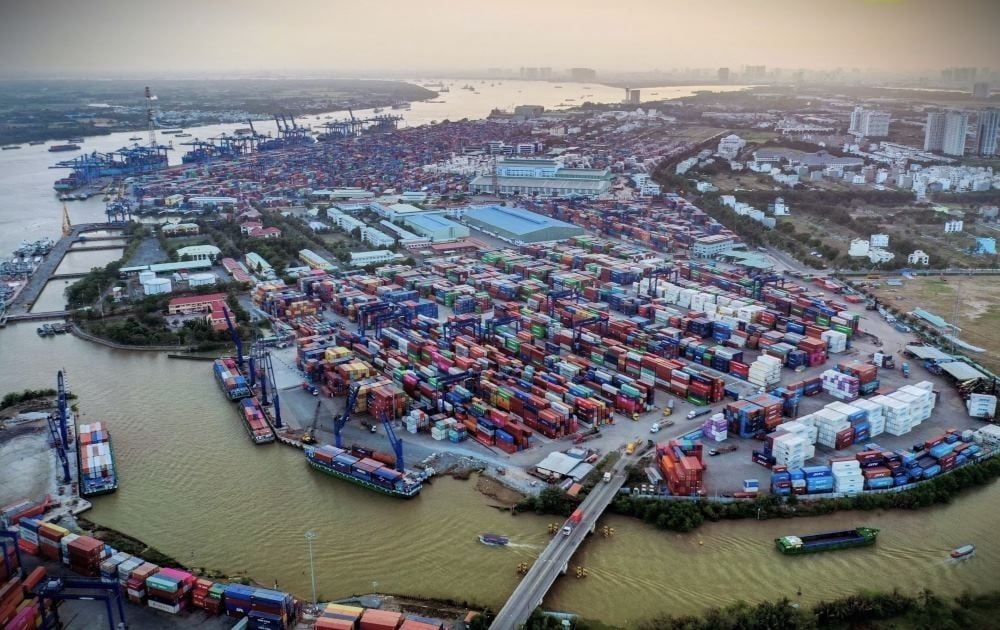
Ho Chi Minh City has issued a decision to establish a Steering Committee to implement Vietnam’s Strategy for Sustainable Development of the marine economy through 2030, with a vision to 2045. The move is aimed at strengthening leadership, coordination, and organization to carry out marine economy development tasks as the city expands its space toward becoming a coastal city, a logistics hub, and a national marine economy center.
Cat Lai Port in Ho Chi Minh City is currently the country’s largest port, handling about 85% of cargo at southern ports and around 50% of national goods. The Steering Committee is expected to guide implementation of marine economy-related programs and projects in line with the city’s evolving development space and priorities.
The Vice Chairman of the City People’s Committee, Bùi Minh Thạnh, has been appointed as head of the Steering Committee. Two deputy heads are drawn from the Department of Agriculture and Rural Development and the Department of Finance. Members include representatives from multiple departments, agencies, and units, along with the Border Guard and leaders of coastal localities within the city.
The Steering Committee will study and advise the City People’s Committee on solutions for sustainable marine economy development. It will also direct and coordinate relevant departments and localities to implement marine economy programs, projects, and initiatives, and propose cross-sector solutions while mobilizing domestic and international resources to implement the marine economy strategy through 2030 with a vision to 2045.
The Department of Agriculture and Rural Development and the Environment is assigned as the standing body. It will advise, synthesize, and ensure conditions for the Committee’s activities. Members will work on a part-time basis and perform duties as assigned by the Committee head.
The establishment comes as Ho Chi Minh City accelerates completion of its plan to develop the city’s marine economy into a national marine economy center—one of the major projects assigned by the Government for implementation in the new phase.
Under the city’s direction, marine economy development will not be limited to resource extraction or port development. Instead, it will aim to build a modern, multi-sector marine economy ecosystem, with focus areas including maritime transport, logistics, port-industrial sectors, energy, marine tourism, maritime services, high-tech coastal industries, and the blue economy.
Following administrative boundary adjustments and the creation of new development space, the city is tasked with rebuilding its marine economy development strategy at a new scale and magnitude. The city’s integration with the two provinces of Bình Dương and Bà Rịa-Vũng Tàu has opened additional development space, enabling a more connected marine economy chain linked with the Southeast Region and the southern economic region. With expanded coastal space, the city now has a seaport system, logistics, industry, coastal tourism, and regional transport infrastructure.
The city’s marine economy development plan will continue to be registered in the Government’s 2026 work program and is expected to be submitted in October 2026.
As part of the expansion of marine economy space after integration, the city’s development plan is expected to be reviewed and adjusted based on new administrative boundaries and new directions for a “coastal metropolis.” The focus will include developing port systems, logistics, high-tech industries, maritime services, coastal tourism, the maritime economy, and sustainable exploitation of marine resources.
The Department of Agriculture and Rural Development and the Environment will lead a review of related planning to implement strategies, plans, and programs for marine economy development in a coordinated manner. The review will focus on the National Maritime Spatial Plan for 2021–2030 with a vision to 2050 and the general plan for sustainable exploitation of coastal resources for 2021–2030 with a vision to 2050, both of which were approved by the Prime Minister.
Beyond marine economy development, Ho Chi Minh City is pursuing smart urban development, green growth, and digital transformation to lay the foundation for sustainable development, with the objective of building a global, modern city capable of adapting to climate change and deepening economic development.
In the 2026–2030 socio-economic development plan, the city identifies strategic infrastructure, the digital economy, high-tech industries, logistics, and the marine economy as major growth drivers in the new period.
The Steering Committee is expected to strengthen cross-sector coordination in implementing marine economy development programs, particularly as many infrastructure projects are accelerating, including an international transshipment port system, beltways, connecting expressways, a logistics center, and industrial parks along coastal economic corridors.
Premium gym chains are entering a “golden era” that is ending or already in decline, as rising operating costs collide with shifting consumer preferences toward more flexible, community-based ways to exercise. Long-term memberships are shrinking, margins are pressured by higher rents and facility expenses, and competition from smaller, more personalized…