•
•
•
•
•
•
•
•
•
•
•
•
•
•
•
•
•
•
•
•
•
•
•
•
•
•
•
•
•
•
•
•
•


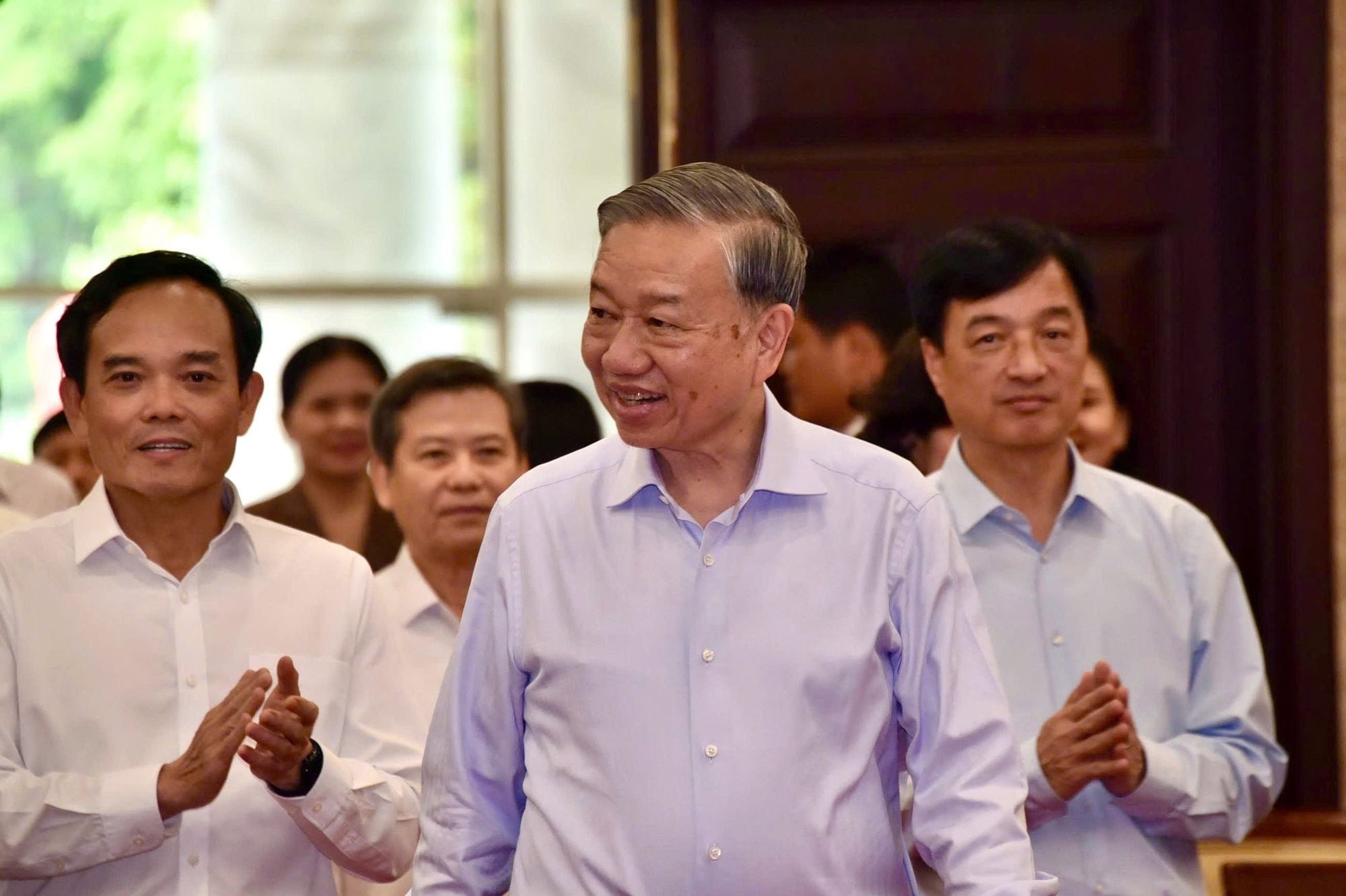
On the afternoon of April 27, in Ho Chi Minh City, General Secretary and President To Lam held a working meeting with the Standing Committee of the Ho Chi Minh City Party Committee. The meeting was attended by Politburo members Nguyen Duy Ngoc, Le Minh Tri, Nguyen Thanh Nghi, and General Phan Van Giang, along with General Luong Tam Quang, General Nguyen Trong Nghia, and leaders from central ministries and agencies.
Ho Chi Minh City reported that implementing the Resolution of the XIV Party Congress and nine strategic resolutions is a major political task, carried out in a unified and flexible manner to build consensus across the Party and the public. The City People’s Committee has issued action programs to concretize the targets; to date, 100% of the programs and action plans for the nine strategic resolutions have been issued, with coordinating units and expected outputs clearly identified.
Regarding growth goals, the Standing Committee of the City Party issued directives for 2026–2030. The City People’s Committee has issued plans to pursue two-digit growth in 2026 and 2030. In addition to traditional growth drivers—investment, consumption, and exports—Ho Chi Minh City is also promoting new drivers including science and technology, innovation, digital transformation, and a green transition.
The city is also implementing directives to ensure travel from Ho Chi Minh City to Long Thành airport takes 30 minutes. City leadership has instructed intensified rail-link development. The Bến Thành–Thủ Thiêm project is expected to break ground at the end of April, while the Thủ Thiêm–Long Thành project is expected to begin around June or July.
The two-tier local government model in Ho Chi Minh City is operating stably, leanly, and in a modern manner. The city said reducing intermediary layers is improving governance and service delivery to citizens and enterprises. The administrative center at all levels has completed 100% of non-territorial administrative procedures.
Ho Chi Minh City has invested nearly 2,000 billion VND in digital infrastructure, built a data strategy, and enhanced governance efficiency.
On planning, Ho Chi Minh City is implementing a city master plan for the 2025–2050 period with a 100-year horizon, aligned with national and regional planning. The city’s planning follows a three-zone, three-hub framework. The detailed outline has been approved, and domestic and international consultants are working with the aim of approving the plan by October and implementing it from now through late 2026.
However, Mr. Nguyen Van Duoc said the city still faces several difficulties and challenges, including the pace of public investment disbursement, land clearance, land pricing, planning progress, and the efficiency of governance and digital transformation, which he said remain suboptimal and not fully synchronized.
In 2026, Ho Chi Minh City said it remains committed to achieving two-digit growth and mobilizing 30–40% of social investment. The city will continue addressing four outstanding issues under directives from the General Secretary and President: traffic congestion, flooding, environmental pollution, and building a drug-free city.
The city also aims to complete the master plan approval process to provide a basis for implementing key projects, shaping space and development for the next period. It said it will remove obstacles in compensation and site clearance and speed up project progress.
During the meeting, Mr. Nguyen Van Duoc urged the Politburo, National Assembly, Government, and central ministries and agencies to consider and promptly issue a resolution on building and developing Ho Chi Minh City in the new era to create a breakthrough mechanism. He also called for the prompt passage of the Special Urban City Law to establish a legal framework supporting proactive governance, resource mobilization and allocation, implementation of new development models, and strengthened state management and international competitiveness.
Mr. Nguyen Van Duoc said Ho Chi Minh City has prepared a draft resolution, an outline, and content for the Special Urban City Law. The city is proceeding with next steps and will seek feedback from central agencies and experts before submitting to the Politburo and the National Assembly.
“Ho Chi Minh City is committed to joining the central authorities in realizing the goal of building the country toward development, self-reliance, prosperity, civilization, and happiness,” Mr. Nguyen Van Duoc emphasized.
The meeting covered preparations for the 50th anniversary of Ho Chi Minh City being named after President Ho Chi Minh, progress on implementing the XIV Congress resolutions, master planning, and the economy and social development in the first four months of 2026, along with plans for two-digit growth and the two-tier local government model.
Source: Phan Anh, Nguoi Lao Dong





Premium gym chains are entering a “golden era” that is ending or already in decline, as rising operating costs collide with shifting consumer preferences toward more flexible, community-based ways to exercise. Long-term memberships are shrinking, margins are pressured by higher rents and facility expenses, and competition from smaller, more personalized…




