•
•
•
•
•
•
•
•
•
•
•
•
•
•
•
•
•
•
•
•
•
•
•
•
•
•
•
•
•
•
•
•
•


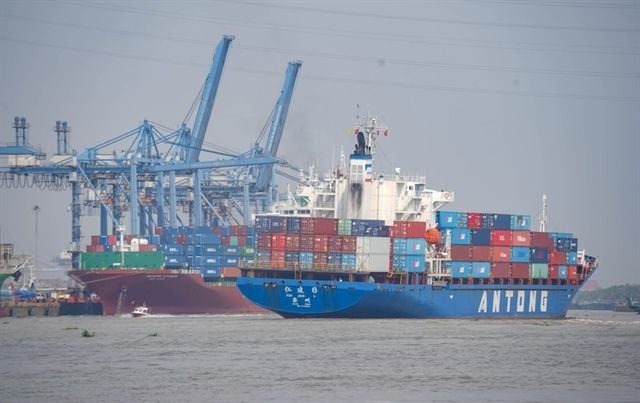
Ho Chi Minh City said it must complete a review of bottlenecks in land, planning, and public assets by 2026 as it pushes for faster economic growth in the 2026–2030 period. The city’s leadership set a goal of average GRDP growth above 10% per year, targeting GRDP of around USD 200 billion by 2030 and per-capita GRDP above USD 14,000.
The Standing Committee said achieving two-digit growth rates is both a major political task and an economic goal in a new development phase with an expanded economy and higher growth requirements. It calls for continued innovation in development thinking, improved effectiveness of organization and implementation, and a stronger culture of bold thinking, bold action, and accountability. The city also aims to mobilize and use all resources efficiently to deliver clear, substantive improvements in the local economy.
The directive calls for reducing scattered projects by at least 30%, with clearer responsibilities, timelines, and deliverables. Growth targets are to be concretized by sector and locality in Q2-2026.
The People’s Committee will prepare a comprehensive implementation plan, translating two-digit growth targets into sector-specific objectives with tasks, deadlines, and performance indicators. It will set a GRDP growth target of over 10% per year by 2030, with GRDP around USD 200 billion and per-capita GDP over USD 14,000, and assign specific growth targets to departments and localities under a transparent evaluation and incentive framework.
The city will identify growth drivers and strengthen forecasting and scenario planning to respond to domestic and international economic changes. Administrative reform will be intensified, including cutting at least 30% of administrative procedures, digitizing 100% of processes, and implementing a “one head, one process, one deadline” regime.
Public investment will be reorganized to focus on key projects, with dispersed projects reduced by at least 30%. The city aims for annual disbursement above 95% and said backlog projects must be resolved by 2026–2027.
Ho Chi Minh City plans to accelerate the mobilization of social resources and public-private partnerships, attract strategic investors, and implement major infrastructure projects, particularly in transport, logistics, and digital infrastructure. It will also enhance regional linkages and expand development space.
The city said it must ensure reliable, stable energy supply for production and business, supported by proactive contingency planning to prevent energy shortages. Fiscal and budgetary management should be proactive and flexible, including increasing revenue, curbing leakage, and prioritizing resources for development investment, science and technology, digital transformation, and strategic infrastructure.
By 2030, the city plans around 199,000 social housing units. It will shift growth toward science and technology, innovation, and digital transformation, with the digital economy targeted to account for 30%–40% of GRDP. Research and development spending is set to reach 2%–3% of GRDP.
The city will develop high-tech sectors including AI and semiconductors, and expand areas such as finance, logistics, the digital economy, and the green economy.
Ho Chi Minh City will strengthen resource management and environmental protection, promote a green transition and circular economy to support sustainable growth and competitiveness, and develop cultural and service industries linked to tourism and trade. It also plans to strengthen the private sector as a growth engine.
The directive includes reforming state-owned enterprises to international standards and attracting selective foreign direct investment in high-tech and innovative projects. It also calls for promoting technology transfer and linkages with domestic firms, and concentrating resources and policy to quickly establish and operate an international financial center in Ho Chi Minh City.
The city will foster an innovation ecosystem, including R&D centers and startup support. It will invest in a high-quality workforce, especially in technology, finance, urban management, and logistics, and reform education and training to align with labor-market needs and enterprise demand. The plan also emphasizes advancing digital technology and AI in education and training, with priority training for growth sectors.
Premium gym chains are entering a “golden era” that is ending or already in decline, as rising operating costs collide with shifting consumer preferences toward more flexible, community-based ways to exercise. Long-term memberships are shrinking, margins are pressured by higher rents and facility expenses, and competition from smaller, more personalized…